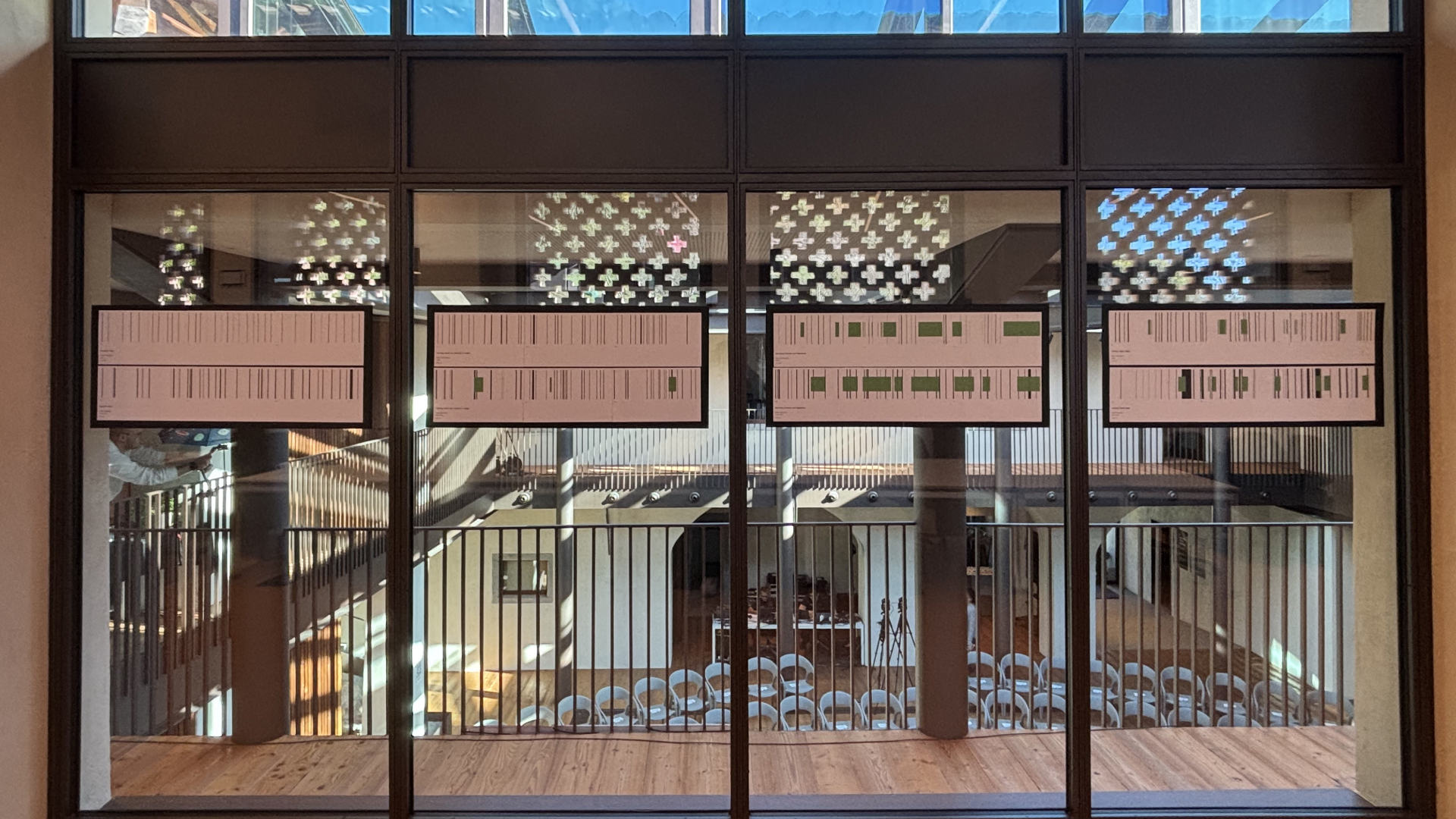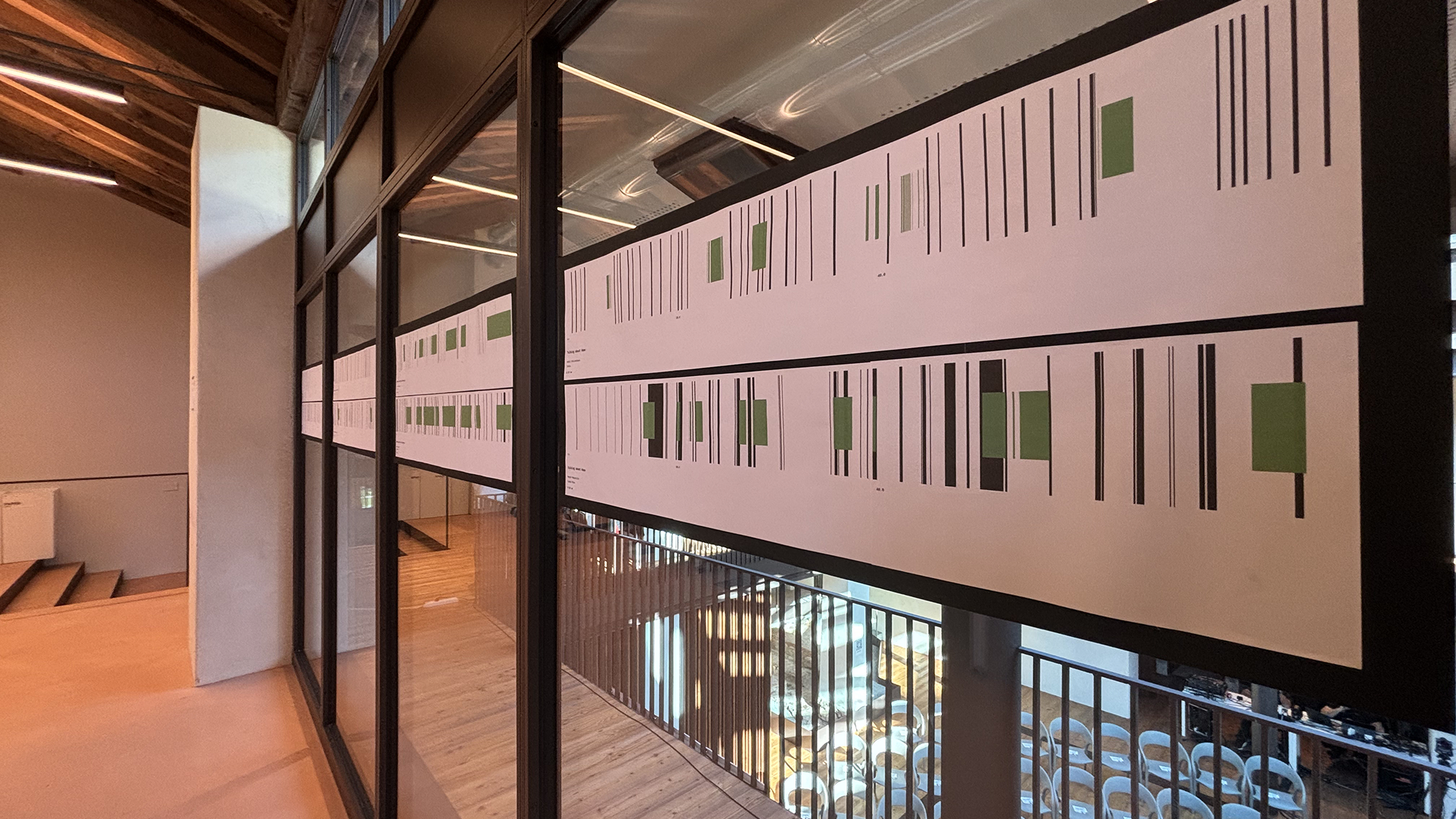
Dumb/Happy Data is a project developed as part of an Intro to Programming course, using code to explore data that is usually seen as trivial or meaningless. Instead of tracking productivity or efficiency, the project focuses on blinks and smiles—bodily actions that sit between conscious control and automatic behavior.
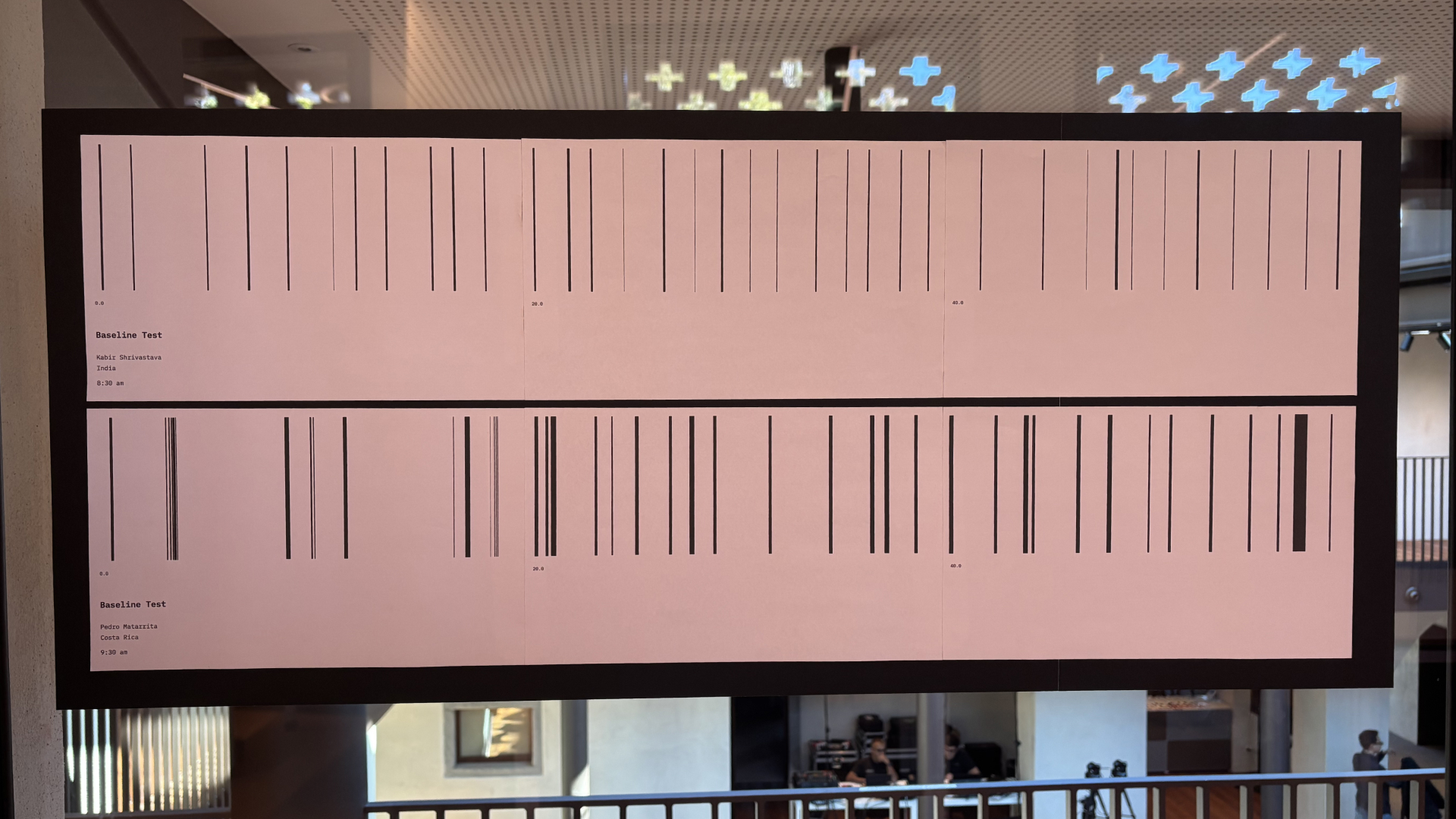
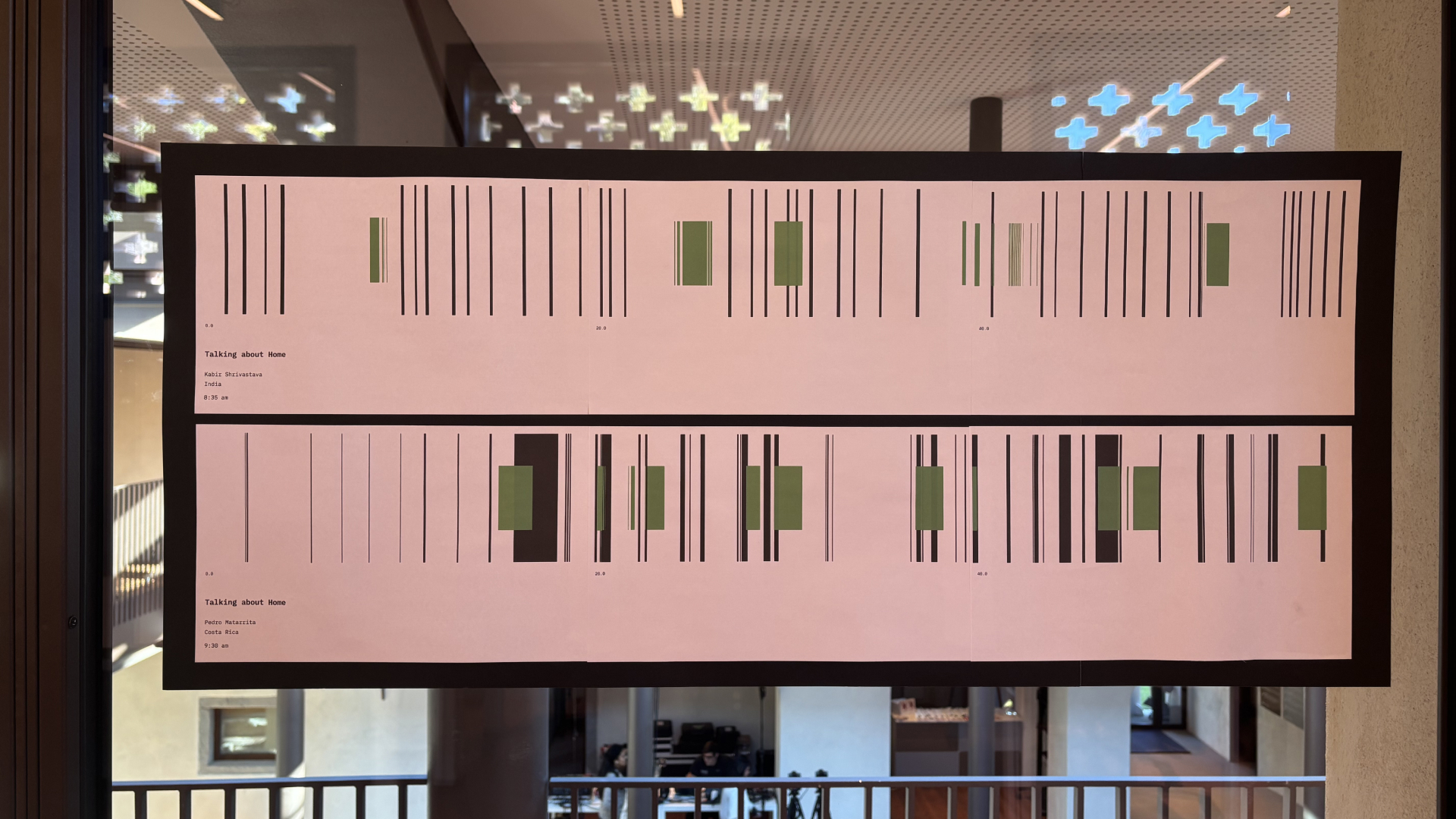
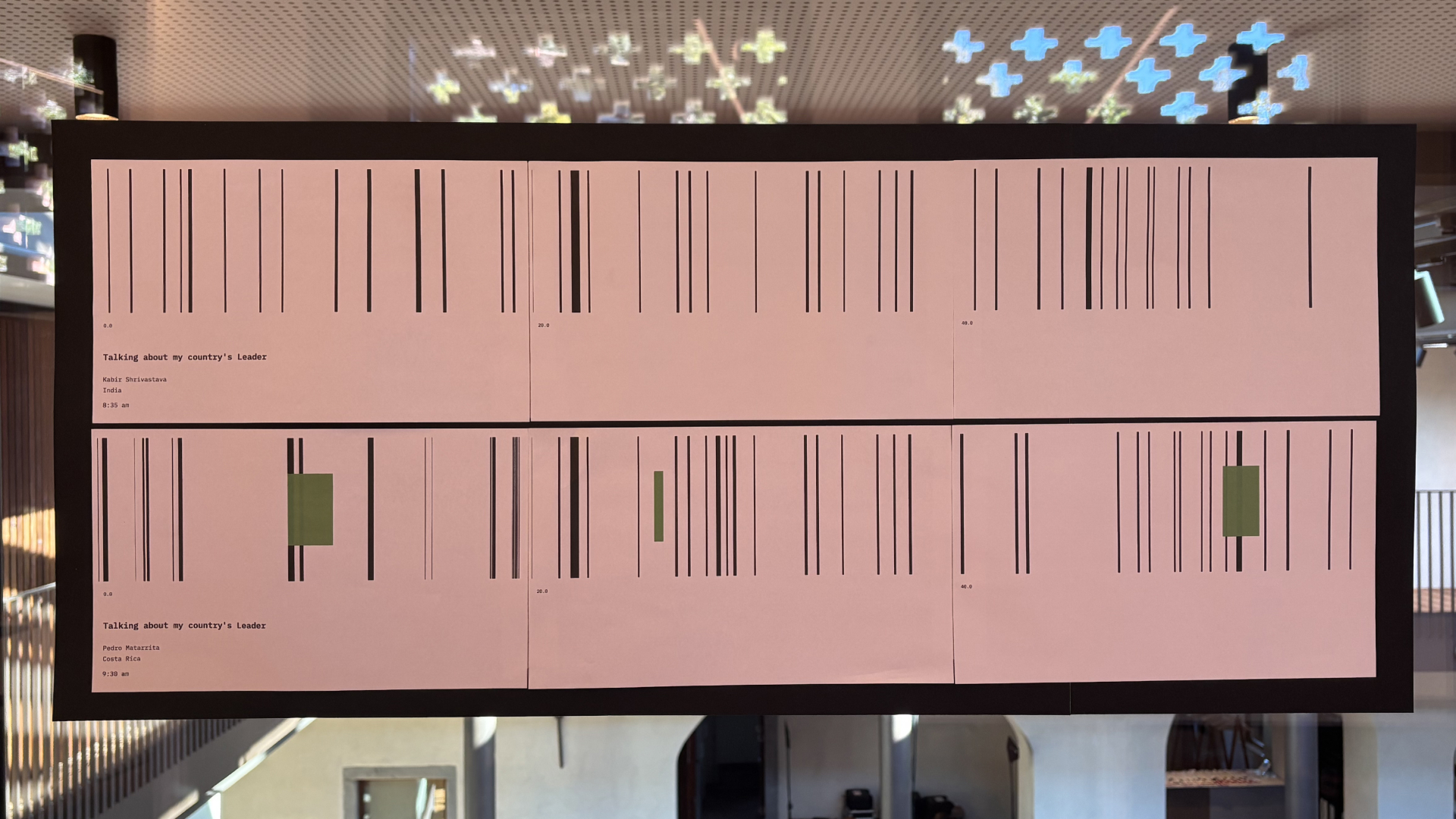
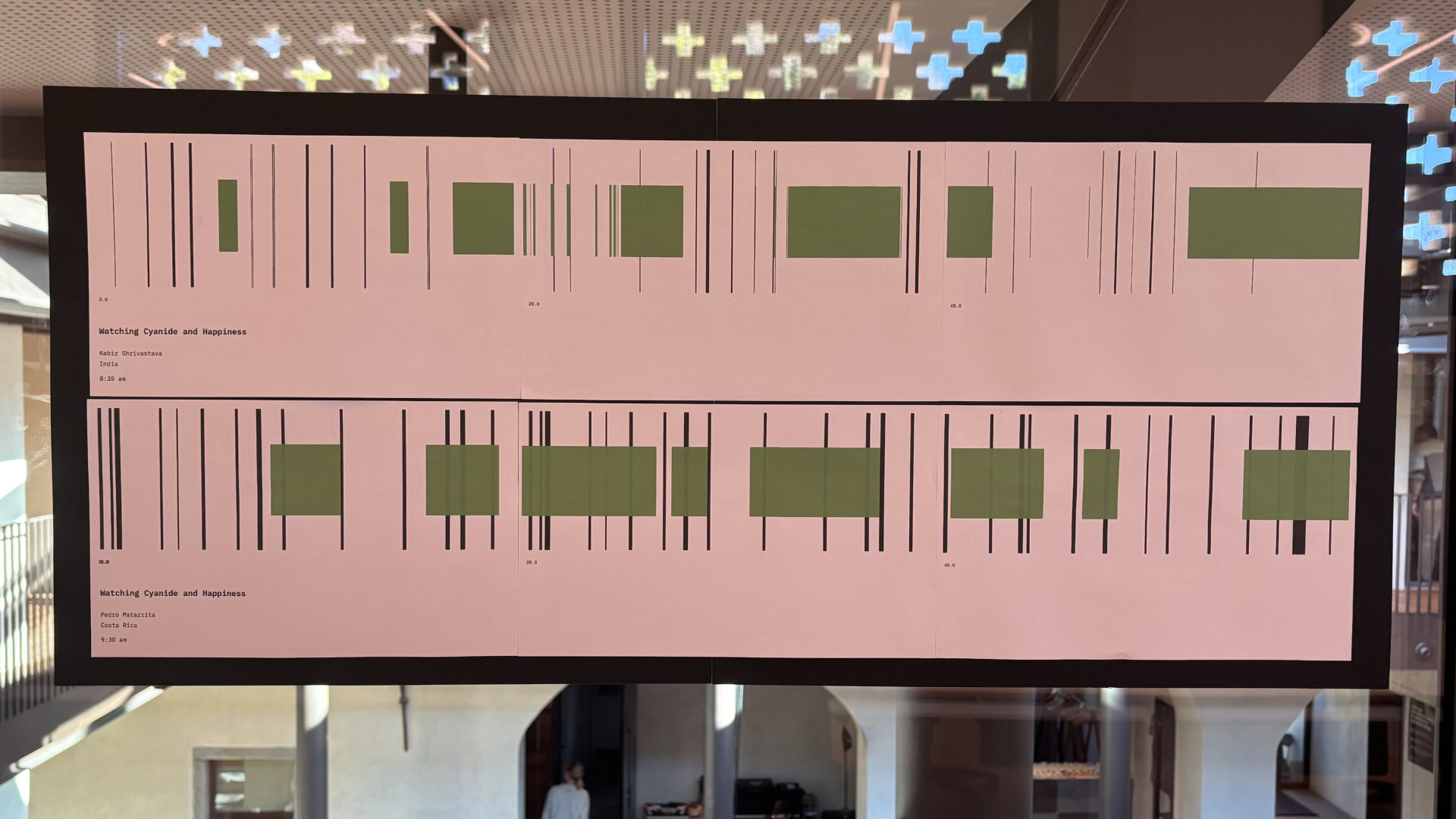
Using Face OSC, facial data was captured in real time and processed through custom code to generate simple visual outputs. Blinks were represented as black lines, while smiles appeared as green blocks, creating clear timelines of facial activity. Baseline tests revealed strong differences between individuals. When two participants were compared, their blink patterns formed distinct, barcode-like visuals, suggesting a kind of personal blink signature.
Emotional prompts were then introduced to see how these patterns shifted. Talking about political leaders, home, or watching comedy altered the density and rhythm of the data, yet each person’s visual identity remained recognizable.
The project is aimed at people interested in programming, human-computer interaction, and alternative data visualization. The research began with questioning what counts as “useful” data and how programming can surface meaning in overlooked signals. The main value lies in showing how small, everyday movements can become expressive when translated through code. Key learnings included writing code from scratch, integrating Face OSC, and designing graphics that respond directly to live facial data.