.jpg)
This project is a pinball game prototype that explores the use of computing to create a playful, interactive experience. Inspired by classic arcade and ping-pong games from childhood, it reinterprets familiar mechanics through physical computing and hands-on interaction.
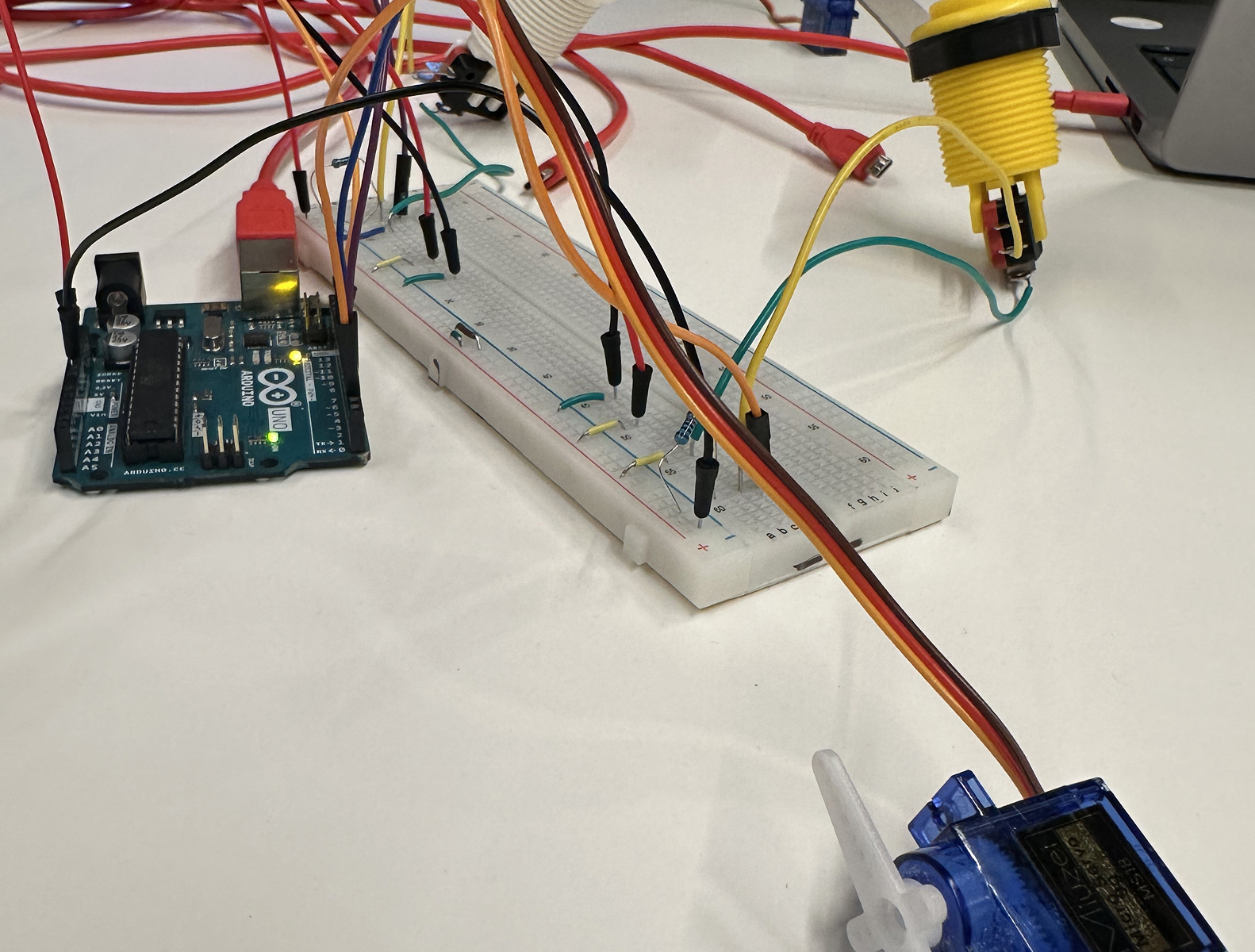
The game was built using the Arduino IDE environment, an Arduino R4 WiFi microprocessor, and servomotors. Four handles function as outputs and are activated through button presses. Each button triggers a servomotor that moves a blade to strike the ball, allowing it to travel across the platform. A key challenge during prototyping was designing the physical surface so the ball could move smoothly and predictably. Through frequent iteration, the team introduced a curved base and adjusted the speed of the servomotor blades, eventually achieving a consistent and engaging ball flow.
The project is designed for learners, students, and anyone interested in playful installations, arcade-style games, and physical computing. It is particularly suited to educational and exploratory contexts where interaction and play support learning.
Research into nostalgic arcade experiences revealed how simple mechanics and responsive feedback can create engaging interactions. This understanding, combined with a desire to explore computing beyond screen-based applications, led to the concept of a physical pinball game as a tool for experimentation and learning.
The value of the project lies in demonstrating how code, electronics, and physical form can work together to create joyful experiences. It highlights play as a meaningful approach to learning and making. Key learnings included understanding the close relationship between code and physical behavior, the importance of rapid iteration, and the role of experimentation in shaping engaging interactions.
.jpg)