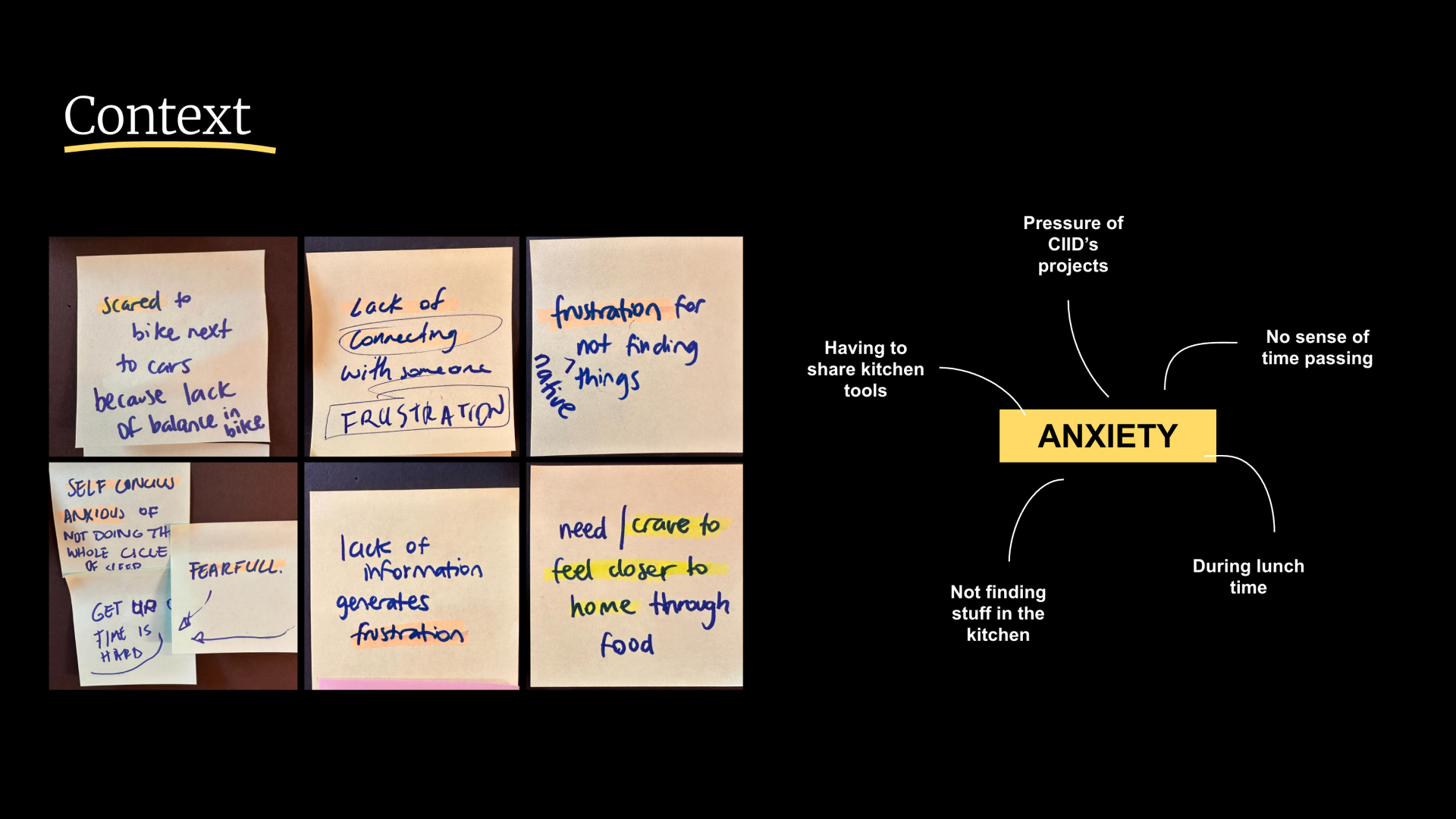
The team explored anxiety as a shared, everyday emotion within the CIID cohort. They observed how it manifests across different contexts: the pressure of starting new projects, the sensation of time passing too quickly, or even during lunch time when sharing the kitchen and rushing back to class can turn a break into another source of stress.
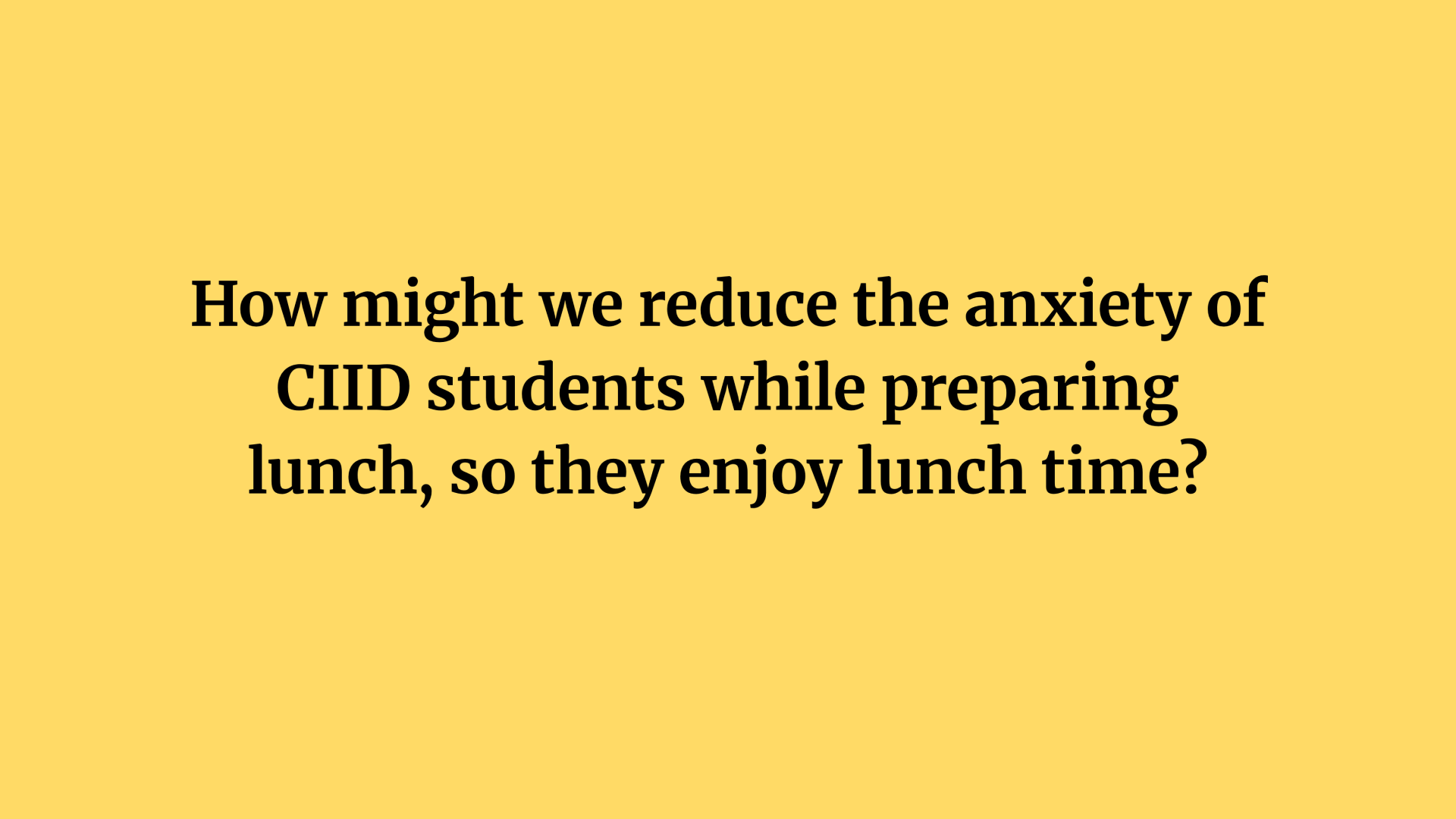
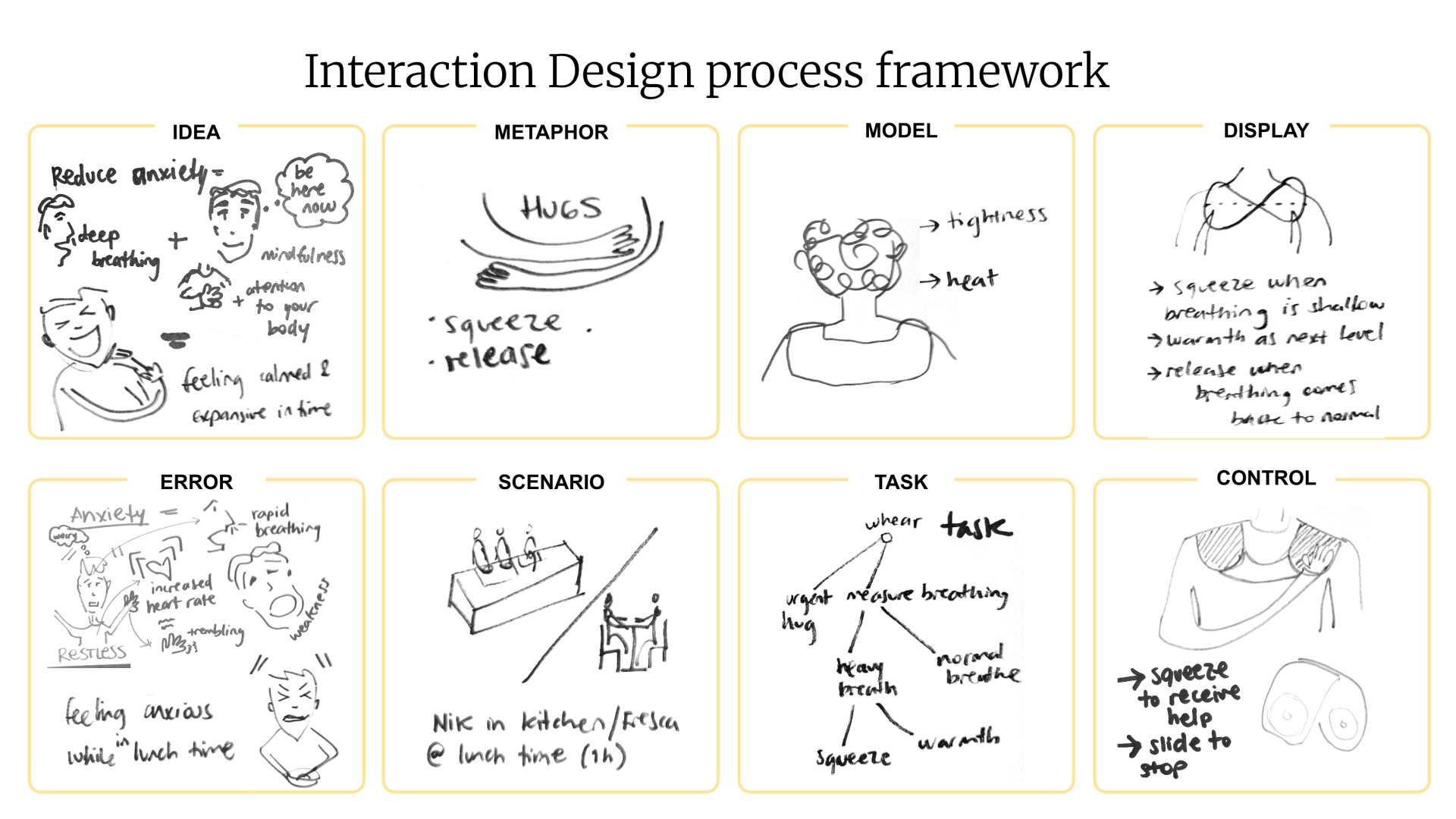
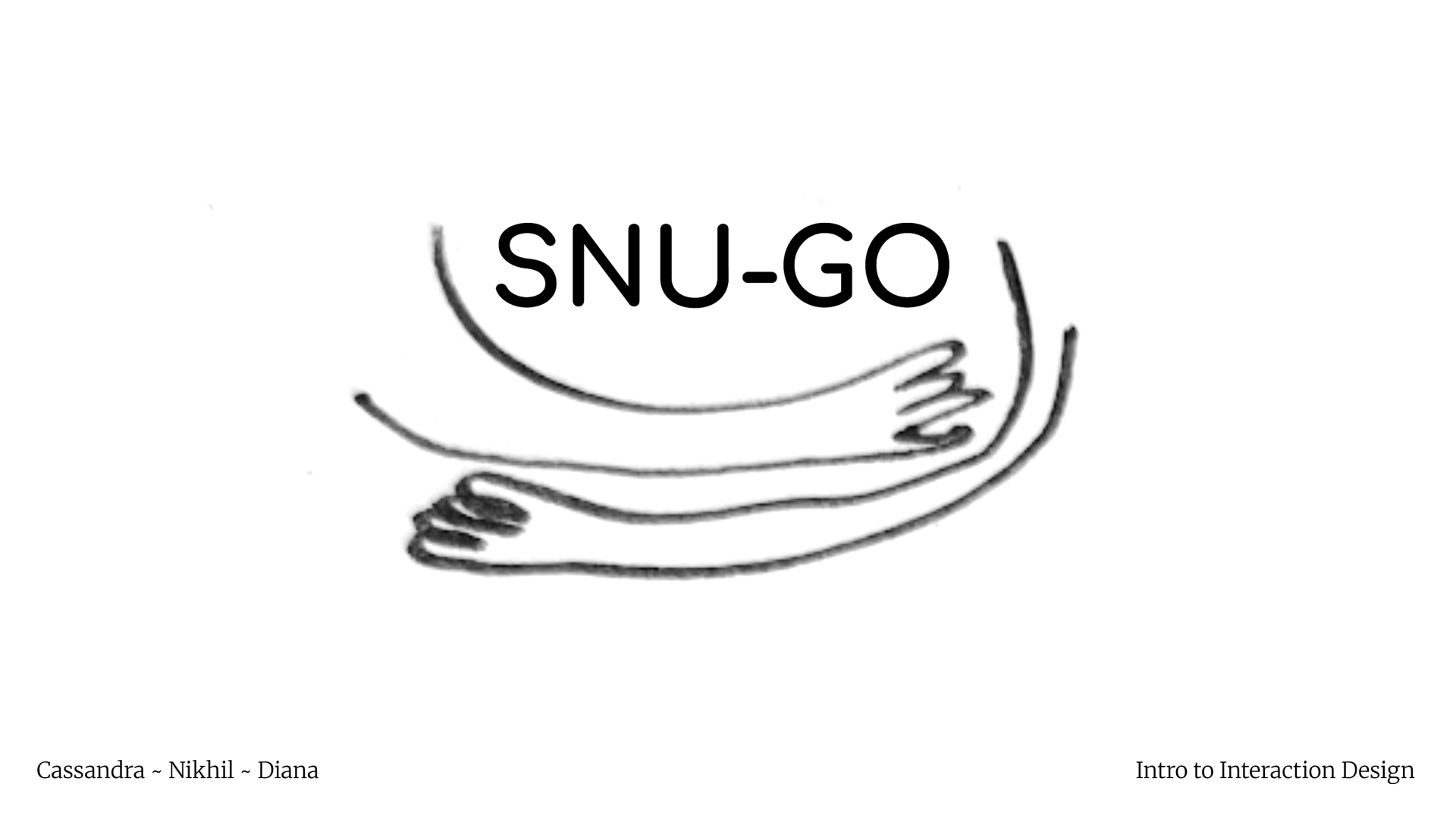
A guiding question emerged: How might we reduce the anxiety of CIID students while preparing lunch, so they enjoy lunch time? Using the metaphor of a hug as a simple yet powerful anxiety reliever, the team developed Snu-Go.
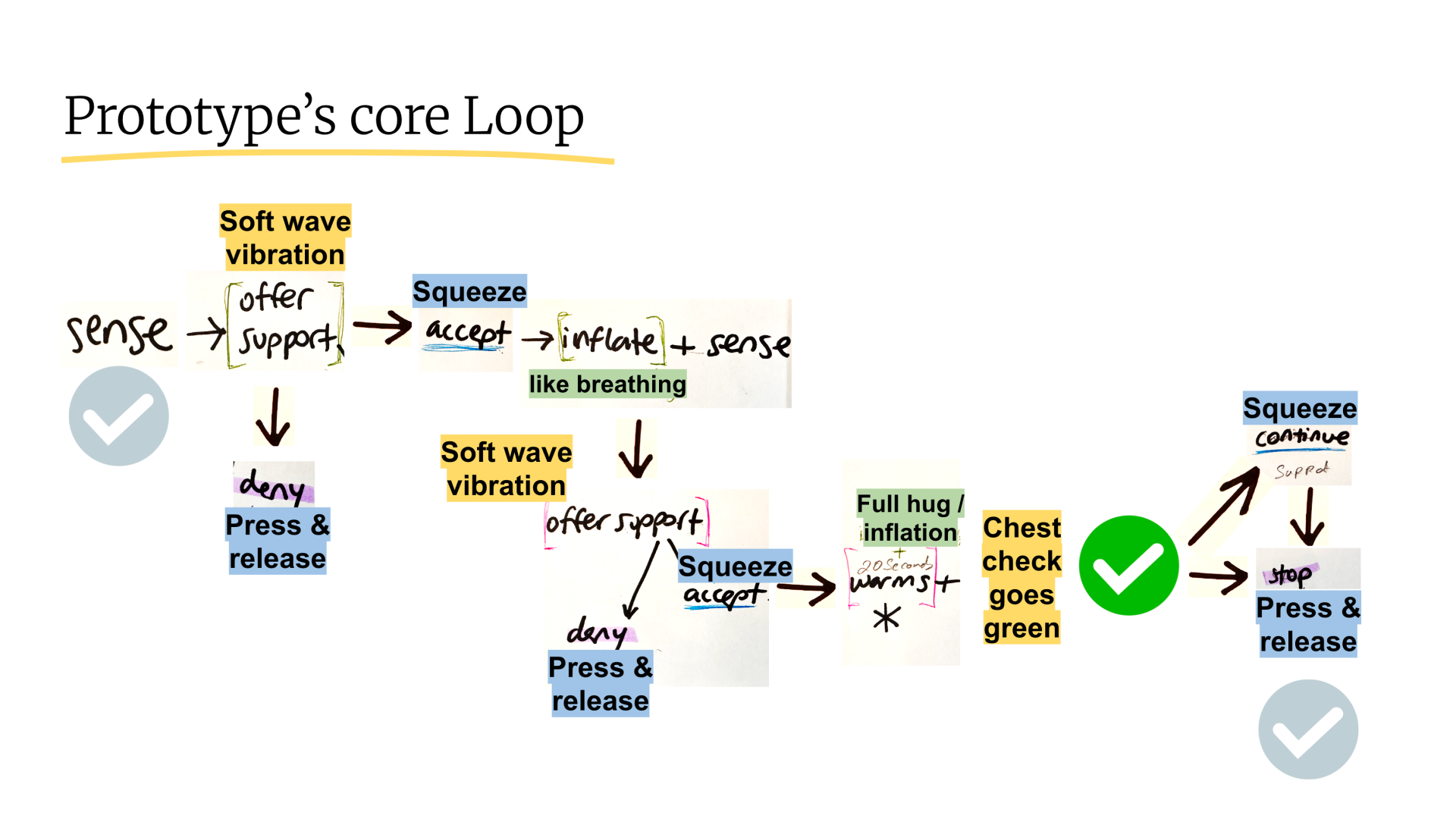
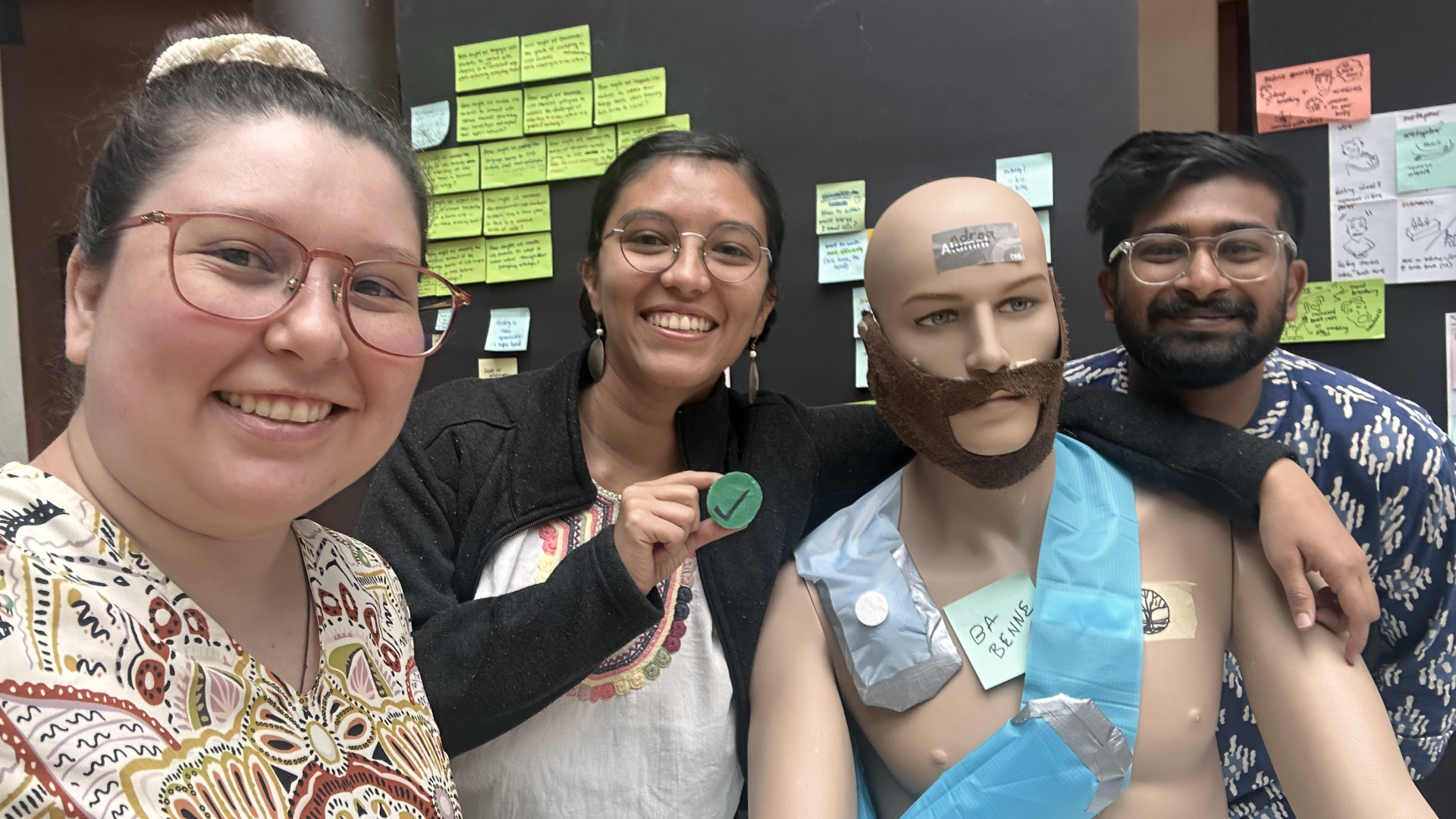
Snu-Go is a wearable support device designed to intervene when the body expresses anxious states, even before the user consciously recognizes them. Its value lies in gently inviting the user to pause, breathe, and reconnect with their body.
How it works:
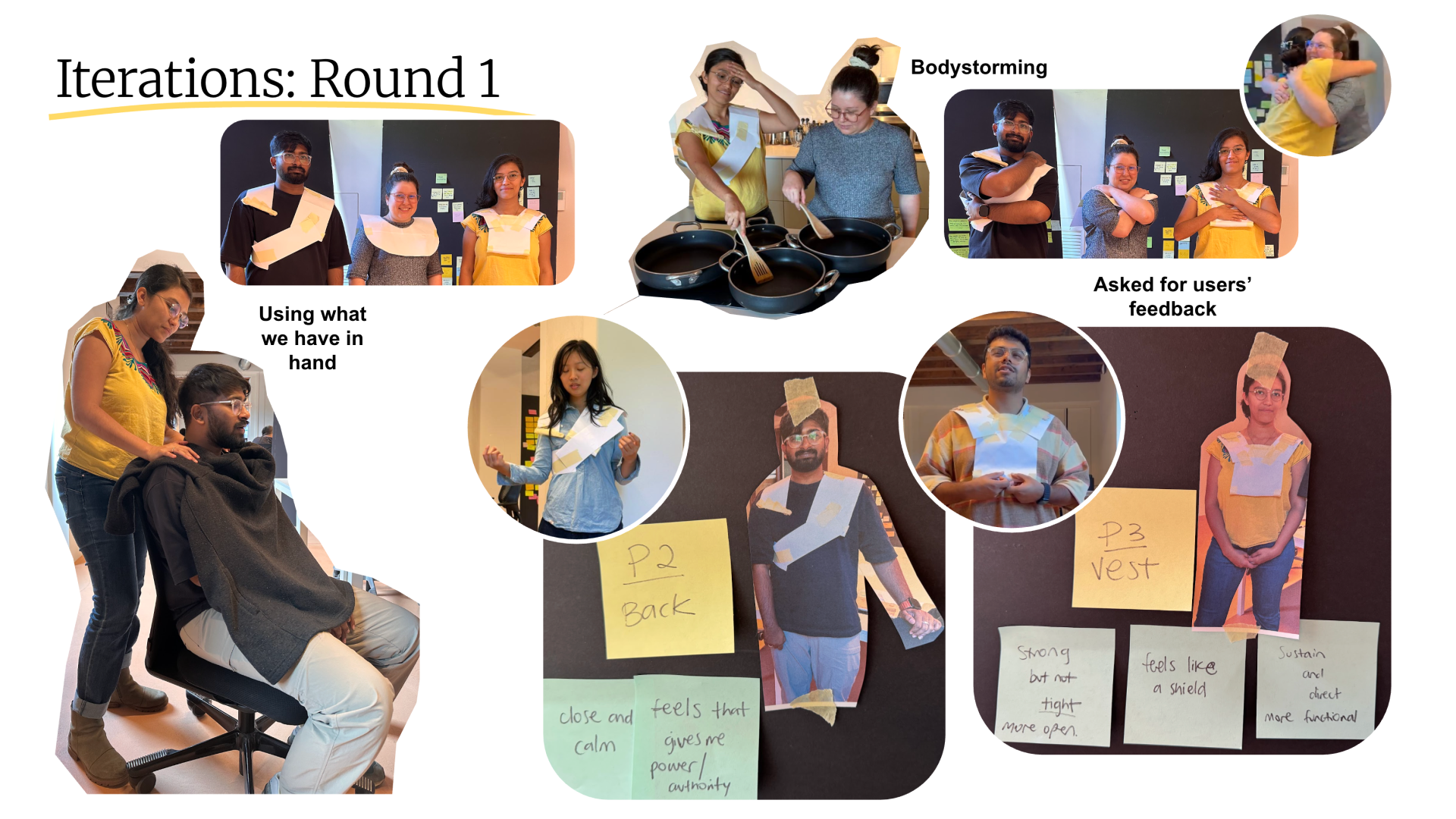
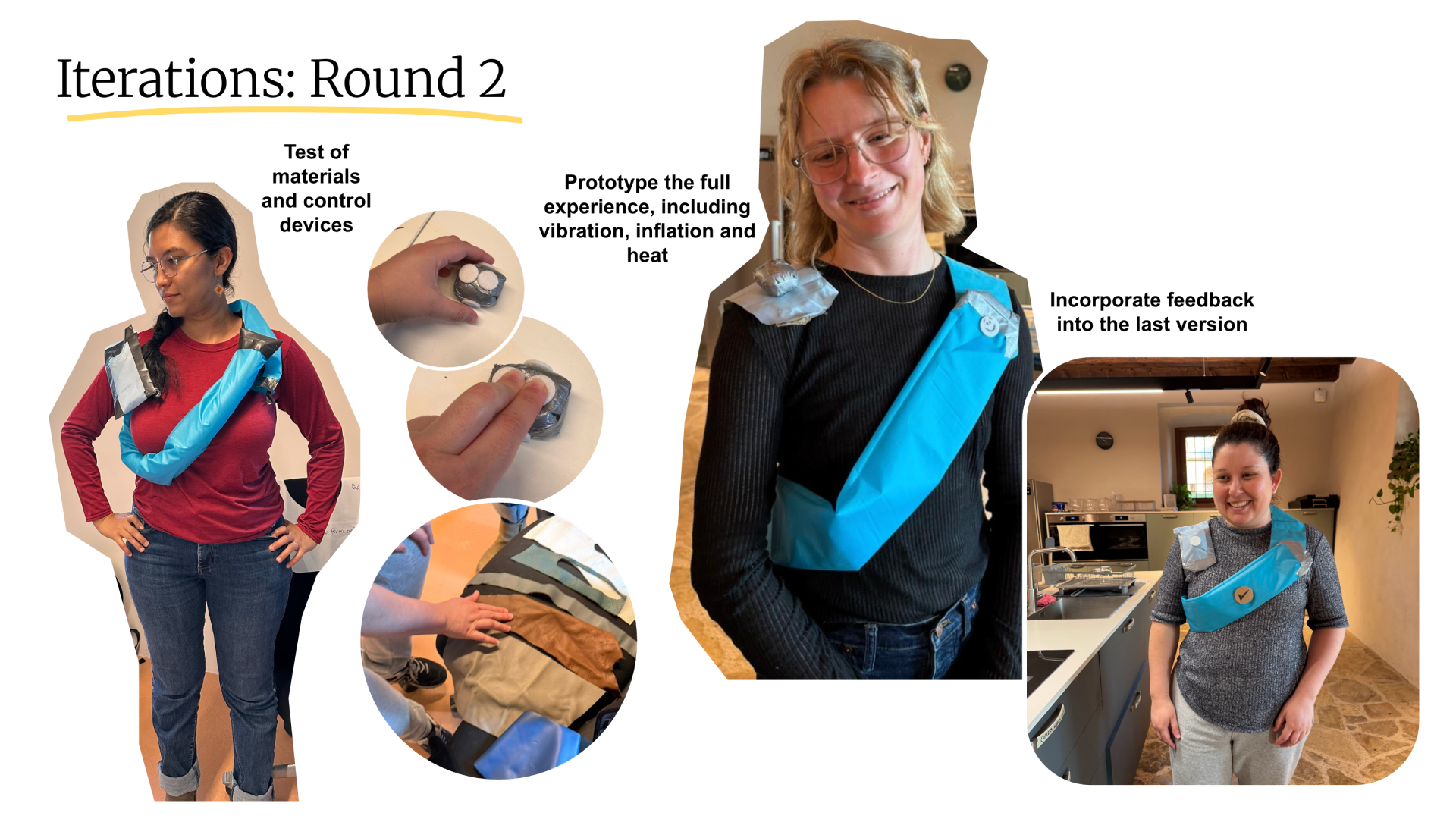
Guided by iterative prototyping and Bill Verplank’s 8-box model, two key iterations were developed. The first iteration used bodystorming with available materials to explore the experience and gather user feedback. The second iteration focused on material testing and control mechanisms, prototyping the full interaction (including vibration, inflation, and heat) while incorporating insights from user testing.
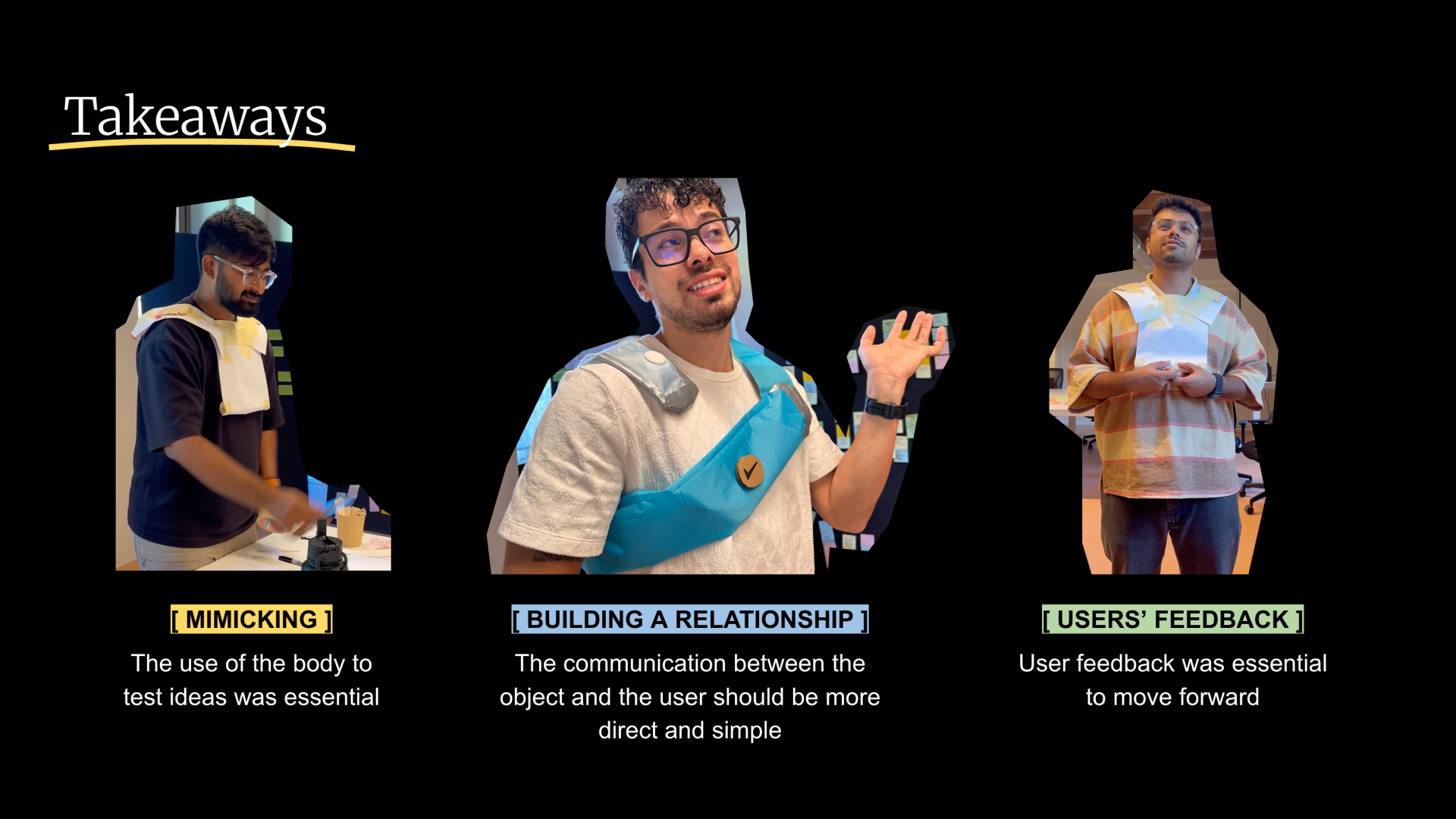
Three key takeaways from the process were identified: the importance of using the body as a design tool, the need for direct and simple communication between object and user, and the central role of user feedback in driving design decisions forward.