SpeakAR is a concept born from questioning the division between the physical and digital worlds. At times, it can feel as though human life is becoming entirely digitalized. With the rise of the internet and, more recently, AI-driven technologies, digital systems increasingly permeate everyday experiences, creating the impression that everything exists online. However, during the development of this project, the team reflected on what truly belongs to the digital realm versus the physical one. Two key insights emerged: first, that most human experiences still occur outside the digital world; and second, that there is a vast range of human behavior, learning, and personal growth that technology does not yet fully capture or understand.
From this perspective, SpeakAR emerged as a response to the modern and increasingly important concept of lifelong learning. As technology evolves at a rapid pace, individuals are required to continuously learn and adapt to new environments, tools, and models. Consequently, learning today differs significantly from traditional education systems. The acquisition of new skills has become embedded in daily life, raising an important question: how can everyday learning activities be documented, recognized, and rewarded as meaningful skills that support career development or personal projects?
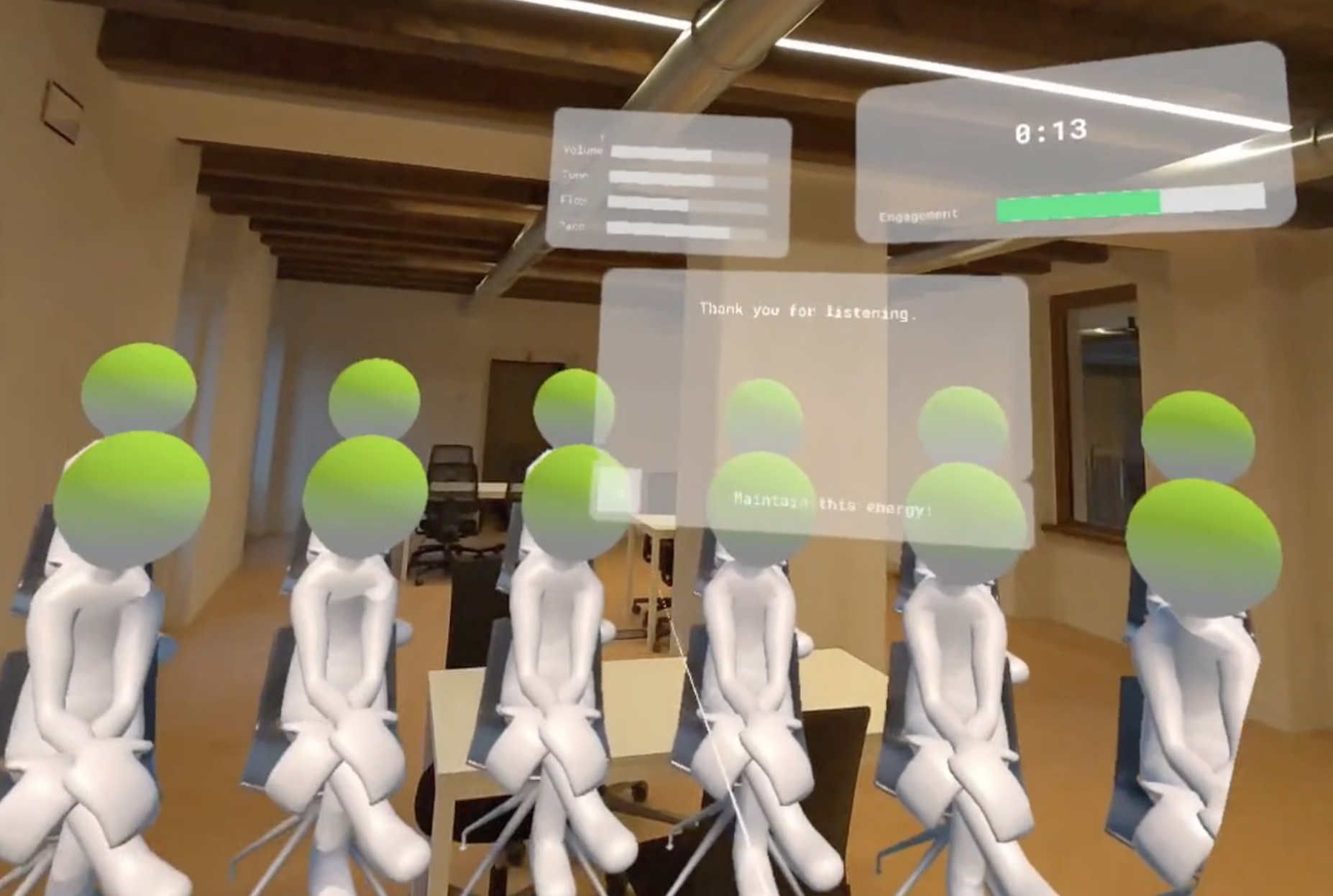
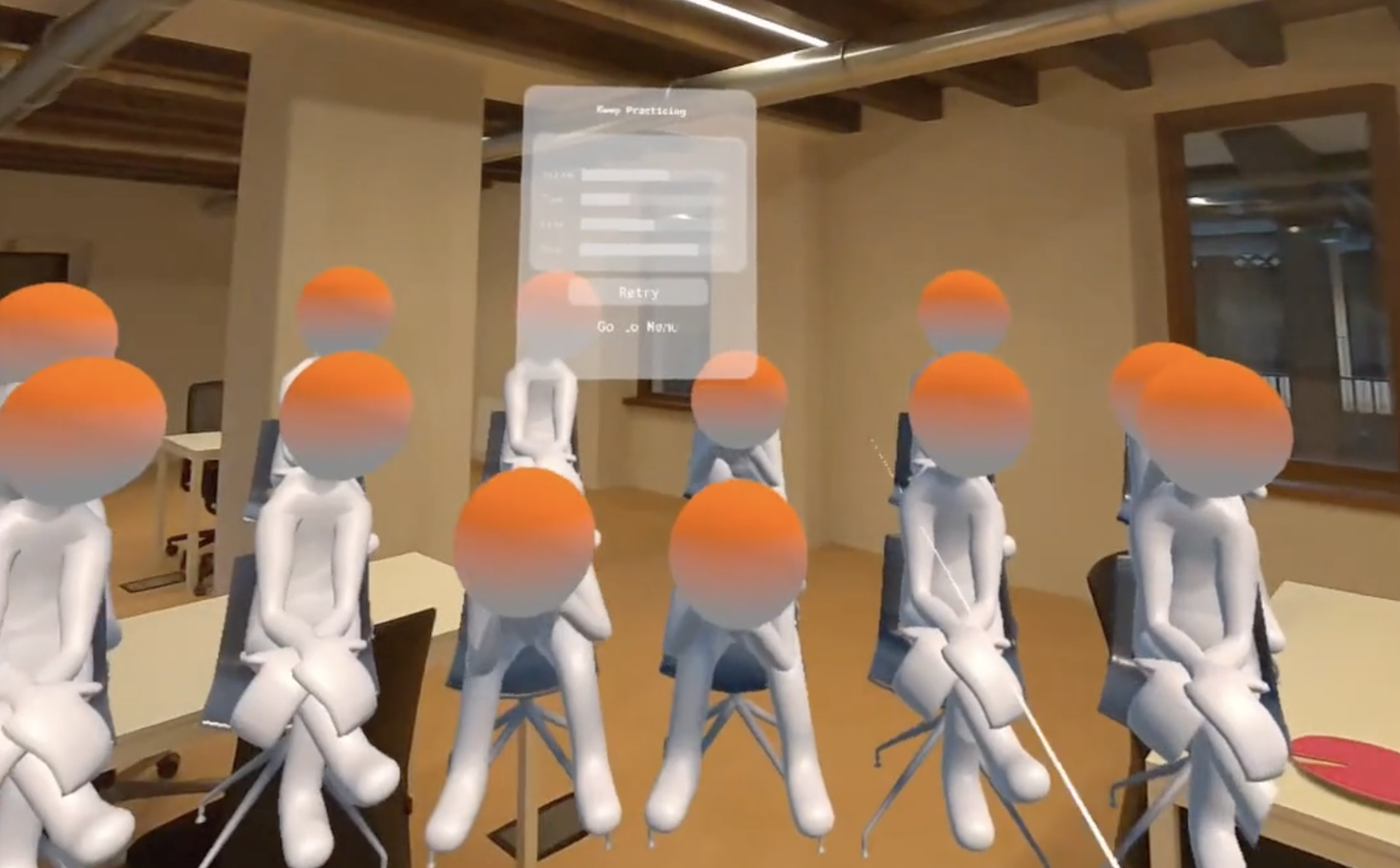
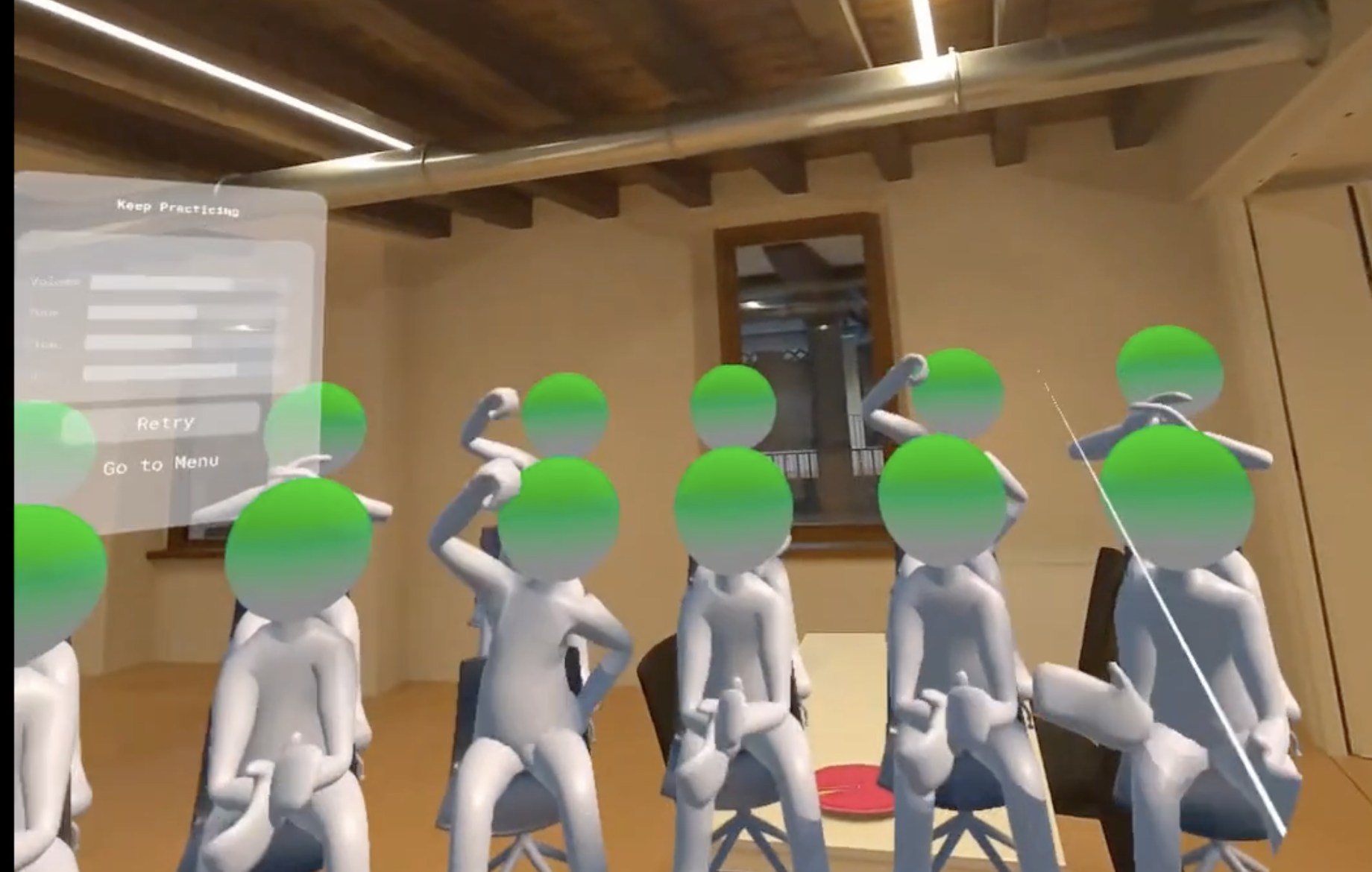
The team chose to focus on one critical and widely applicable skill: public speaking. By leveraging emerging technologies such as virtual and mixed reality, SpeakAR creates a training environment that enables users to practice public speaking and improve their performance. The experience helps users transition from a digital training environment to real-life situations by using technology as a supportive tool rather than a replacement for real-world interaction. At the same time, SpeakAR rewards consistent practice, transforming learning efforts into tangible benefits for the user.
The prototype was developed using Meta Quest and Unity. Within the training environment, users receive feedback on elements such as voice tone and speaking pace. As the technology evolves, additional forms of feedback—such as posture and body movement analysis—can be incorporated in future versions of the prototype.