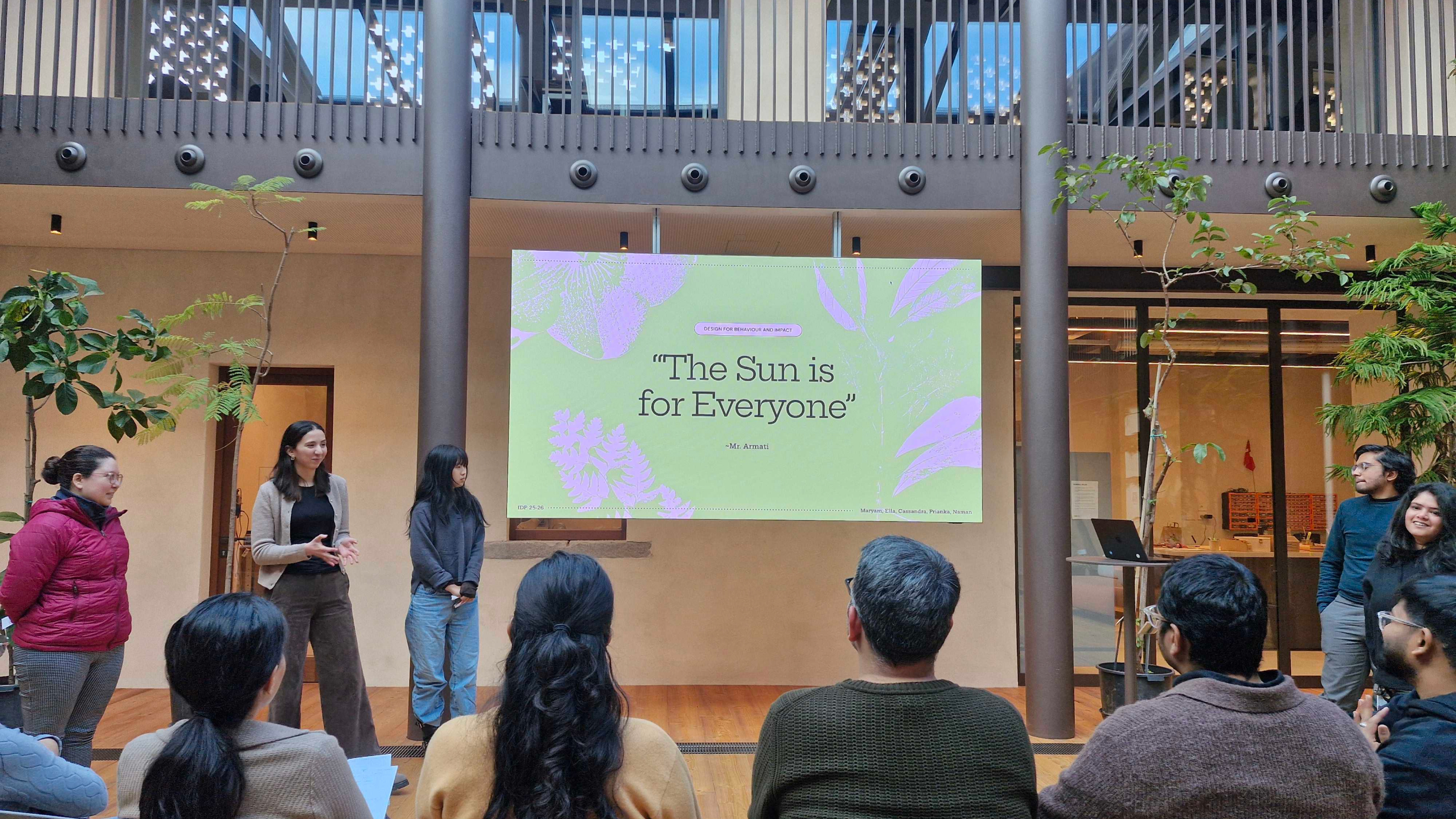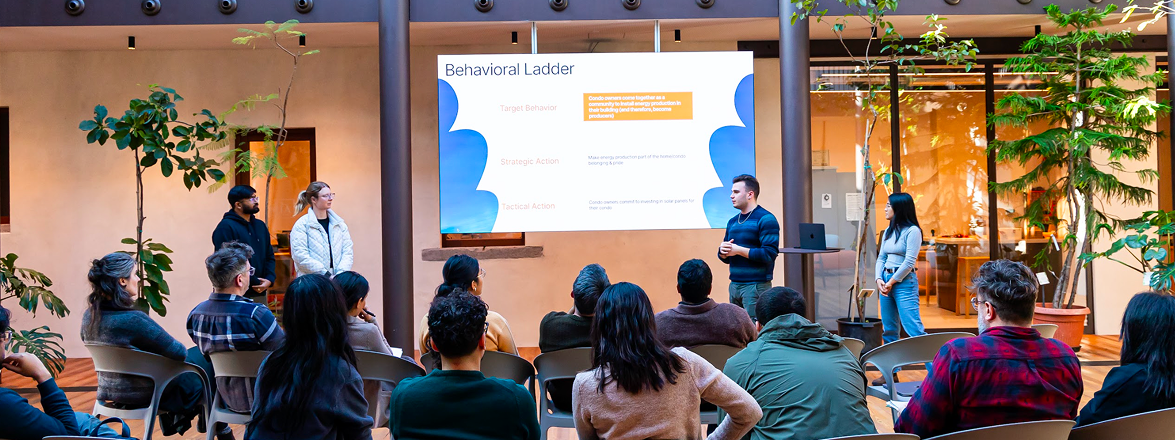
Design for Behaviour and Impact bridges the gap between behavioural science and design, equipping students with the tools to create meaningful experiences. It explored how people think, make decisions, and act in different contexts, uncovering motivations behind behaviour to design environments that foster positive change.
The course introduced key frameworks from behavioural science and behaviour change, laying the foundation for purposeful design. Students then applied these principles to a real-world challenge. This year focused on alternative energy communities. Where they implemented a strategic behavioural design process in a practical context. Students also learned how to navigate wicked problems and the various frameworks needed to support ground-up, systemic change at the community level.
By the end, students gained an understanding of how behavioural insights shape design and how to apply these principles to influence and drive desired behaviours effectively.



Matt has been designing digital products and services since 1995, working across startups, research labs, and scaling companies at the intersection of technology, design, and futures.
He is currently Head of Brand & Design at ICEYE, the Finnish space intelligence company that operates the world’s largest constellation of synthetic aperture radar (SAR) satellites — technology capable of seeing through cloud and darkness to enable persistent, high-resolution monitoring of a changing planet.
Prior to ICEYE, he served as Head of Design for AI at Miro, and before that as Head of Design at Lunar Energy, where he worked on products aimed at making clean home electrification simple and elegant.
He spent just under a decade at Google as a Principal Designer — initially at the Creative Lab in New York, working on projects spanning clean energy, AR/VR, and urban computing, followed by six years at Google Research exploring how AI could shape future hardware and software experiences, well before it became a defining topic within the industry.
From 2009 to 2013, he was a founding principal at BERG, the London-based design and invention company whose work on connected objects, physical computing, and speculative futures influenced a generation of designers and technologists. Projects from BERG were exhibited at MoMA and featured in publications including Wired, Fast Company, the Financial Times, and even Marvel Comics.
Earlier in his career, he was Creative Director for the launch of BBC News Online, and co-founded Dopplr, a social travel platform acquired by Nokia in 2009.
He has taught design at the RCA, Goldsmiths, SVA (New York), AHO (Oslo), and CIID (Copenhagen). He originally studied Architecture. He has also been writing about interaction design, technology, and futures at http://petafloptimism.com since 2000.
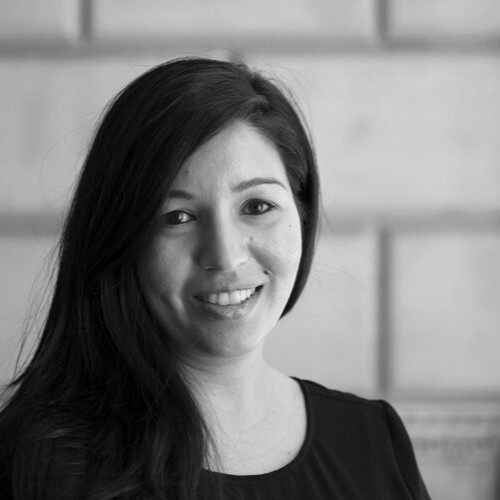
As a Partner at ReD Associates, Millie leads the firm’s practice across financial services, insurance, and healthcare in the United States.
She specialises in applying a social science perspective to complex regulatory and B2B contexts. Within healthcare, she has supported life sciences companies in developing patient-centred agendas, including value propositions and patient support programmes. In financial services and insurance, she has guided clients towards a deeper understanding of people’s complex relationships with money, informing more effective ways to engage with consumers — both digitally and in person.
She has also held the roles of Managing Partner and Chief Operating Officer at ReD Associates, where she was responsible for shaping the company’s overall strategic direction and driving its growth.
Prior to joining ReD, she worked as a strategy consultant at the New York Economic Development Corporation under the Bloomberg Administration, where she developed a portfolio of initiatives aimed at strengthening the resilience of New York City’s economy in the aftermath of the 2008 financial crisis.