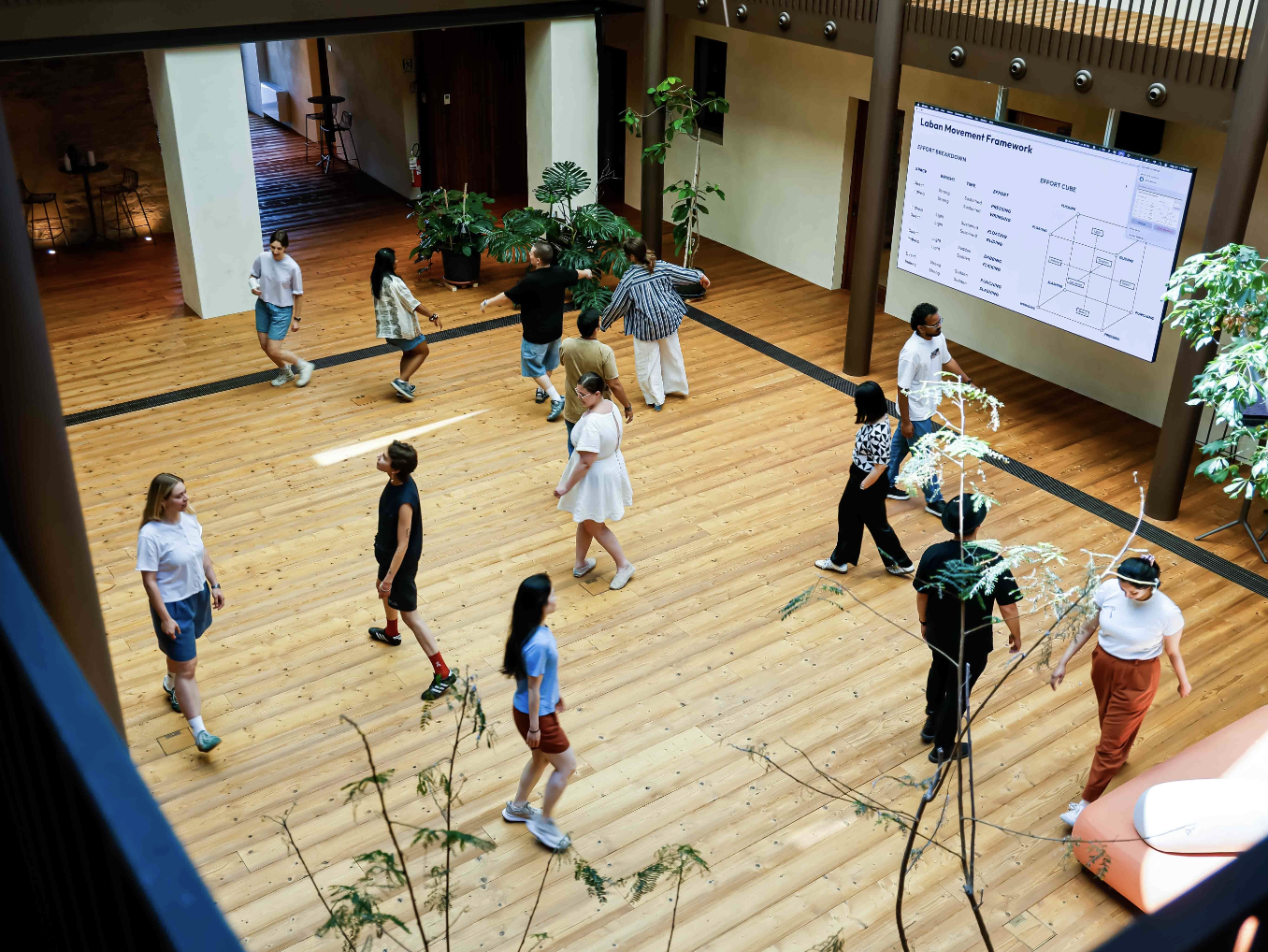
Introduction to Interaction Design provides foundational knowledge across the history, theory, aesthetics and practice of interaction design. For five days, students explore the discipline through lectures, films, discussion and hands-on studio practice, establishing a common language and set of concepts that will support their work throughout the programme and beyond.
It introduces key foundations of interaction design alongside contemporary topics and debates, encouraging students to consider how interactions are shaped across both digital and physical spaces. Students explore the materiality of interactions and learn to think of interaction itself as a design material, using artefacts, environments and experiences as ways to investigate and communicate ideas.
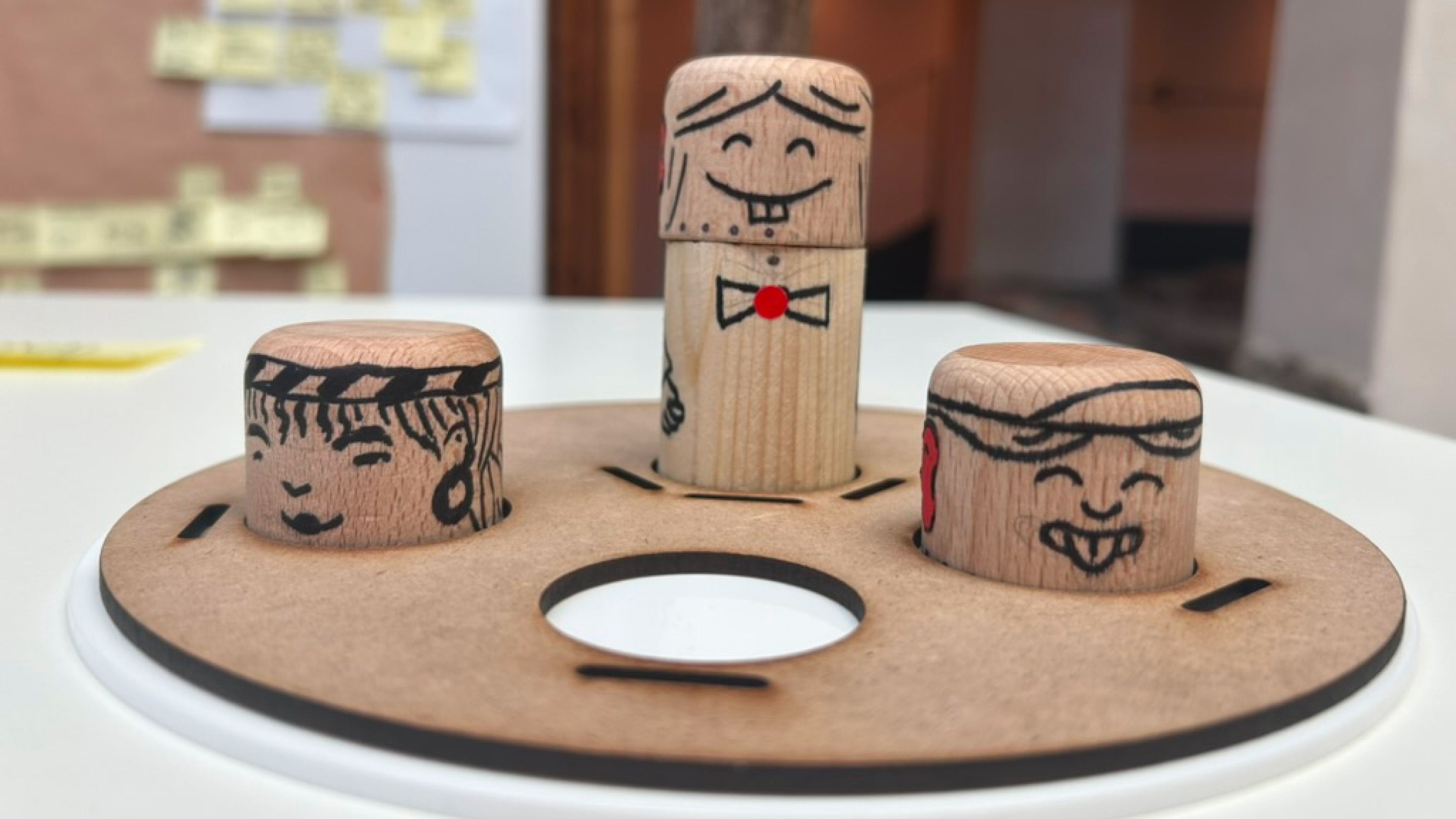
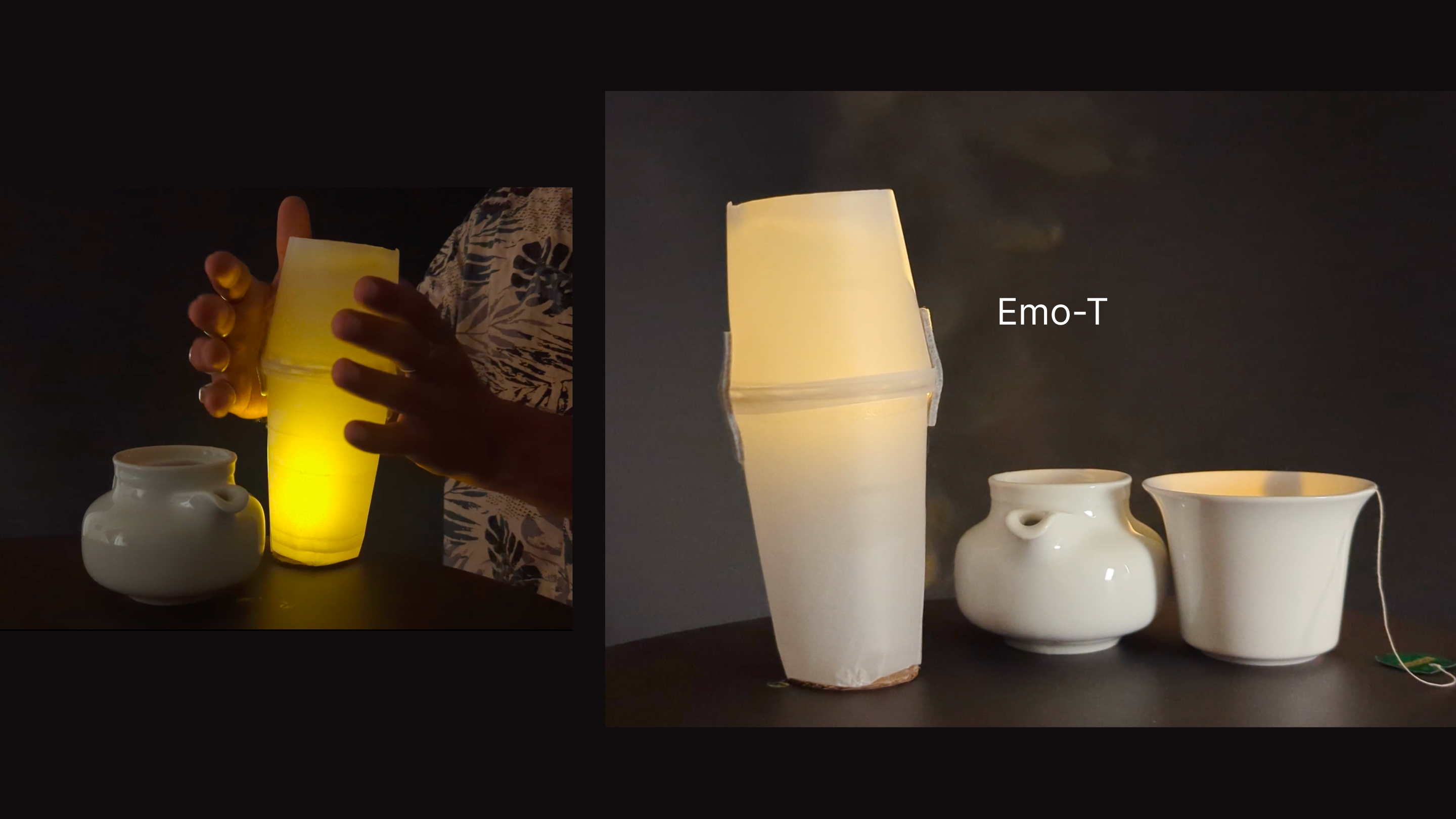
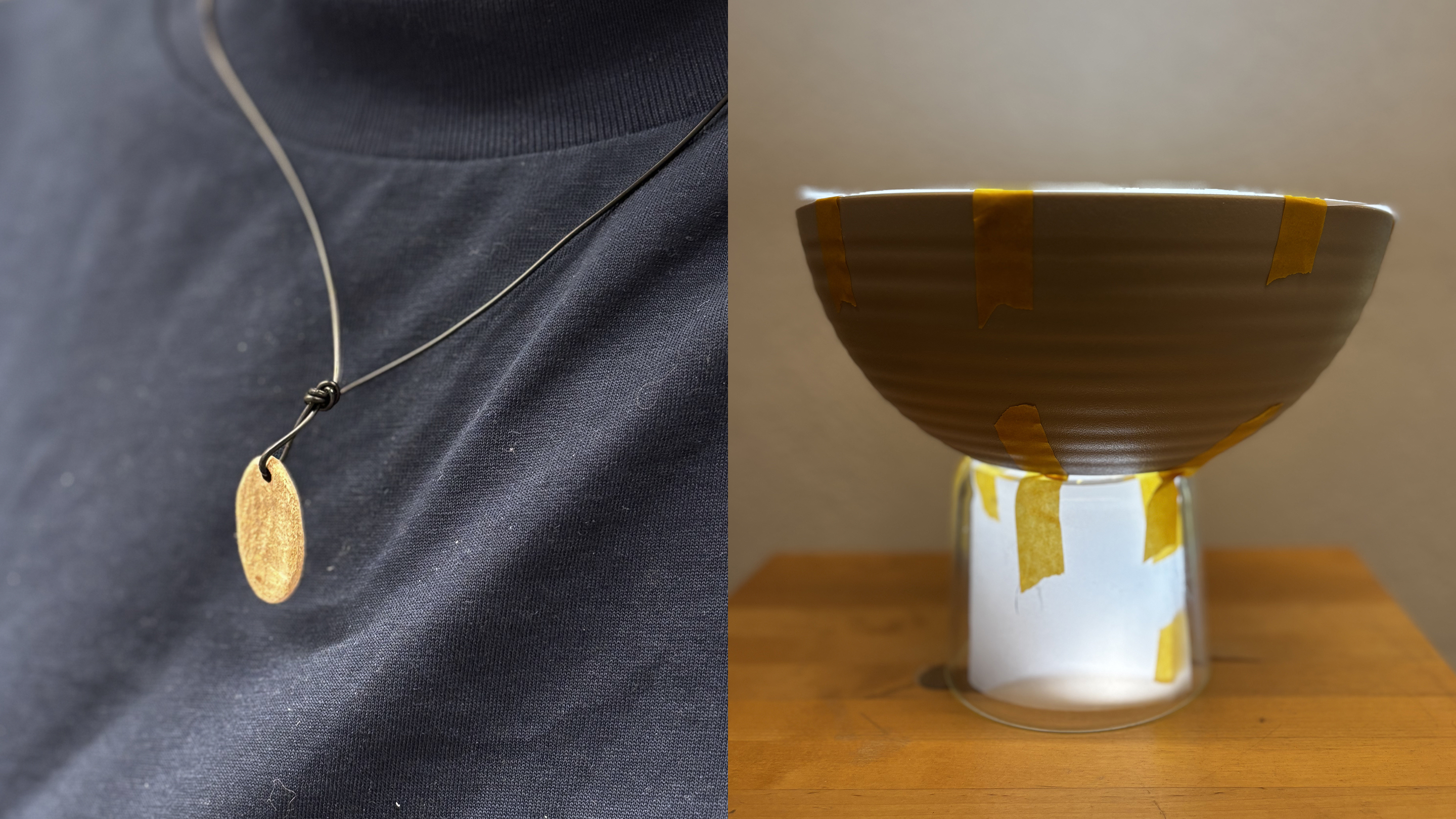
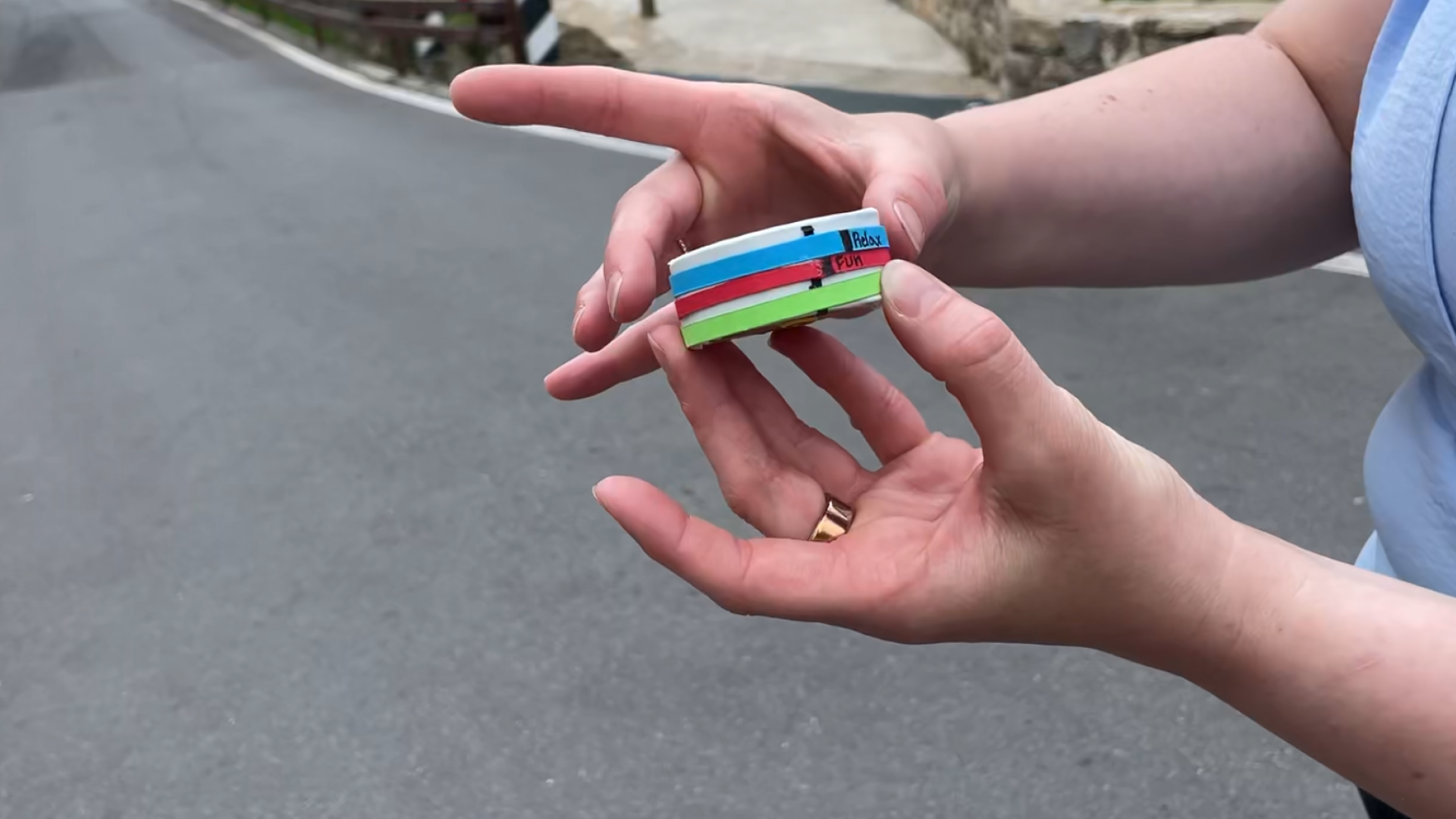
A group project provides the spine of the course, taking students through research and problem framing, structured generative practices, making and design synthesis. Through this process, students experiment with different approaches to visualising concepts, exploring embodiment, developing emotional resonance and using making as a way of thinking and learning.
Students work both individually and in teams, present their ideas, participate in critiques and respond to feedback, developing their ability to communicate and collaborate effectively. They learn to work creatively within constraints while exploring diverse problem spaces and forms of interaction.
By the end, they have developed a stronger understanding of interaction design foundations and contemporary practice, alongside practical experience in creativity, design synthesis, critique, teamwork and presentation. Most importantly, they begin to develop an awareness of how thoughtful, emotionally resonant interactions can shape the relationship between people, technology and the world around them.


Erik is an independent designer, researcher, and strategist based in Grand Rapids, MI, USA. His background in anthropology, semiotics and human-computer interaction help him make sense of complex situations and create meaningful interactions and experiences for his clients and their customers.
Erik’s work has covered websites, applications, products, wearables, environments, and services across domains from personal electronics, military, financial, medical, industrial robotics, farming and agriculture, education, and cooking.Erik has particular interest in ethnographic research, information visualization, embodied interactions, emotions, and product strategy.
His clients have ranged from small startups to Fortune 500 companies, including companies like Yaskawa Robotics, Panasonic, General Dynamics, Case New Holland, Select Sires, Target, Extole and Bluebox among others. While Erik was at MAYA Design in Pittsburgh, he helped develop the initial Human Centered Design curriculum that became the core of what is now the Luma Institute.
Erik has spoken and run workshops around the world at Interaction, UX Week, MidwestUX, IA Summit, EuroIA, UX Lisbon, among others, on topics ranging from general theory and practice, ethnography, research, culture, embodied interactions, and Arduino.
In 2010, Erik co-founded the MidwestUX conference, an intimate, regional UX conference creating a space for distributed design practitioners to form connections at a human scale. I
n 2018, he finished serving a 2-year term as President of the Interaction Design Association (IxDA), where he has previously served as a Board Member and Local Leader.

Jose Chavarria is an Interaction Designer and Creative Technologist with a background in Industrial Design Engineering. He's a CIID alumni and has been working in the Interaction Design field since 2015.
Jose started as an Interaction Engineer and later became an R&D Lead at a design studio in San Jose, Costa Rica where he created interactive art installations. He then joined CIID as resident faculty, managing the digital fabrication lab and mentoring students.
After that, he worked as a Creative Technologist and Strategist for an architecture firm, designing AR and VR solutions, digital products, and interactive installations.
Jose's work has been recognised by the Core77 Design Awards in 2021 for Speculative Design and Costa Rica Design Week in 2022 for Interactive Design.
Passionate about human perception and Life-Centred Design, Jose aims to create technology solutions that benefit all forms of life, not just humans.
But in short, he builds stuff and wears hats.