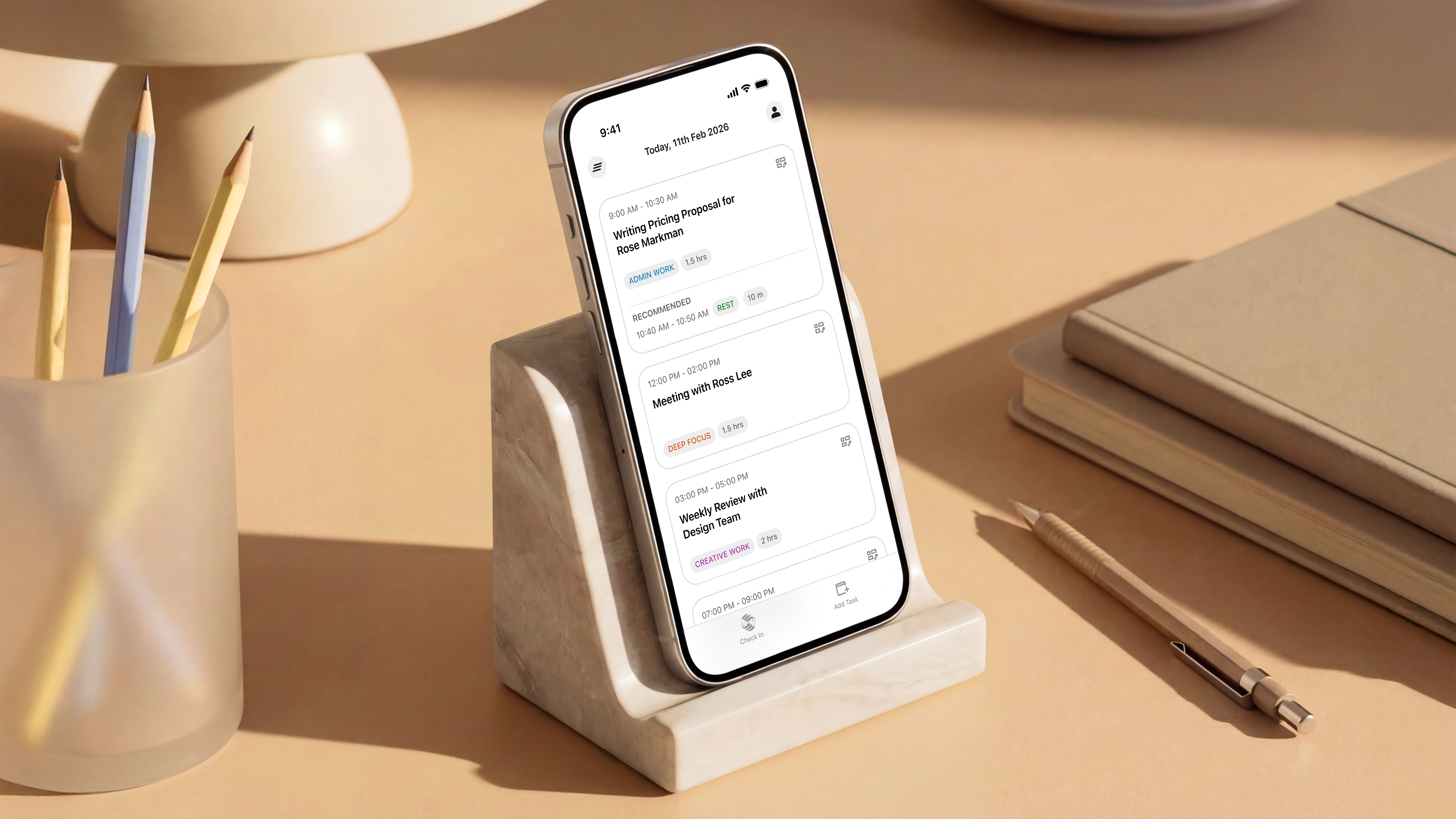
Most calendars are built on a simple but flawed assumption: that every hour of the day is equally usable. Cadence begins from the opposite idea. It recognizes that people move through the day in changing states of focus, motivation, and mental energy. Some moments are naturally better for deep thinking, others for creative exploration, lighter admin, or rest. Instead of treating planning as a problem of time alone, Cadence reframes it as a problem of rhythm, asking what would happen if your calendar responded to how you actually feel.
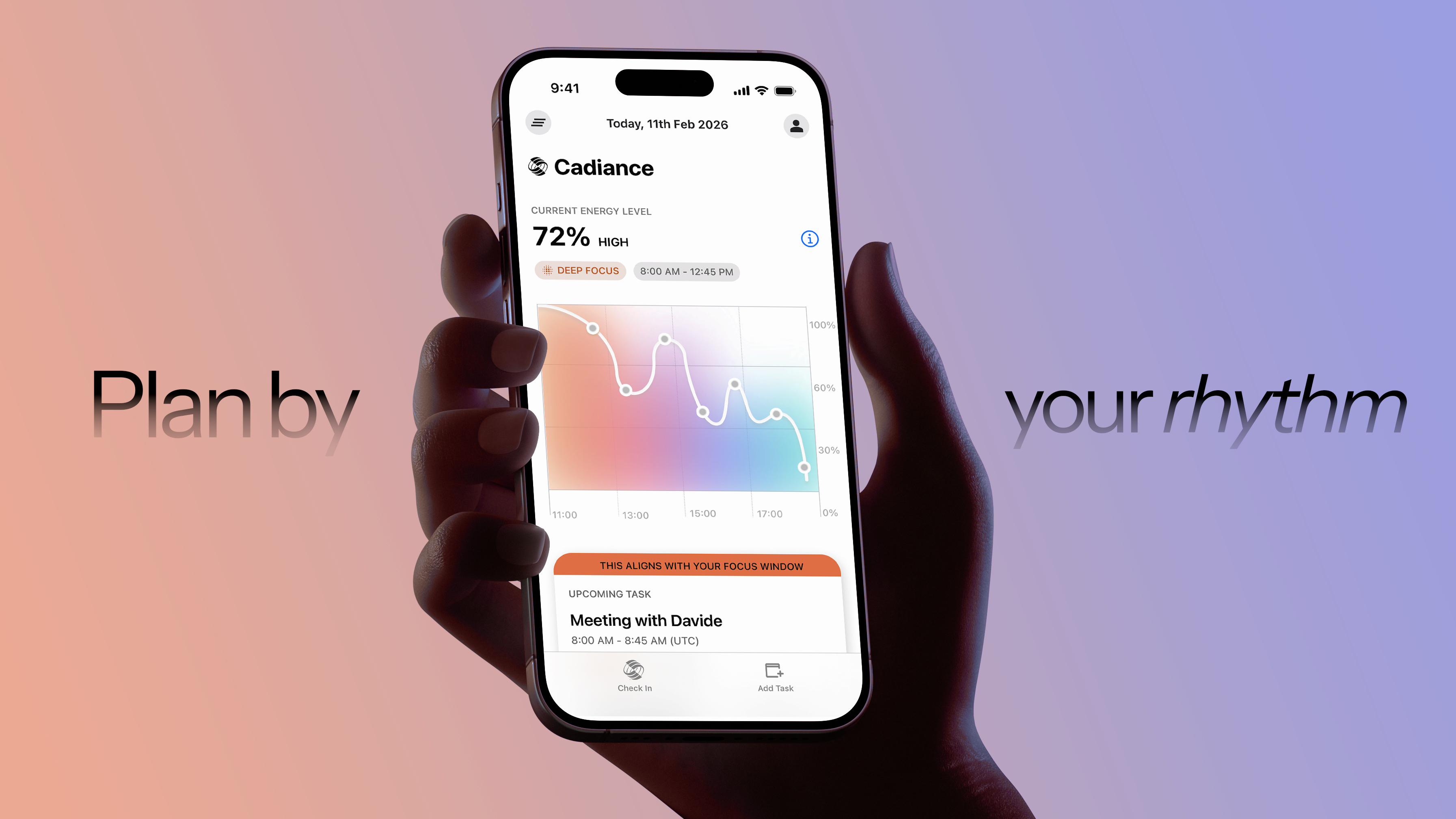
Cadence is a human energy calendar designed to sit alongside your existing schedule and make that invisible rhythm visible. Through a simple onboarding flow, the app learns when a person tends to feel strongest, whether that is in the morning, midday, evening, or through a more personal pattern. Once connected in read-only mode to a user’s calendar, it begins to interpret the day through four clear work modes: Deep Focus, Creative, Admin, and Rest or Recovery. This allows the schedule to be understood not just as blocks of time, but as different kinds of effort requiring different kinds of energy.
What makes the project meaningful is the way it supports people without taking control away from them. Cadence does not force a new plan. Instead, it works through suggestion-first guidance. If a mentally heavy task is placed in a low-energy part of the day, it can recommend a better slot. If meetings are stacked too tightly, it can suggest a short “Reset 10m” break. If the day begins to feel overloaded, it offers a preview of a more balanced arrangement. The experience is designed to feel less like a system managing you, and more like a quiet assistant helping you make better decisions before burnout builds.
At its core, Cadence is an attempt to make planning more human. Traditional calendars are good at storing commitments, but they do not understand readiness, energy, or recovery. Cadence fills that gap by helping people align their work with the natural rise and fall of their day. The result is not just better productivity, but a schedule that feels more realistic, supportive, and sustainable. Instead of asking users to constantly push against themselves, the project imagines a calendar that finally learns how to work with them.
.jpg)