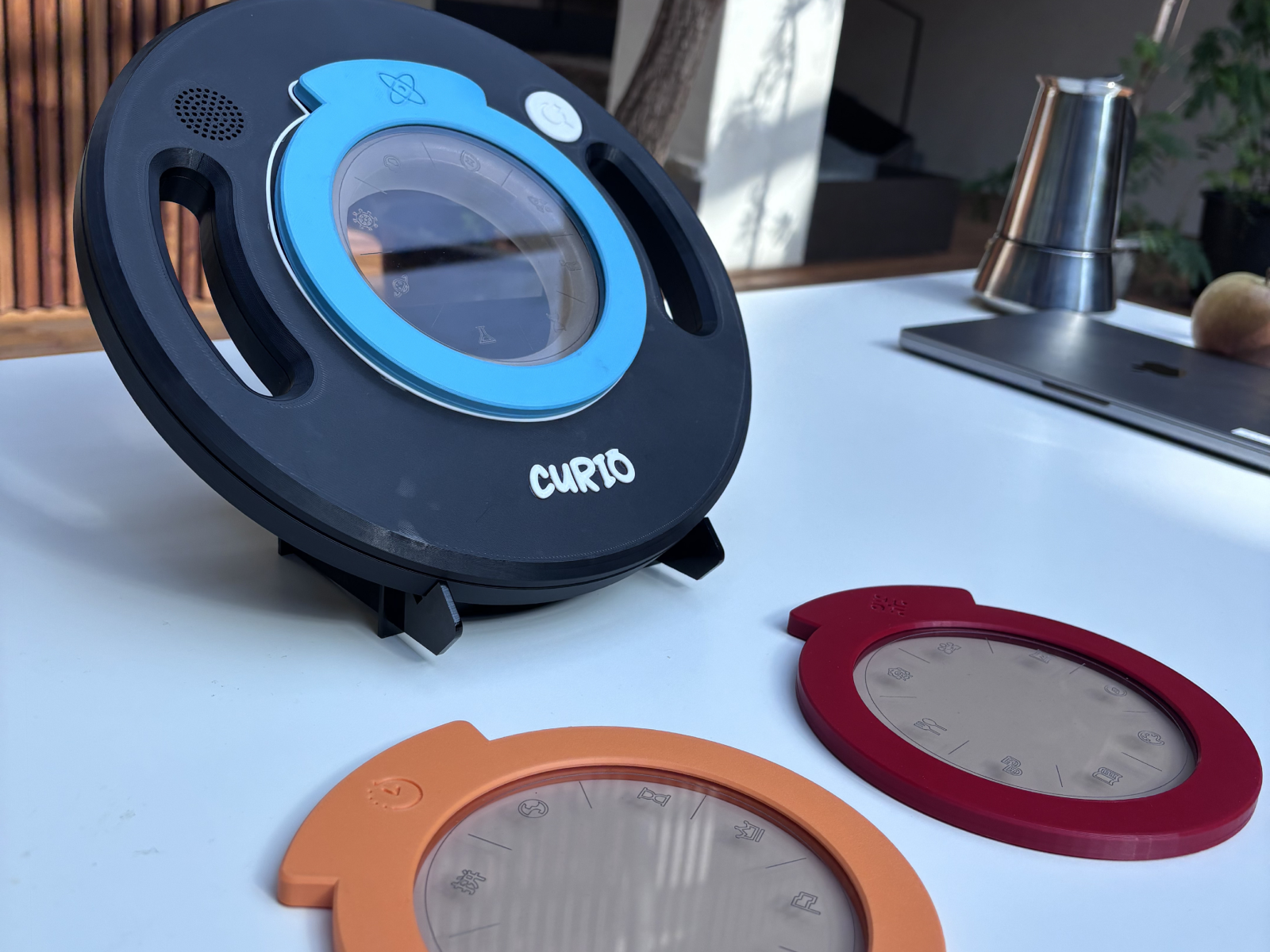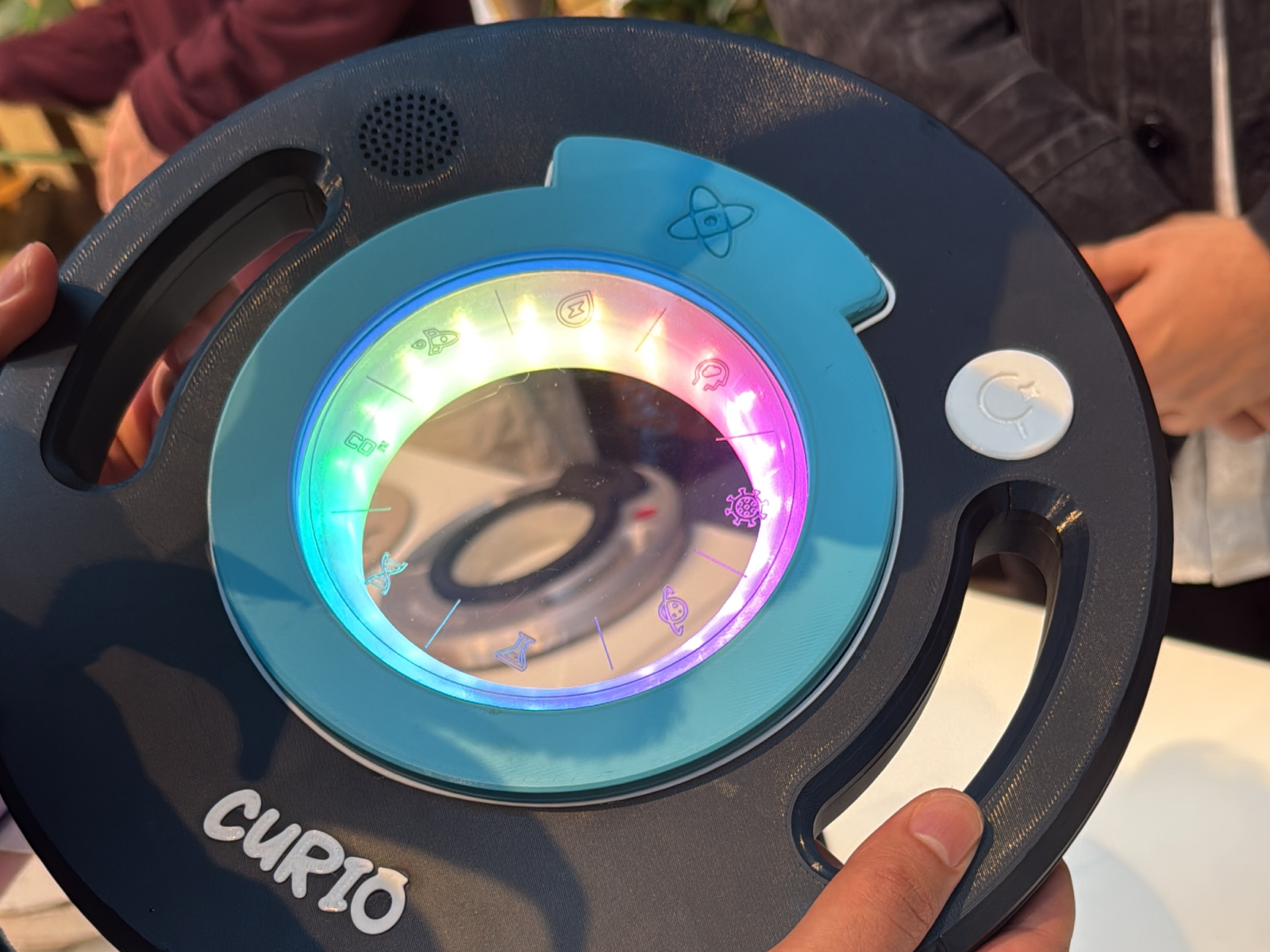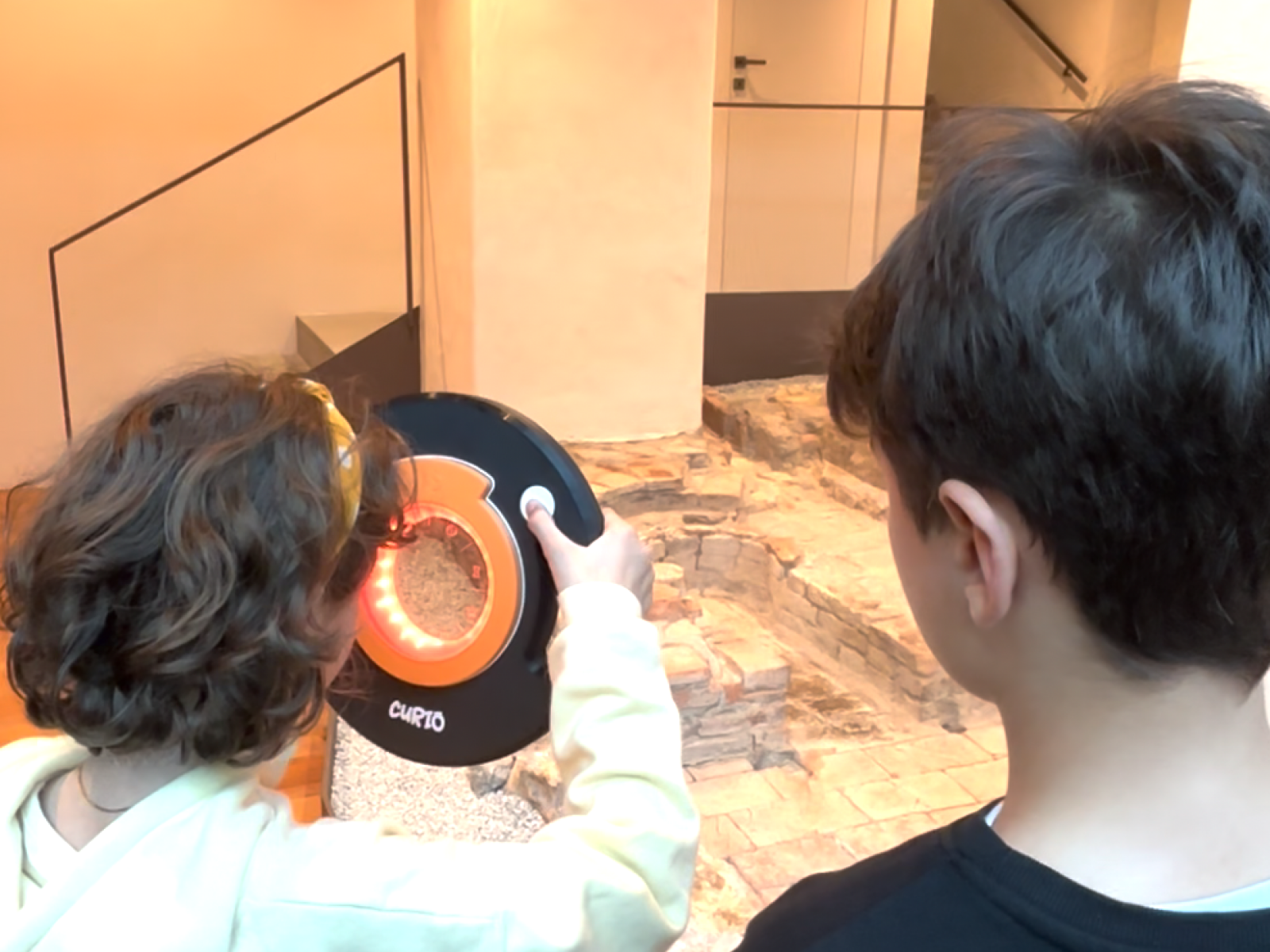
Curio was born from the idea of giving children a tool that helps them navigate and explore the world with the support of artificial intelligence, without relying on the often overwhelming experience of smartphones or traditional chatbots.
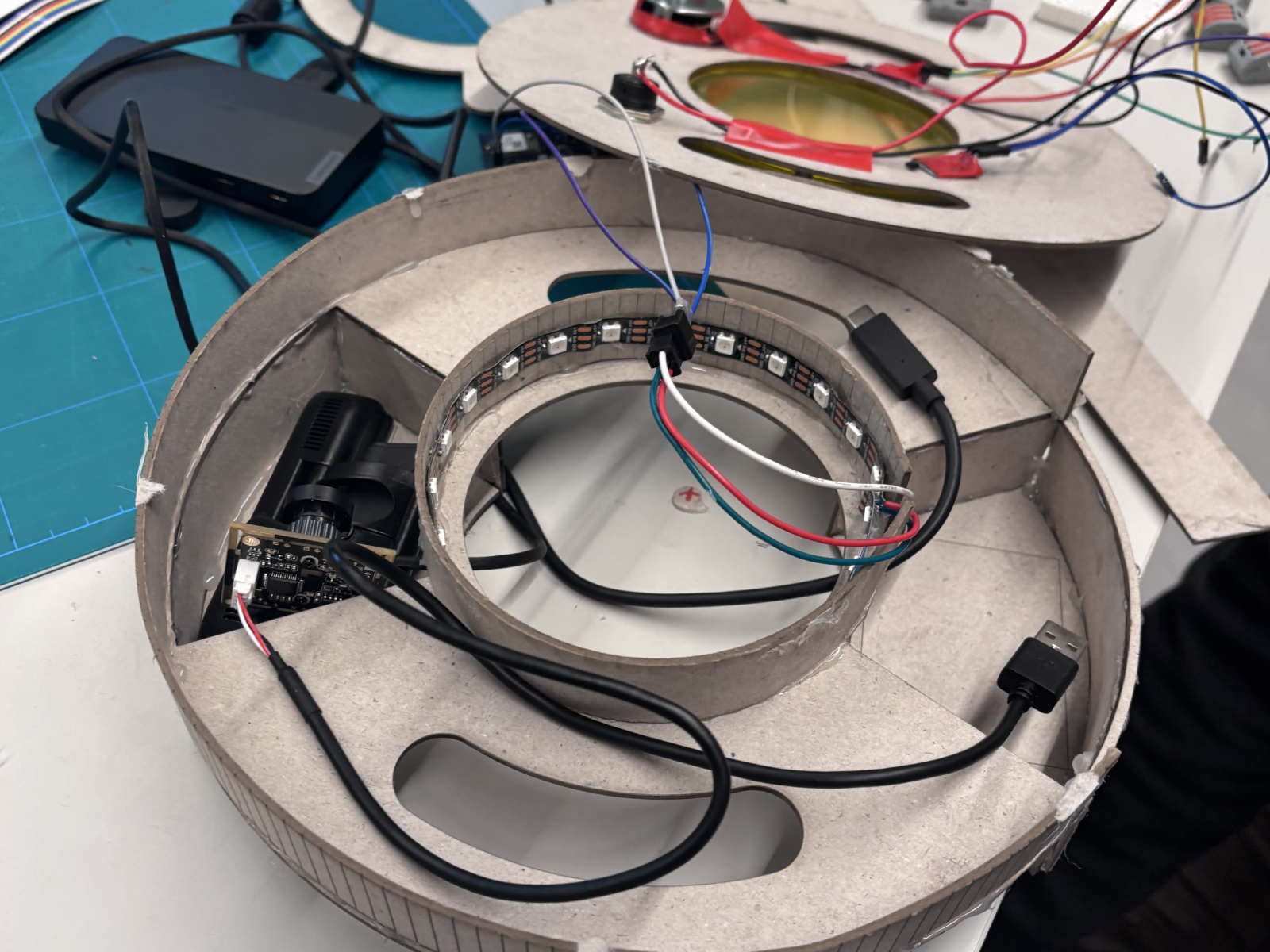
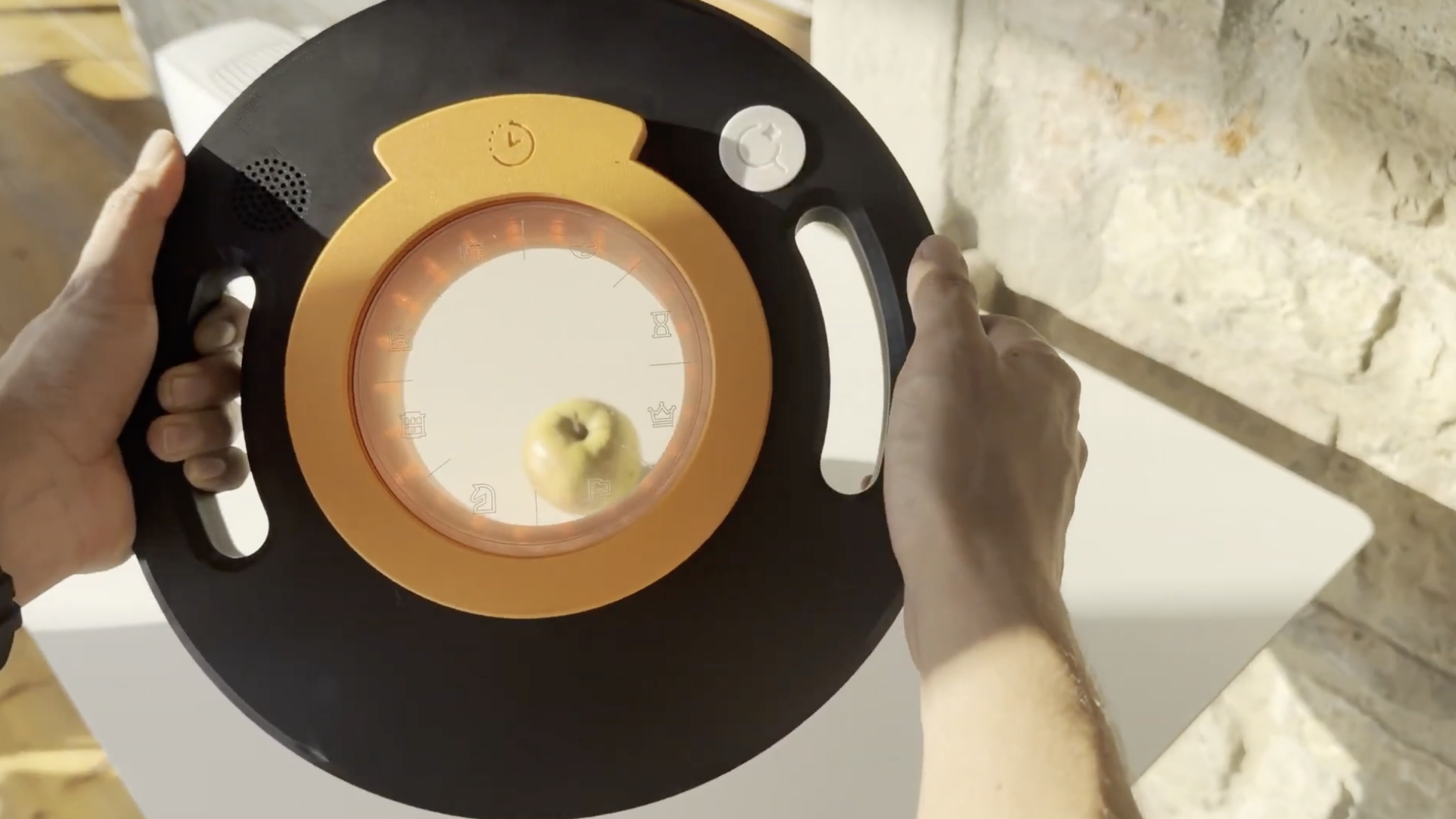
Using an Arduino Q and a range of electronic components — including an HD camera and an amplified speaker — the team developed a sophisticated yet approachable artefact designed to be intuitive, tangible, and engaging for users of all ages. The device encourages active exploration rather than passive screen consumption, supporting learning through direct interaction with the physical environment.
The true strength of Curio lies in its interchangeable magnetic lenses. Each lens represents a different “personality” or perspective through which users can choose to observe and interpret the world. These lenses function as contextual filters for the prompt sent to the AI agent. For example, by attaching the History lens (orange) and capturing an image using the device’s physical button, the system sends the photo along with instructions to provide simple, child-friendly historical insights about the object being observed. In this way, even very young users can access meaningful explanations and discover new knowledge in an accessible format.
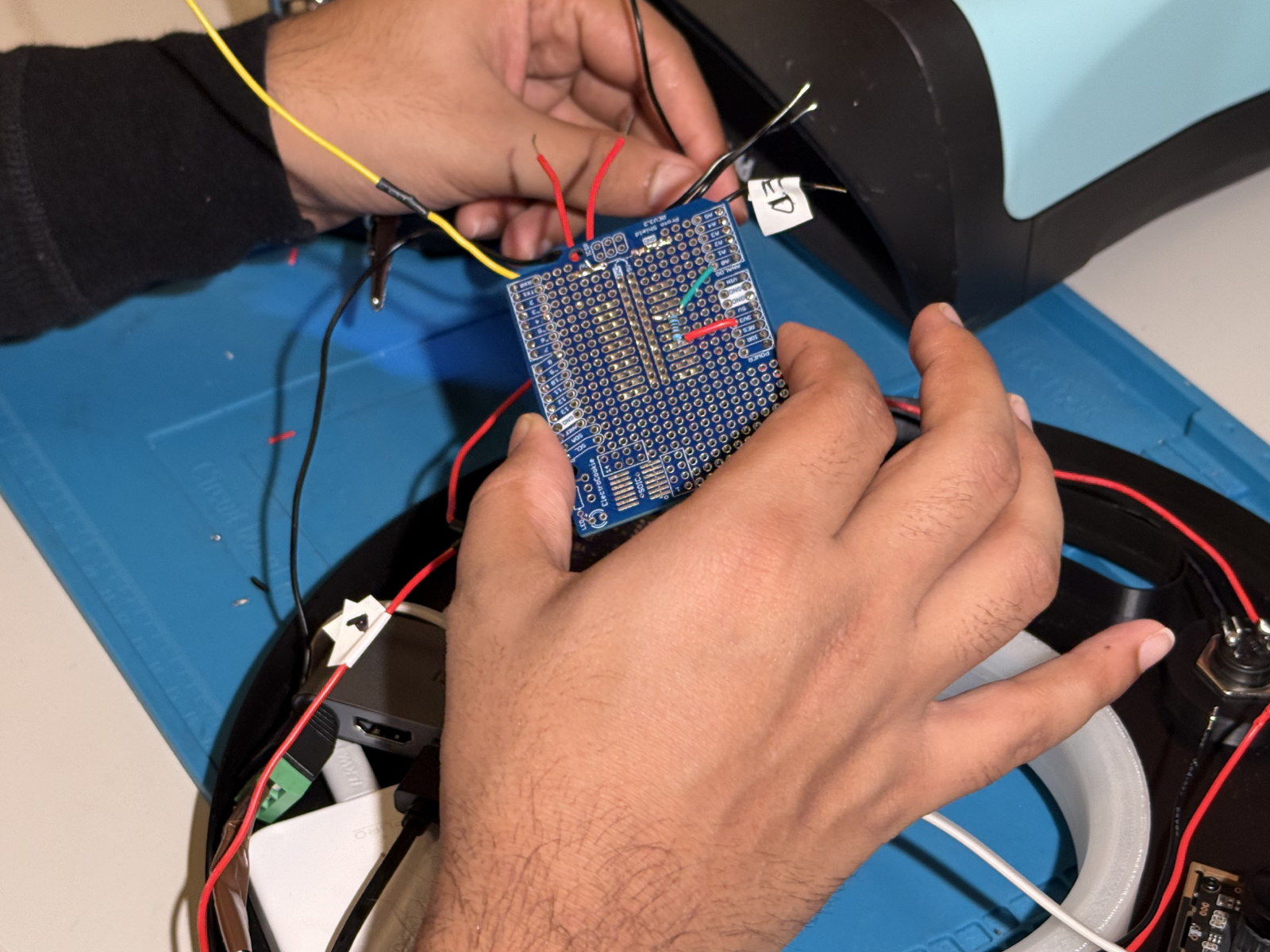
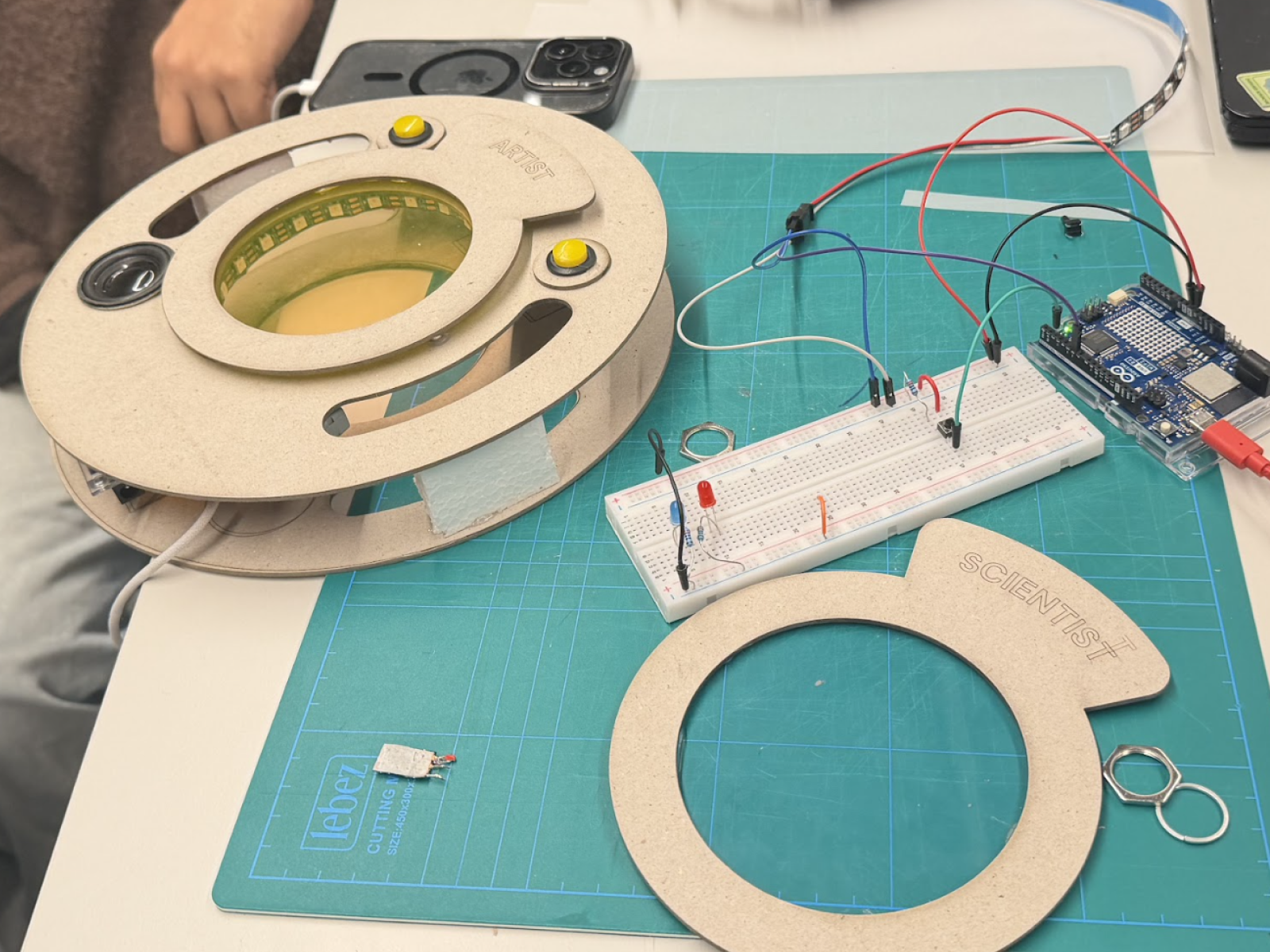
Three lenses were developed for this prototype, and designing the magnetic recognition system that allows the device to identify which lens is attached proved to be a significant technical challenge. The tactile action of removing and changing lenses becomes the way users directly control the prompt being sent to the AI, making interaction with the system physical, intuitive, and immediate.
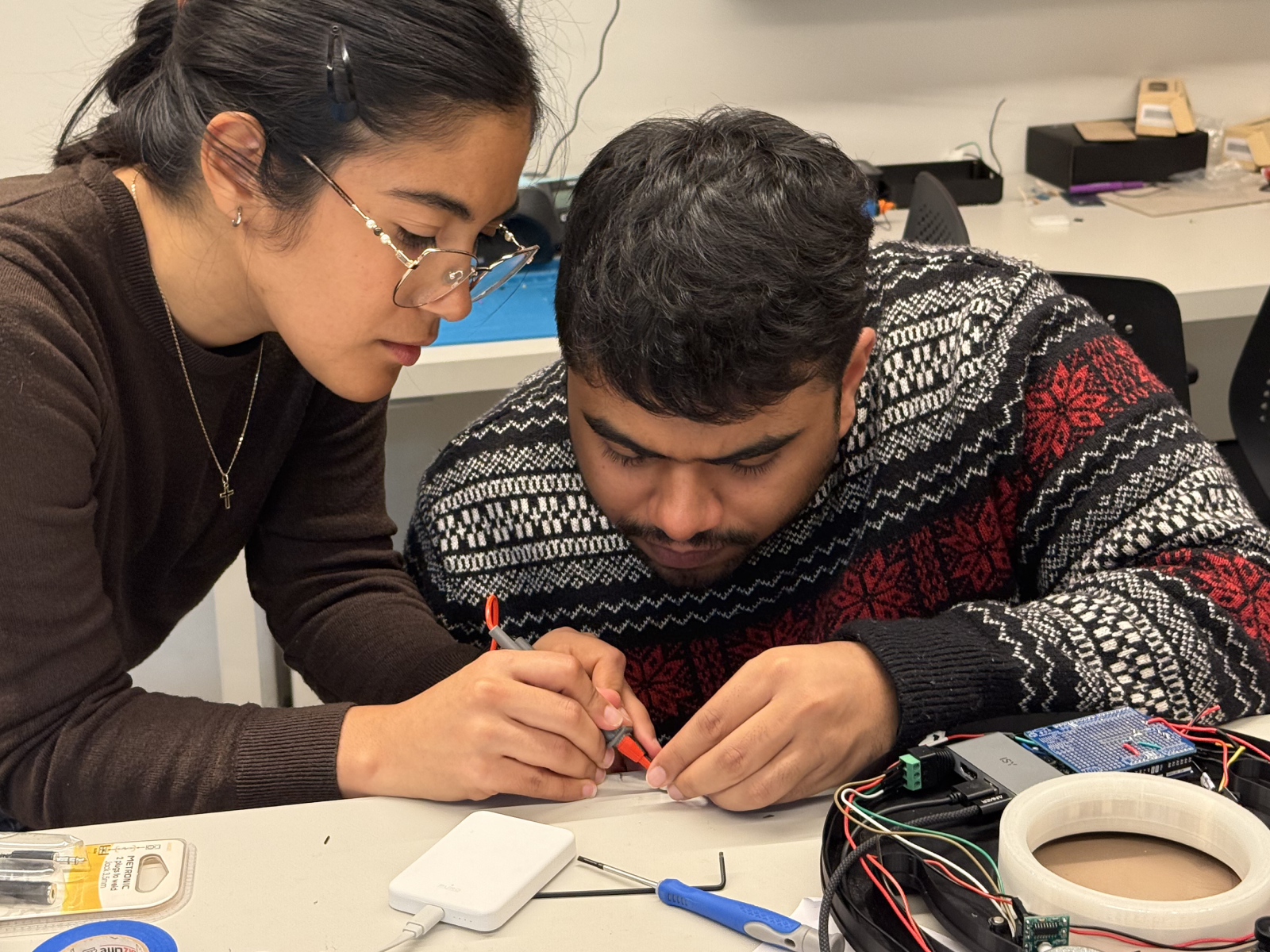
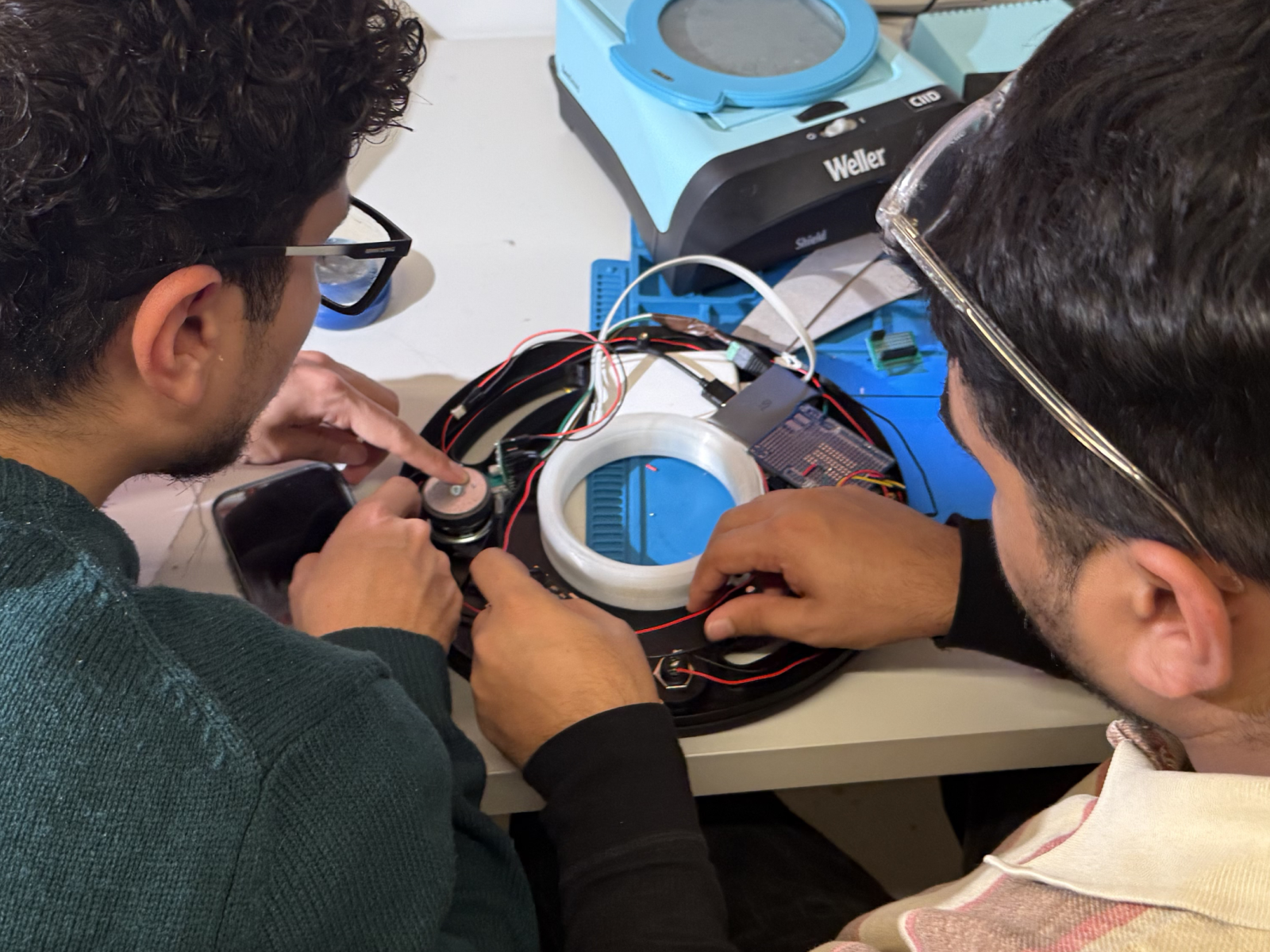
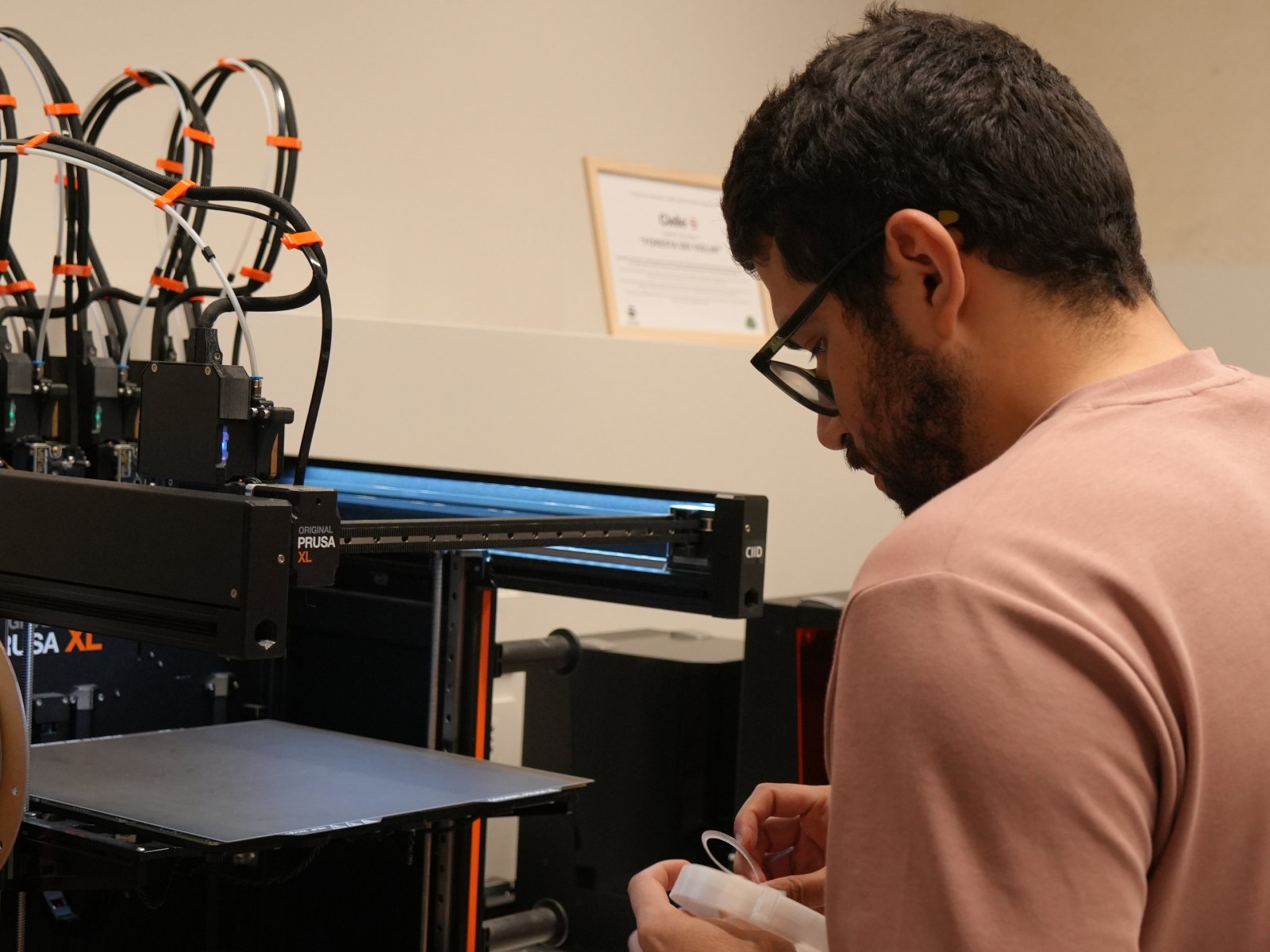
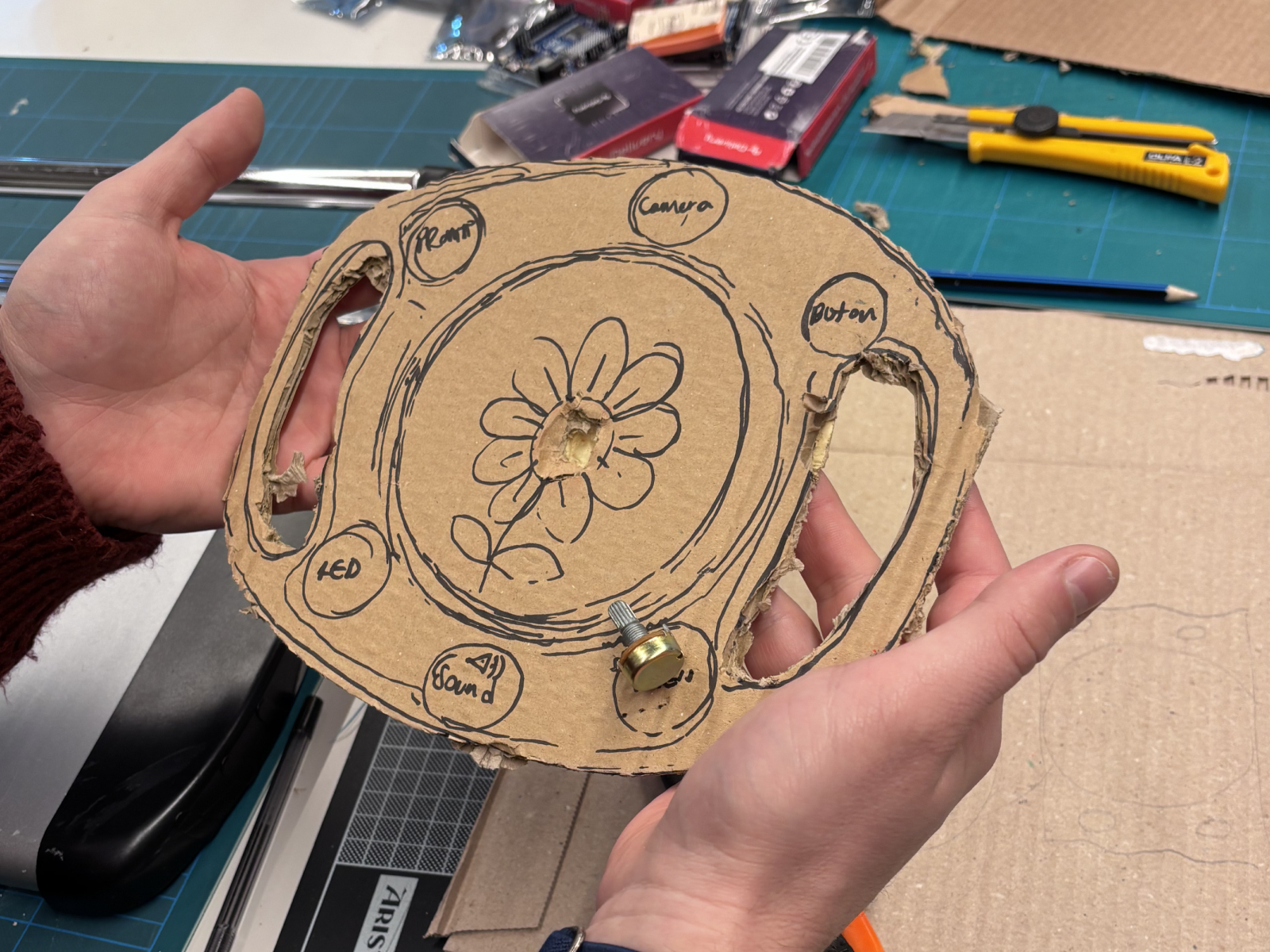
Over the course of two intensive weeks, the team worked through the full lifecycle of a complex hardware-interaction project, building five successive prototypes before arriving at the final version. This process enabled them to fully experience experimentation, iteration, and progressive refinement.
Through this journey, the team learned how to optimise time, distribute responsibilities effectively, and approach unfamiliar technological challenges with confidence, ultimately achieving the rewarding milestone of delivering a fully functional prototype.