Every phone contains a built-in gyroscope that measures the direction and speed of its movement. This project explores how such tilt-based input can be used to design interactions. Having already used the gyroscope as input for a drawing tool, I became interested in extending this idea to two phones, combining their gyroscope data into a single, shared interaction.
Making two phones behave like one shared surface became the focus of my project. I began by prompting Claude to move a marble using the gyroscope data of both phones, with the marble transitioning seamlessly from one screen to the other upon reaching the edge. At this point the marble was only moving between the two screens, but that alone was already fun to play with.
From there, I iterated on the marble's movement to make it feel closer to a real object, giving it a sense of weight so that it rolled and picked up speed more naturally, and worked on the interface.
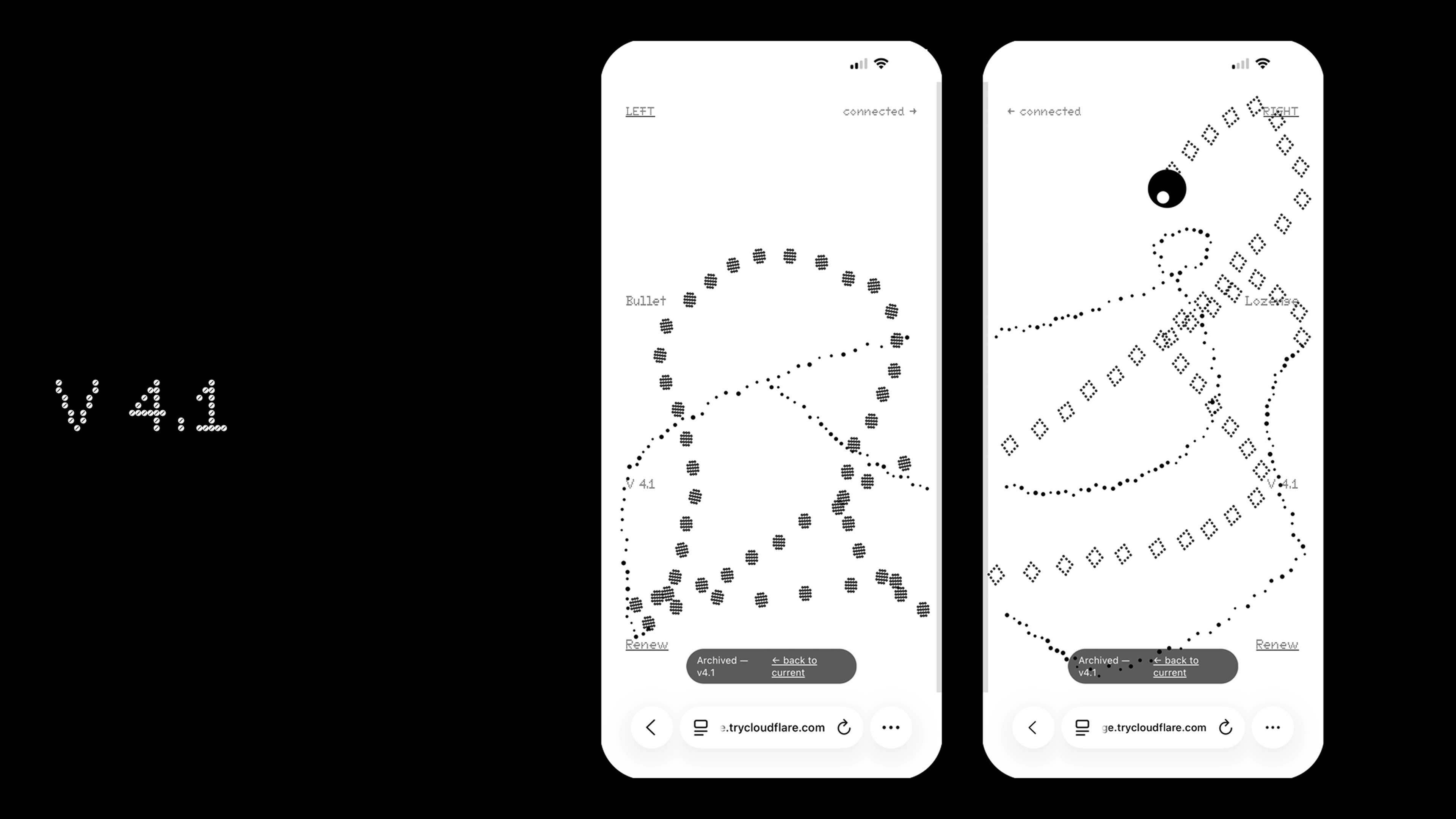
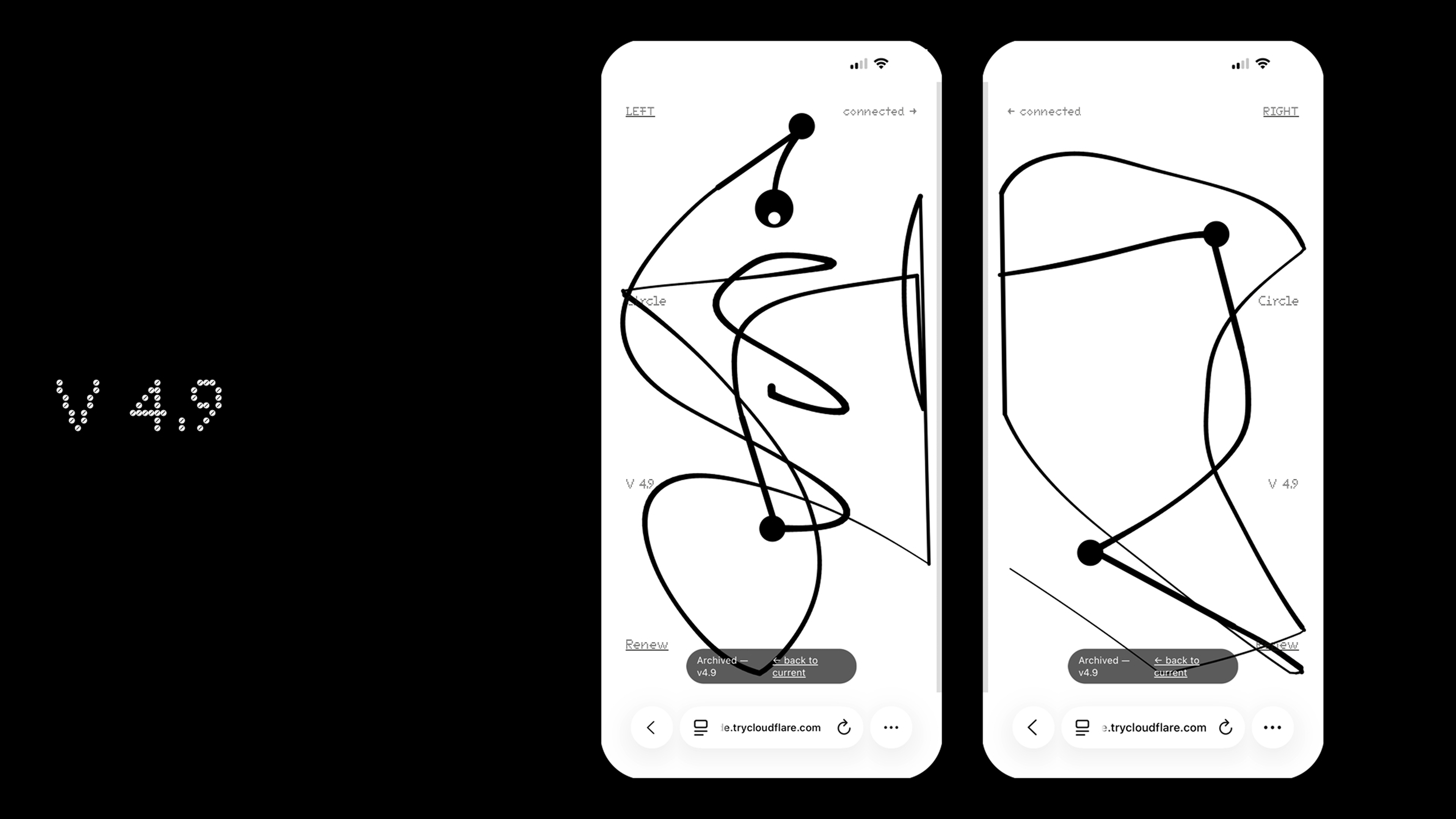
Once the movement and interface felt right, I began adding further features. The marble left an inked trail as it moved, and each player could choose the symbol drawn by their own marble. The line's thickness responded to the phone's speed of movement: slower motion produced thicker lines, faster motion thinner ones. I also introduced a throwing gesture, in which the marble leaves the screen, briefly appears as a shadow, and lands again as a heavy dot of paint. Every iteration of the application remains accessible within it, allowing me to step back through the full history of changes on both phones.
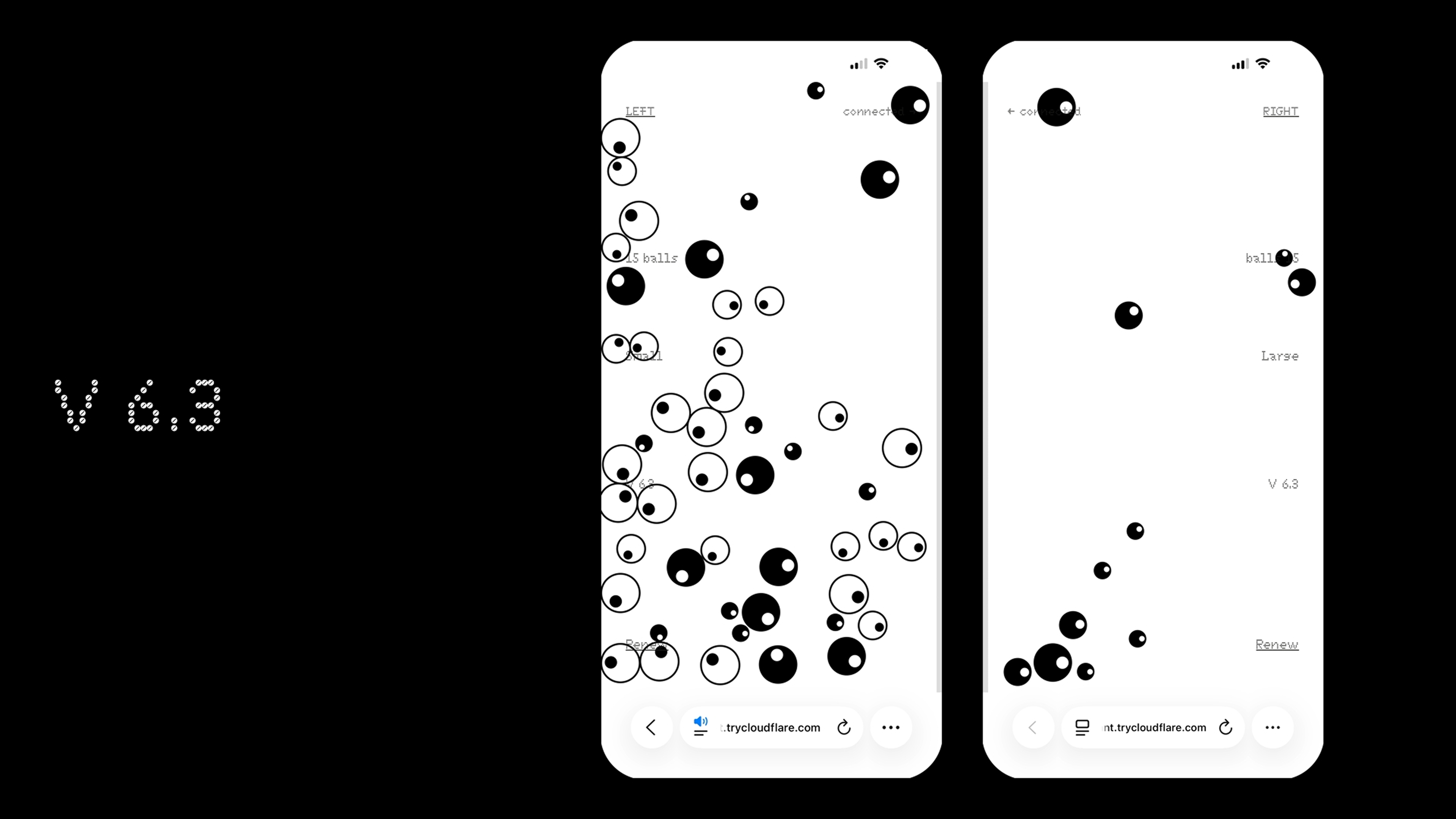
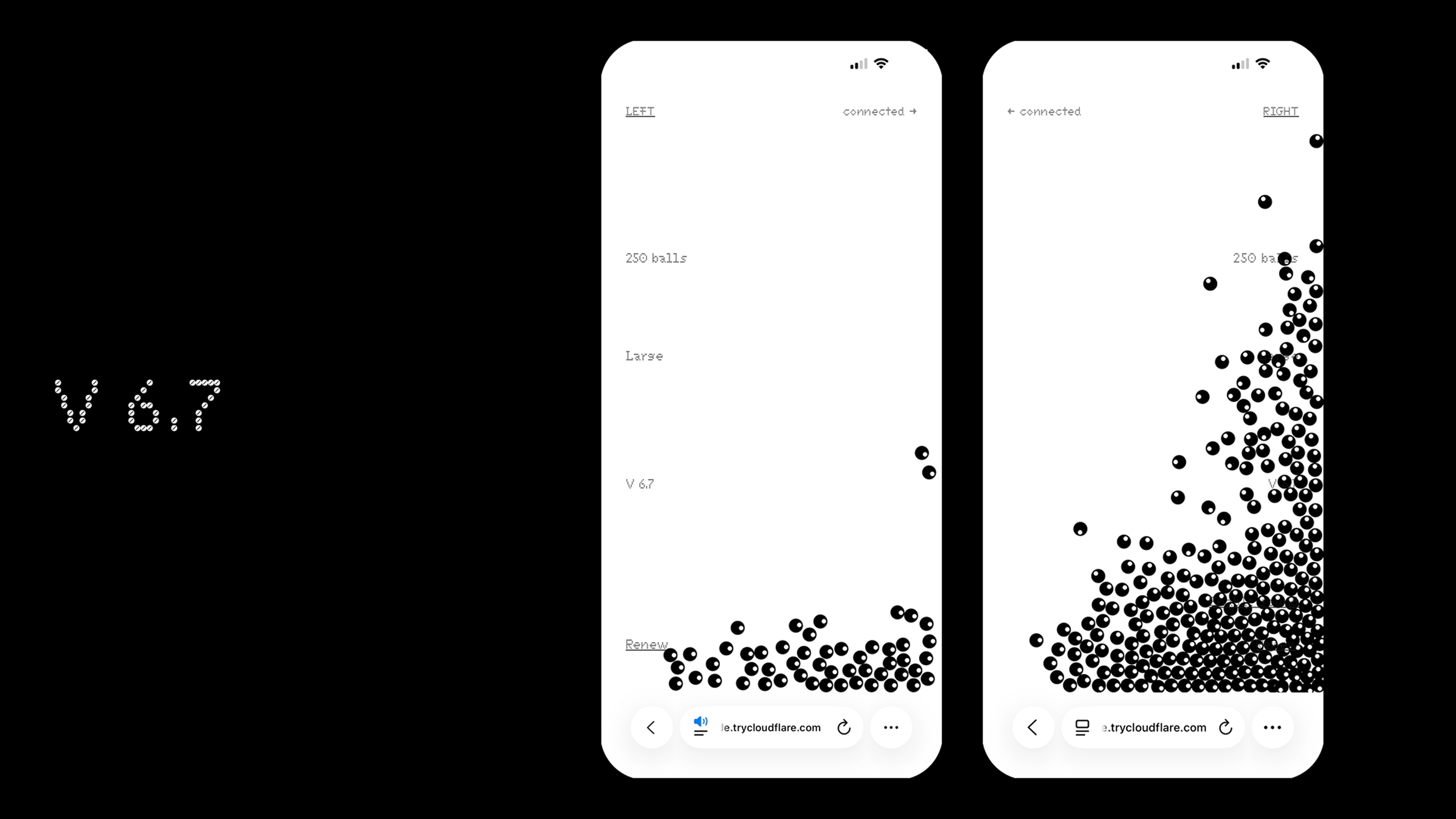
My most recent exploration involves multiple marbles, with adjustable size and quantity, resembling a kind of digital ocean drum. Each player can control the size and number of their own marbles and move them independently, so that the two sets of marbles respond to and collide with one another through the phones' movement. Sound will be the final addition, linking audio to the marbles' motion so that both players can collaboratively create something soothing.
What began as a single phone and a single line evolved into a surface shared between two people, where movement, drawing, and eventually sound converge.