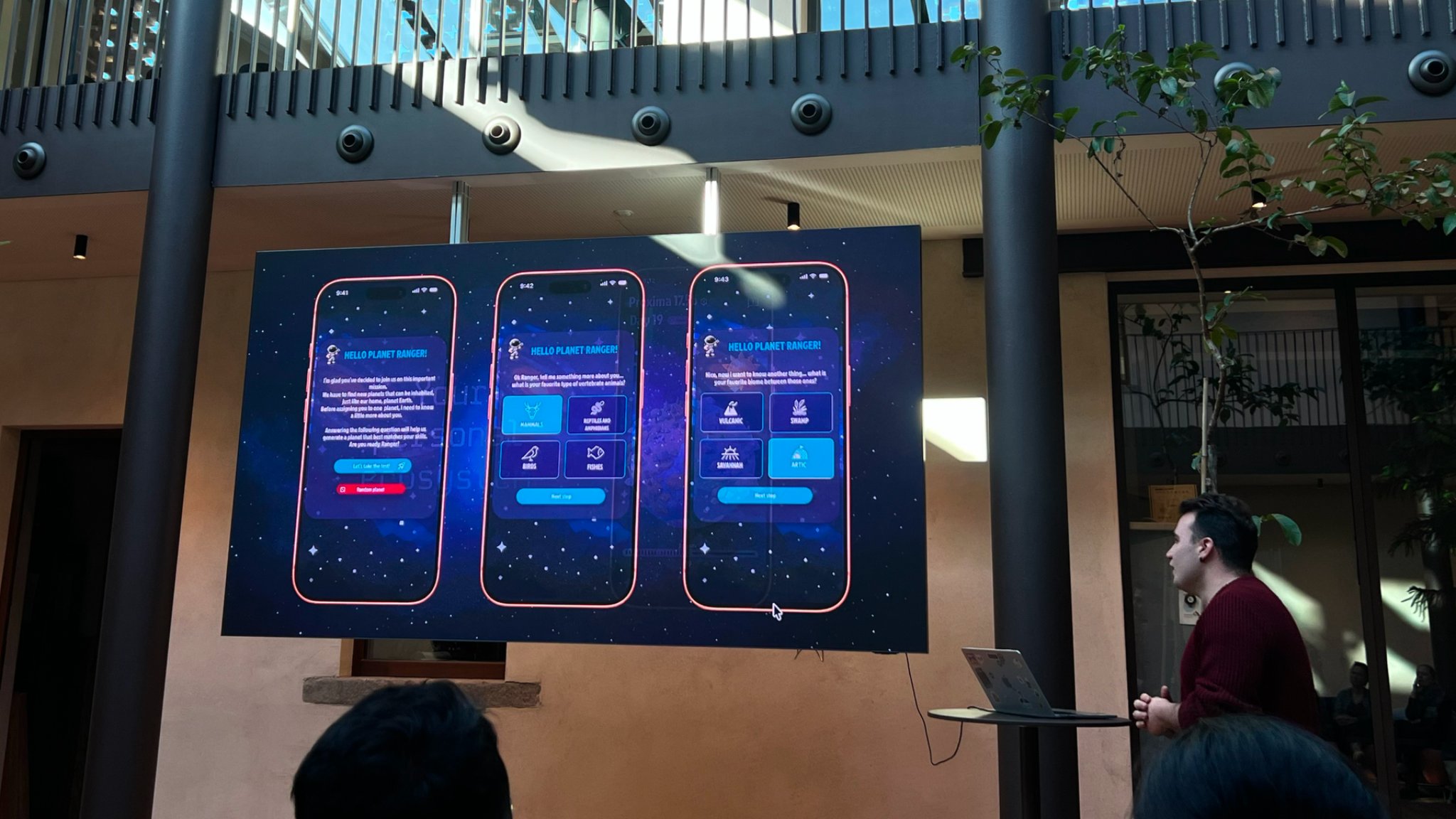
Echo is an iOS visual experience and ecosystem-management game which centres on the perception of natural time.
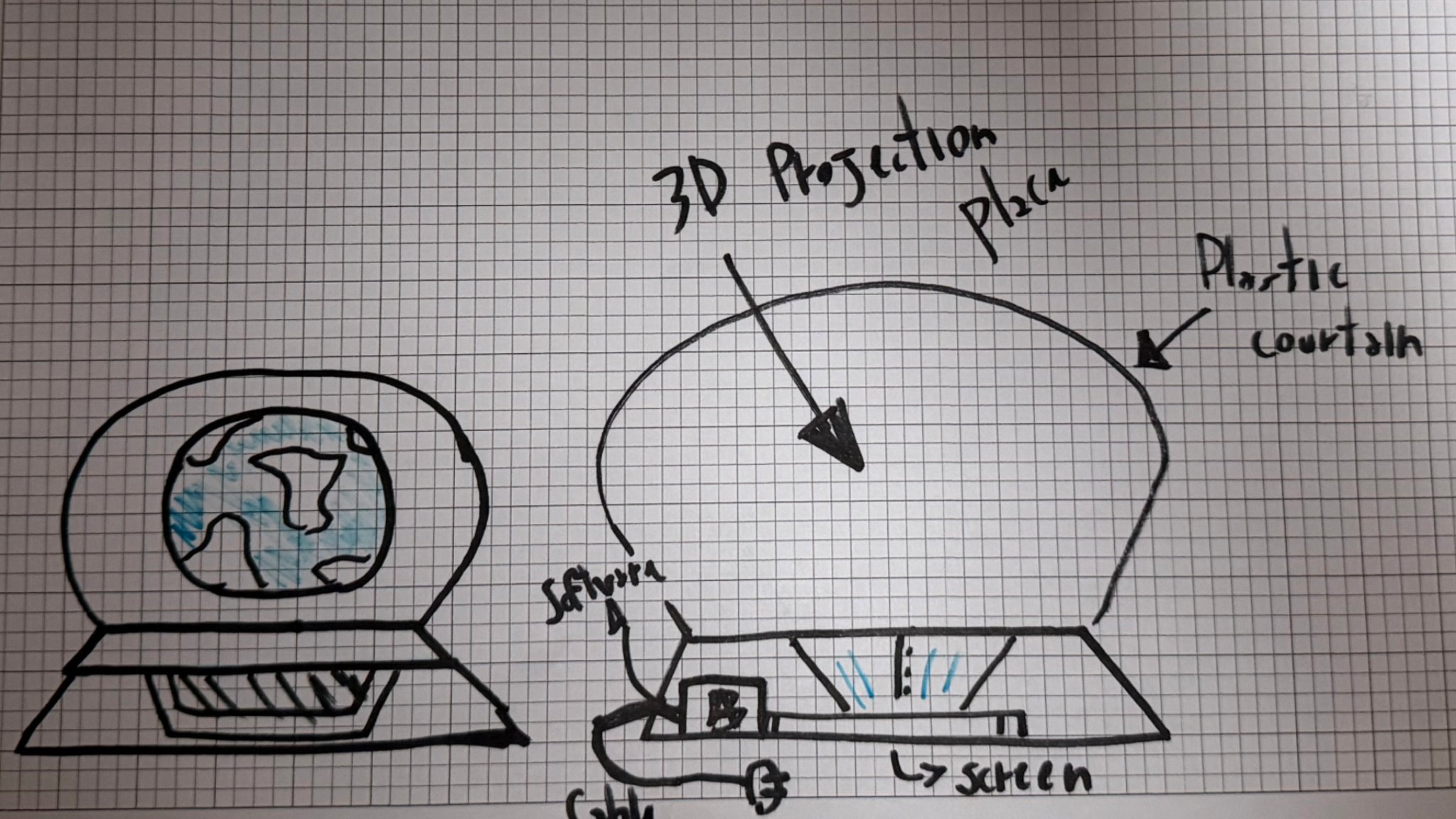
Each player receives a procedurally generated planet populated by plants and animals that evolve according to ecological dynamics rather than numerical schedules. The experience focuses on observation, light interaction, and long-term transformation. Alongside the application, a physical companion device called EchoDeck projects a holographic representation of the planet, creating a tangible extension of the digital ecosystem and reinforcing a continuous relationship between the user and their evolving world.
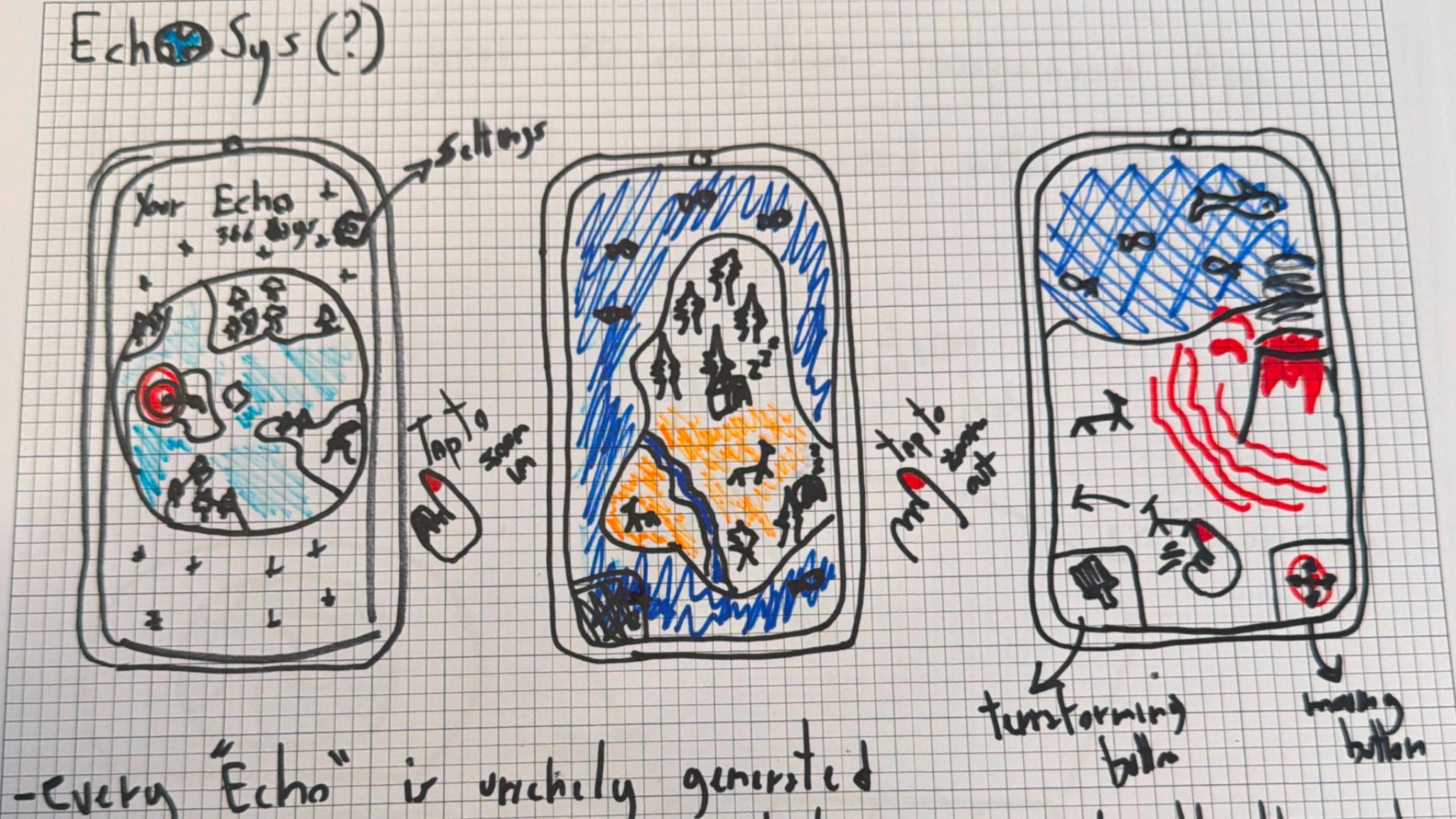
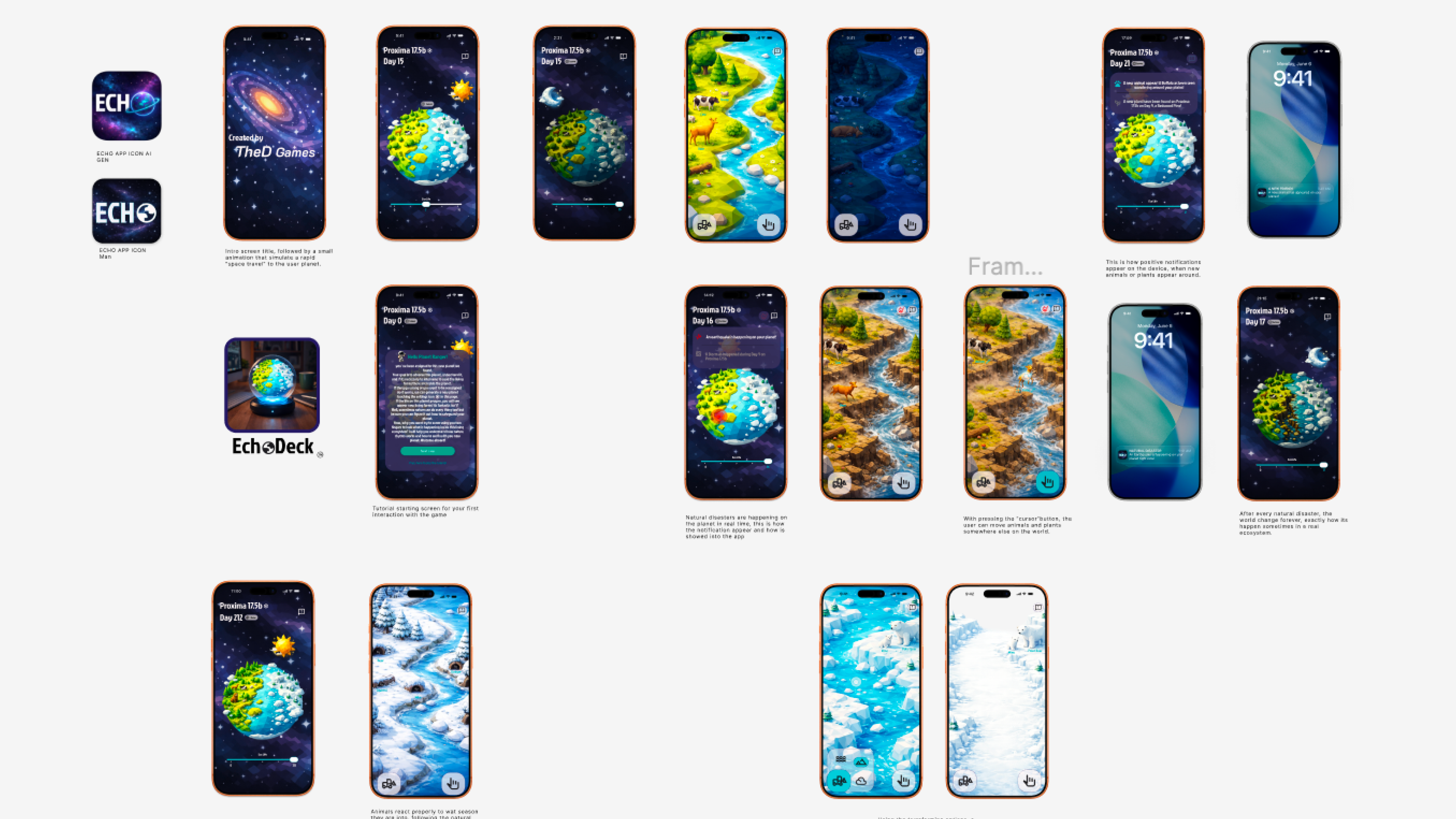
At first launch, the system generates a unique planet from a combination of possible biomes. From that moment, ecological processes such as seasonal change, life emergence, extinction, and environmental disruption unfold continuously. You can observe the planet from a distant spatial perspective or zoom into specific areas to explore individual biomes and life forms more closely. Interaction is intentionally limited: players can move creatures, adjust selected environmental parameters through terraforming, and respond to natural disasters that occur within time ranges inspired by real events on Earth.
A time slider allows you to revisit previous states of the planet and compare ecological evolution over days or longer periods. New species periodically appear depending on biome conditions, environmental threats, and the level of attention. When you enter the range of the EchoDeck, the latest planetary state is transmitted and projected automatically.
The experience is designed for reflective people who are interested in nature, generative systems, slow games, and ambient digital artefacts. Research on time perception and digital wellbeing suggested that most interfaces frame time as something to optimise and control. This project instead explores time as something to witness, experience, and adapt to.
By limiting control and embracing unpredictability, the system encourages contemplation, curiosity, and emotional attachment to change. The development process also highlighted how procedural uniqueness can strengthen personal connection, and how reducing explicit information can increase discovery without demanding constant attention.