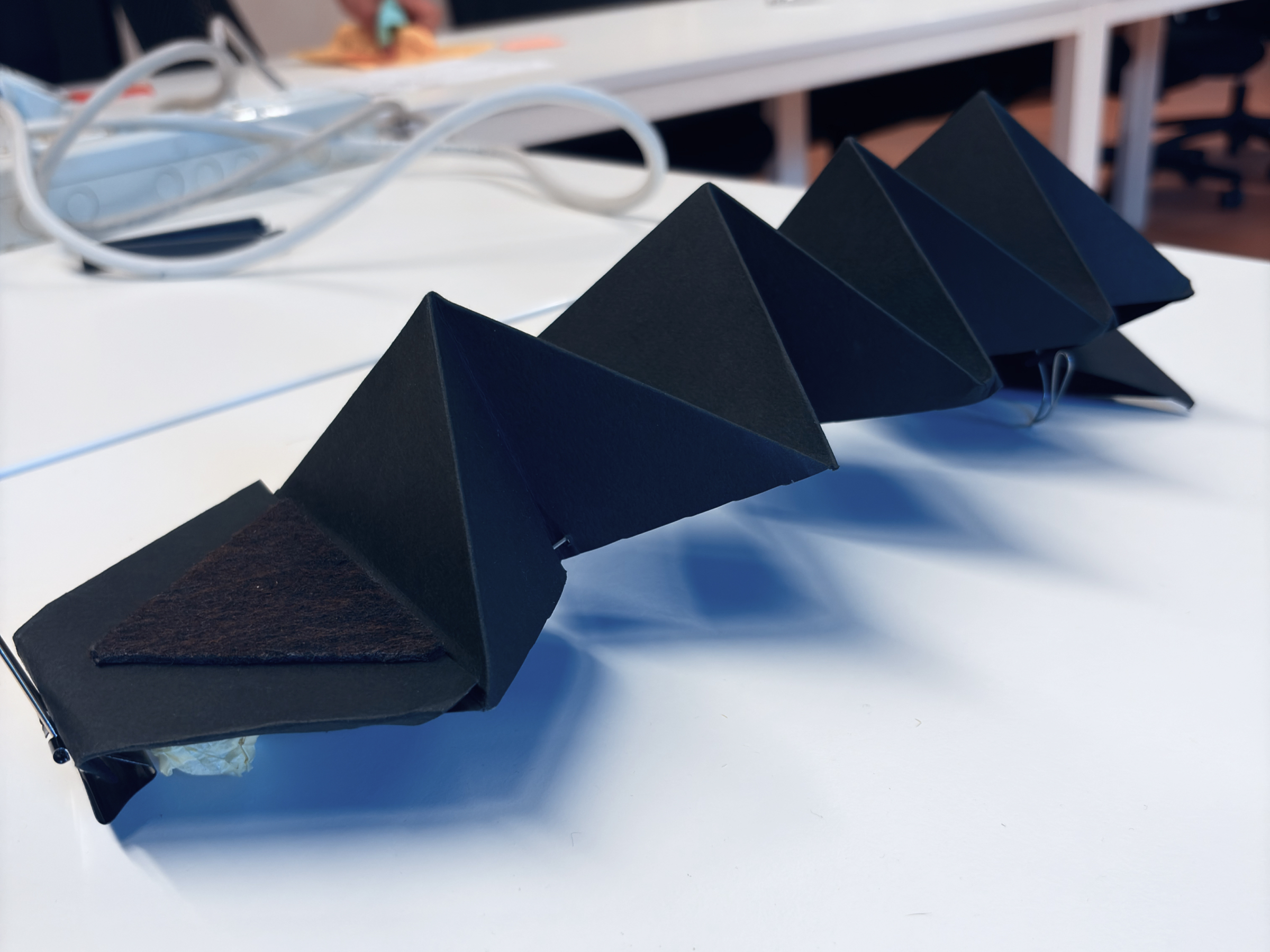
A wearable concept that encourages users to stay physically active through movement-based, corrective feedback. By physically restricting posture, it highlights the consequences of inactivity. The project explores user interaction through iterative testing and interaction design frameworks.
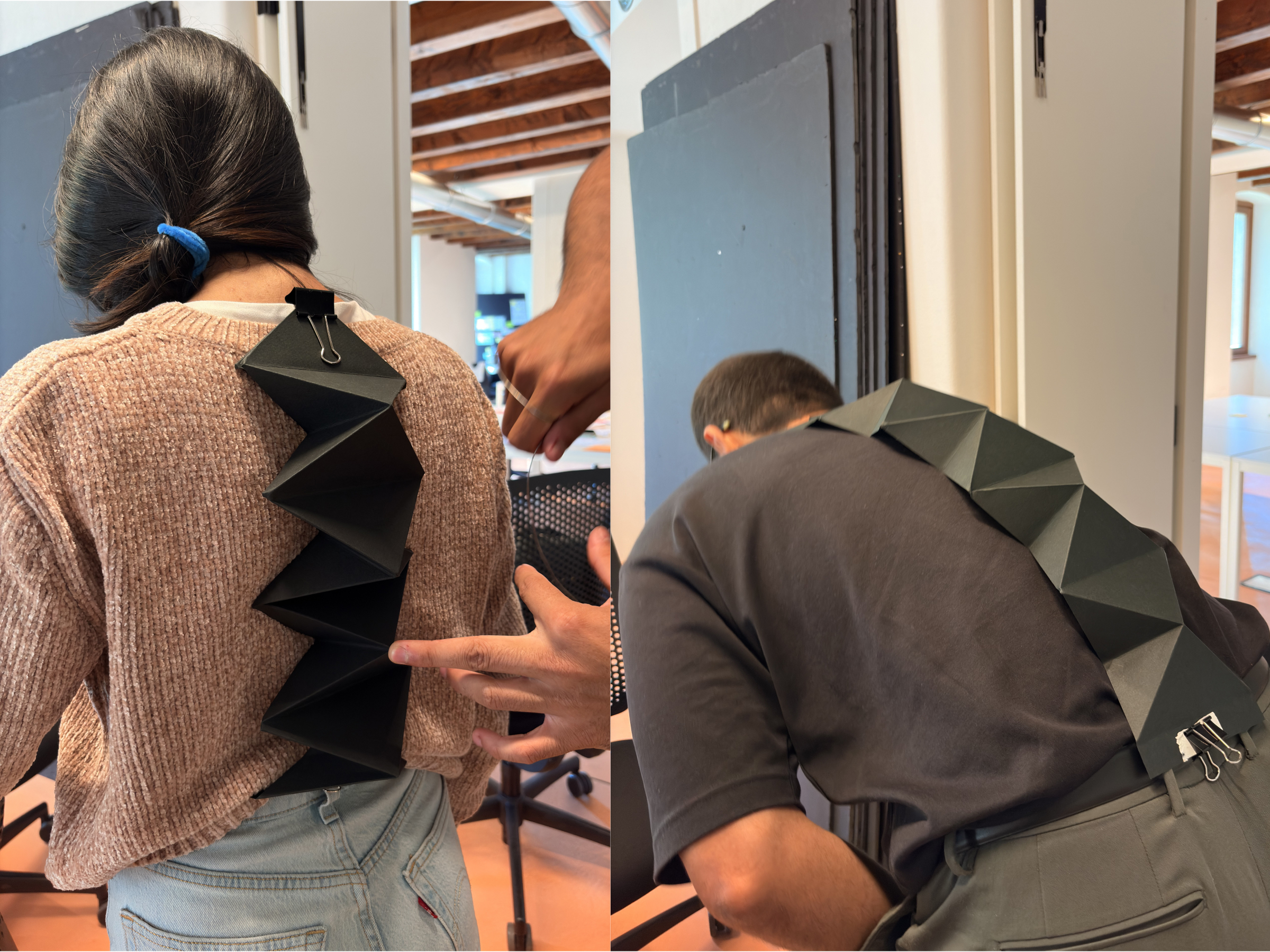
“Spinefy” is a project that aims to incentivize physical activity as a priority for CIID students. The device is placed along the user’s spine and uses movement-based feedback to remind—and apply a form of corrective discomfort—when the user remains inactive. The concept employs mechanisms similar to those of modern wearables that track movement through sensors; however, instead of relying solely on notifications, the device physically forces the user to lean forward. This interaction highlights the consequences of prolonged inactivity, expressed through discomfort, back pain, and limited mobility.
The interaction between the user and the device includes three primary actions:
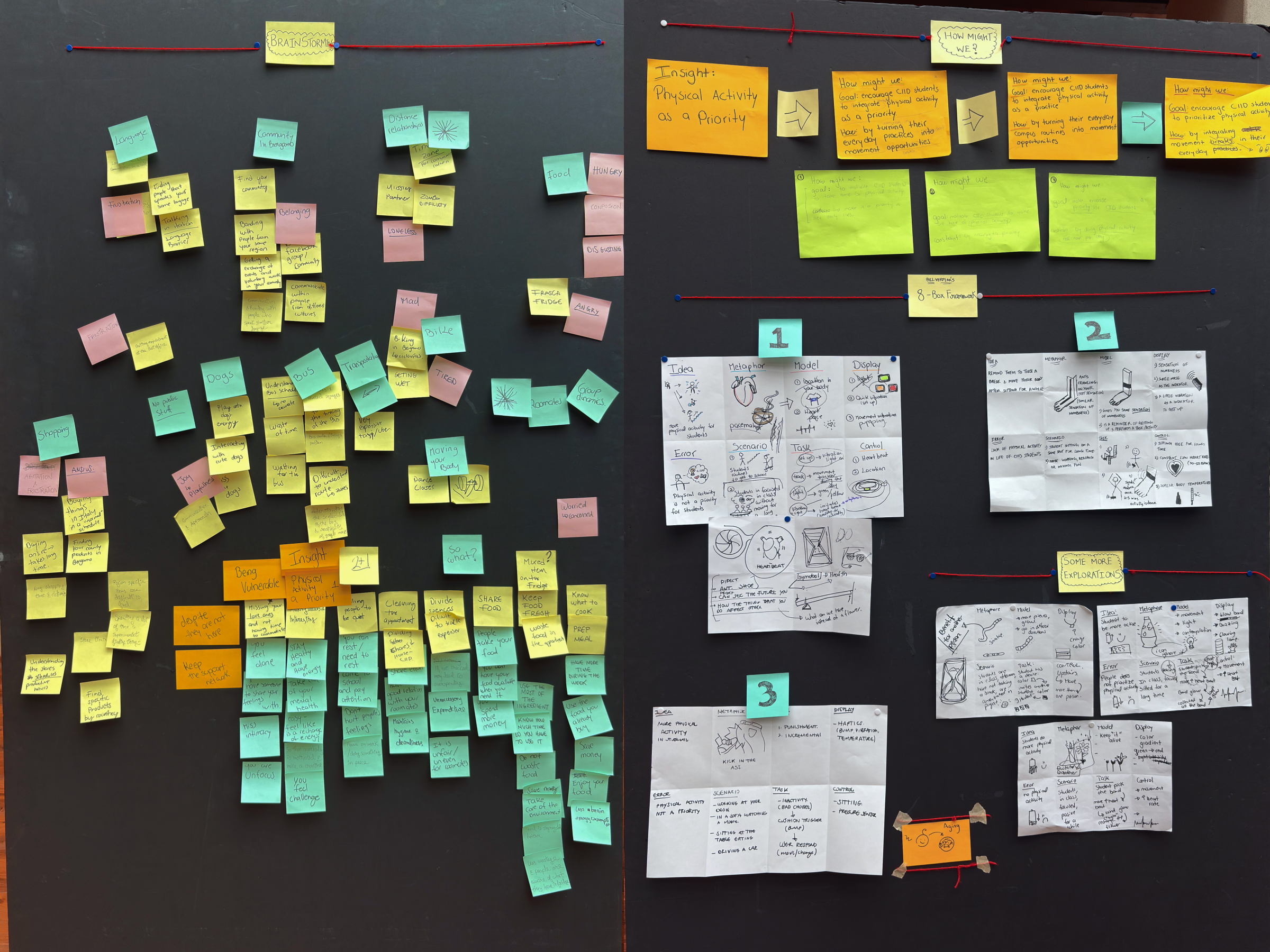
The project team defines the problem statement as:
How might we encourage CIID students to prioritize physical activity by integrating movement into their everyday lives?
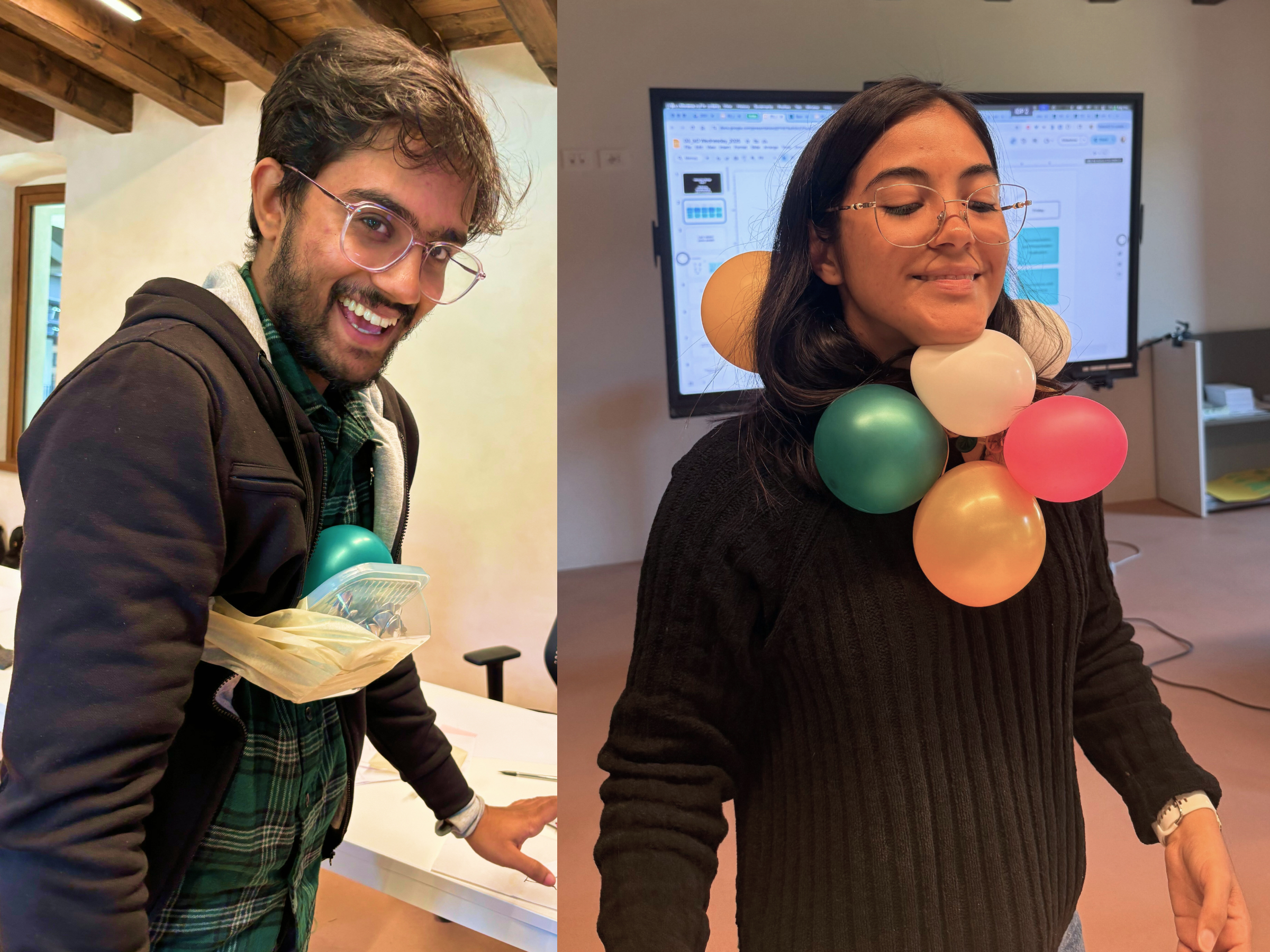
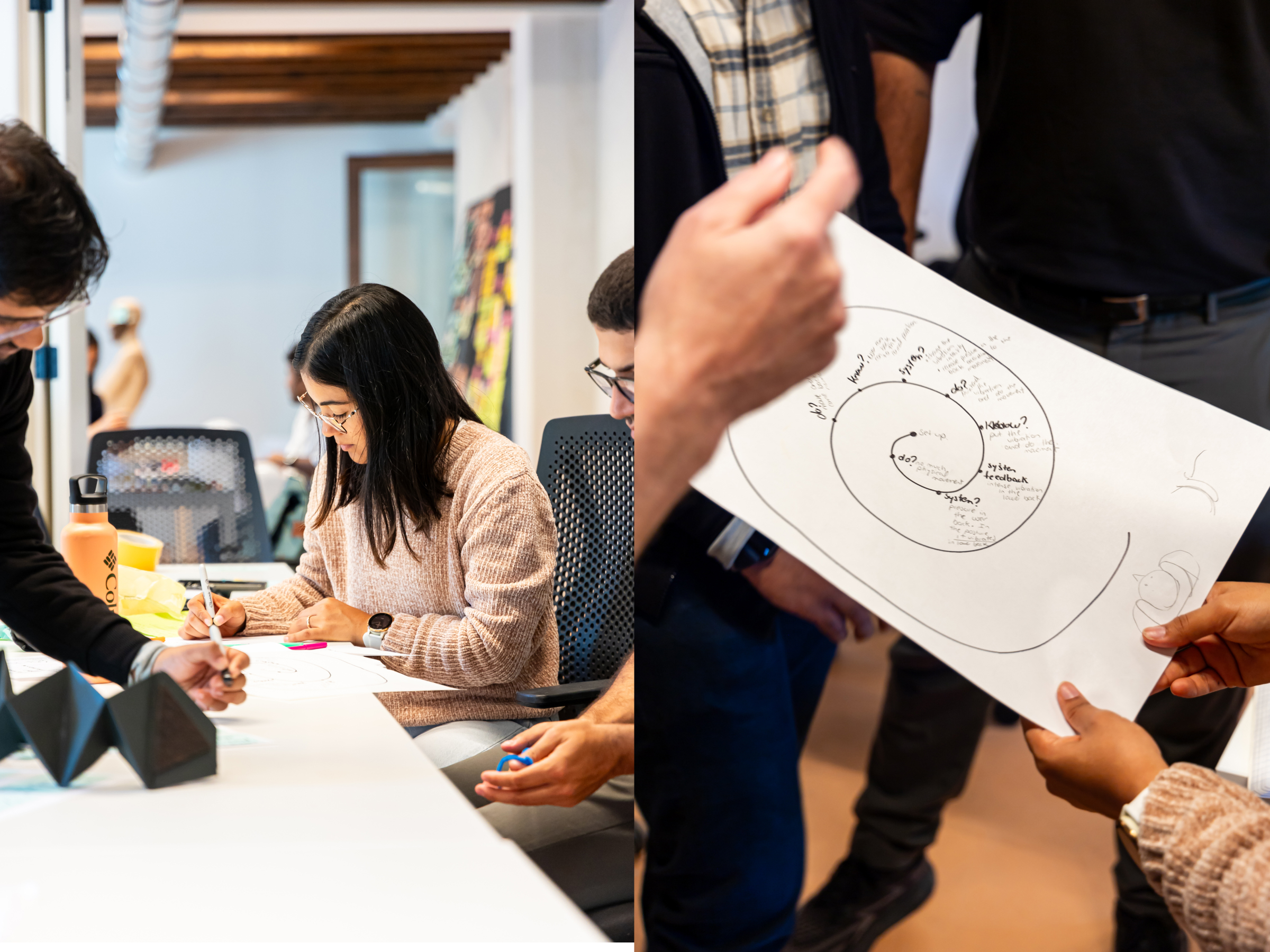
The main learnings from this project relate to user interaction frameworks. The team applied Bill Verplank’s Framework for Interaction Design, focusing on the questions: How do you do? How do you feel? How do you know? Repeated testing of the interaction was a key step in refining the concept and understanding user response.