Nowadays, phones have become an extension of the human body, an inseparable part of how we live. More and more functions are packed into this sleek, pocket-sized device, making life ever more convenient and accessible. But the distractions that come with it can be overwhelming: a simple task can drag on forever, pulled apart by notifications and other functions competing for attention. Do you ever miss the days when a calculator was just a calculator, and an alarm was just an alarm?
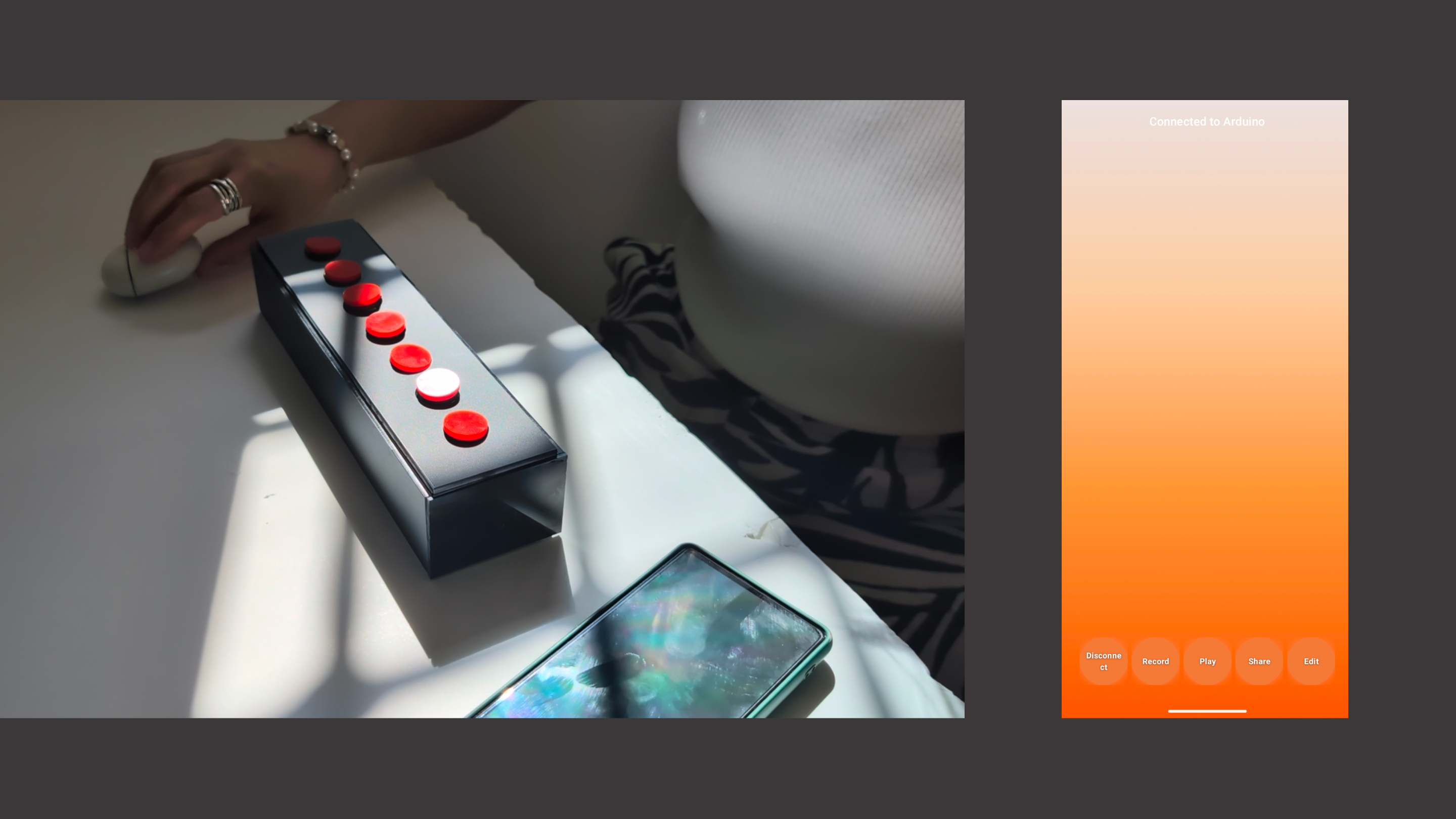
Tether brings back that single-function simplicity. It still relies on certain functions of the phone, but the device itself is the instrument, something you hold, press, and play. You can bring it anywhere: a long commute, an endless wait. Turn it on, connect it to the Tether app over Bluetooth, and start playing and recording. Because the sound plays through your phone's speaker (or your headphones, if you'd rather keep it private), you won't disturb anyone around you, even in public.
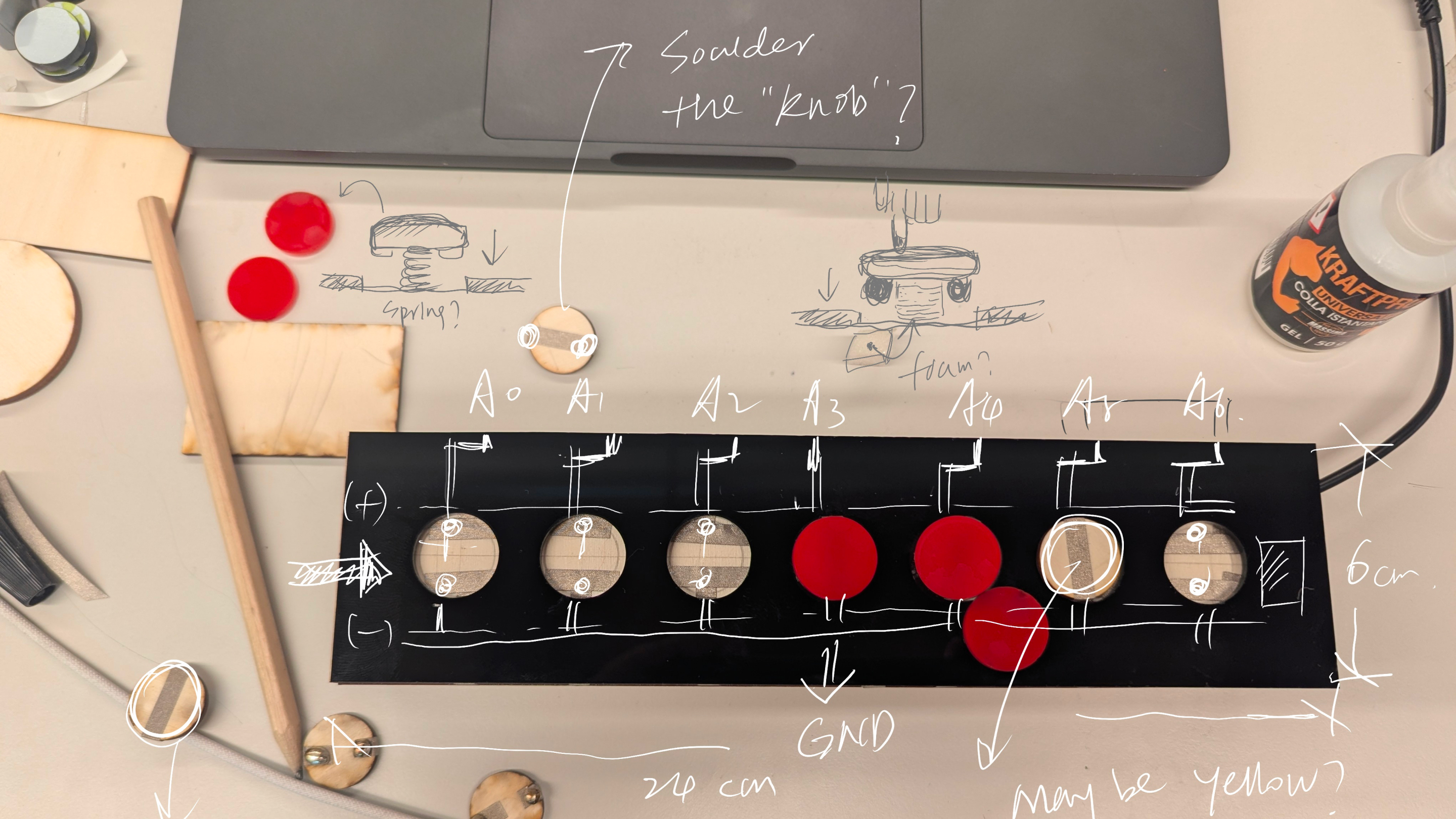
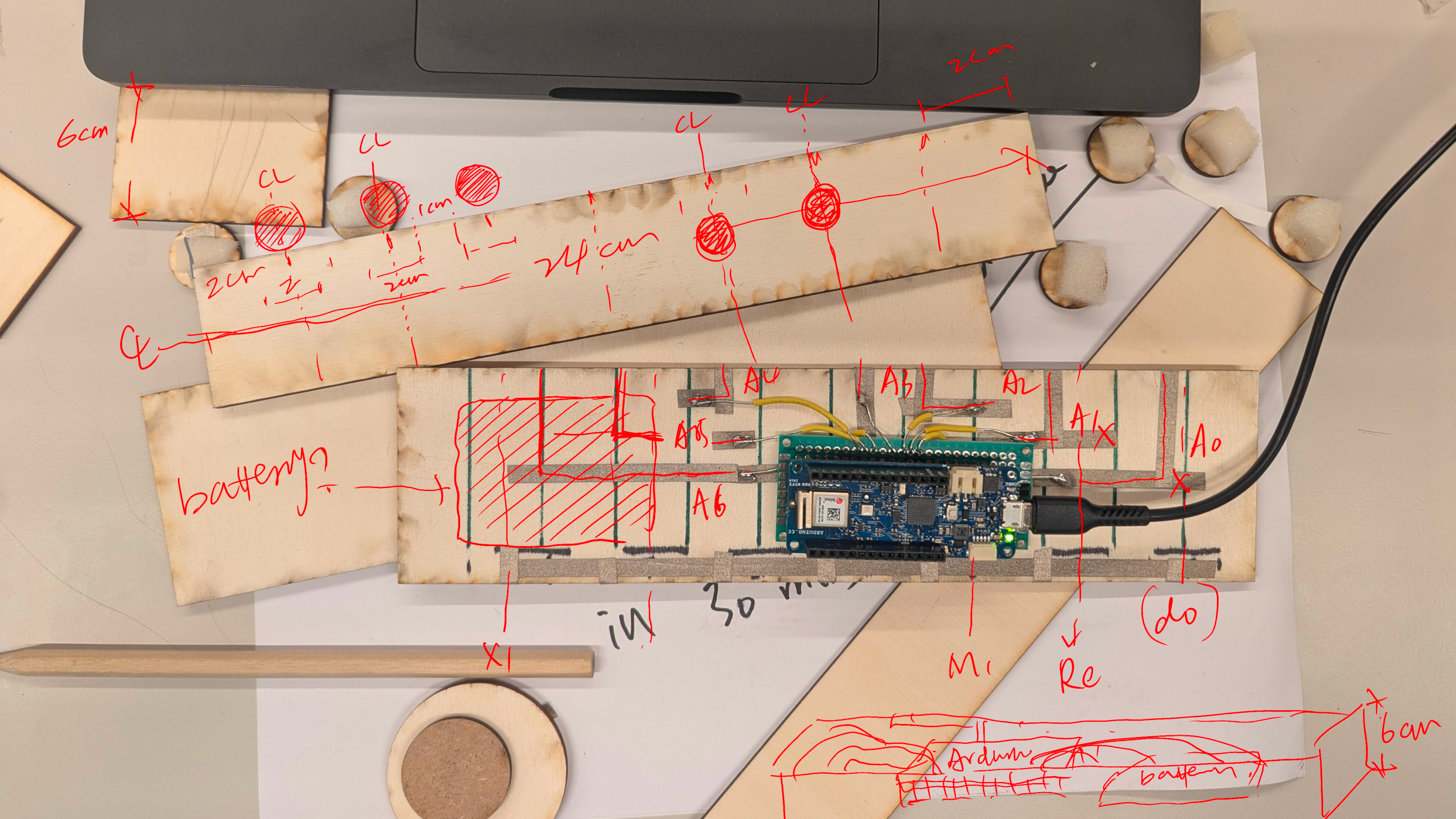
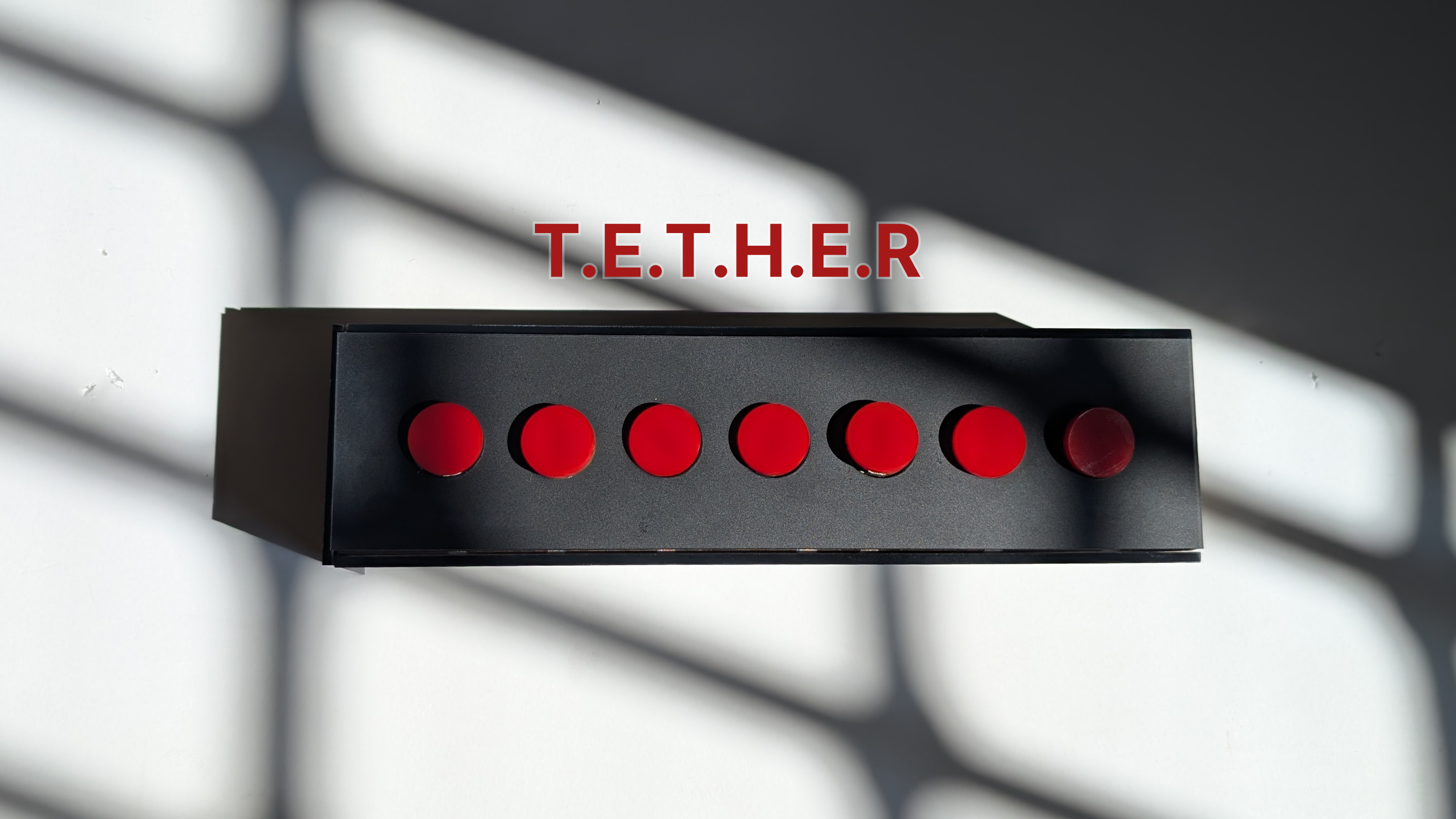
Underneath, the object is powered by an Arduino and a battery, and features seven buttons: one for each note of the scale, Do through Xi. Power on the device, connect it to the app, and you're ready to play or record. Every recording is saved locally on your phone, where you can play it back, rename it, or delete it whenever you like. You can also assign a drone, a sustained background note, to any recording, adding a simple harmony underneath the melody you played. When you're happy with a take, share it instantly with friends through any messaging app.
The current sound design mimics a piano. Future iterations could explore other instrument voices, or let multiple Tethers sync together so people can jam in the same key.
With its small size and portability, Tether lets you play music anywhere and share it instantly. It doesn't ask you to give up your phone; it asks the phone to step back into a supporting role, a tool that enhances the object and the experience, rather than the center of it.
Behind the scenes, Tether was built in close collaboration with Claude, Anthropic's AI coding assistant, working conversationally to write the Android app and Arduino firmware, implement the Bluetooth connection, and build features like recording, and playback.