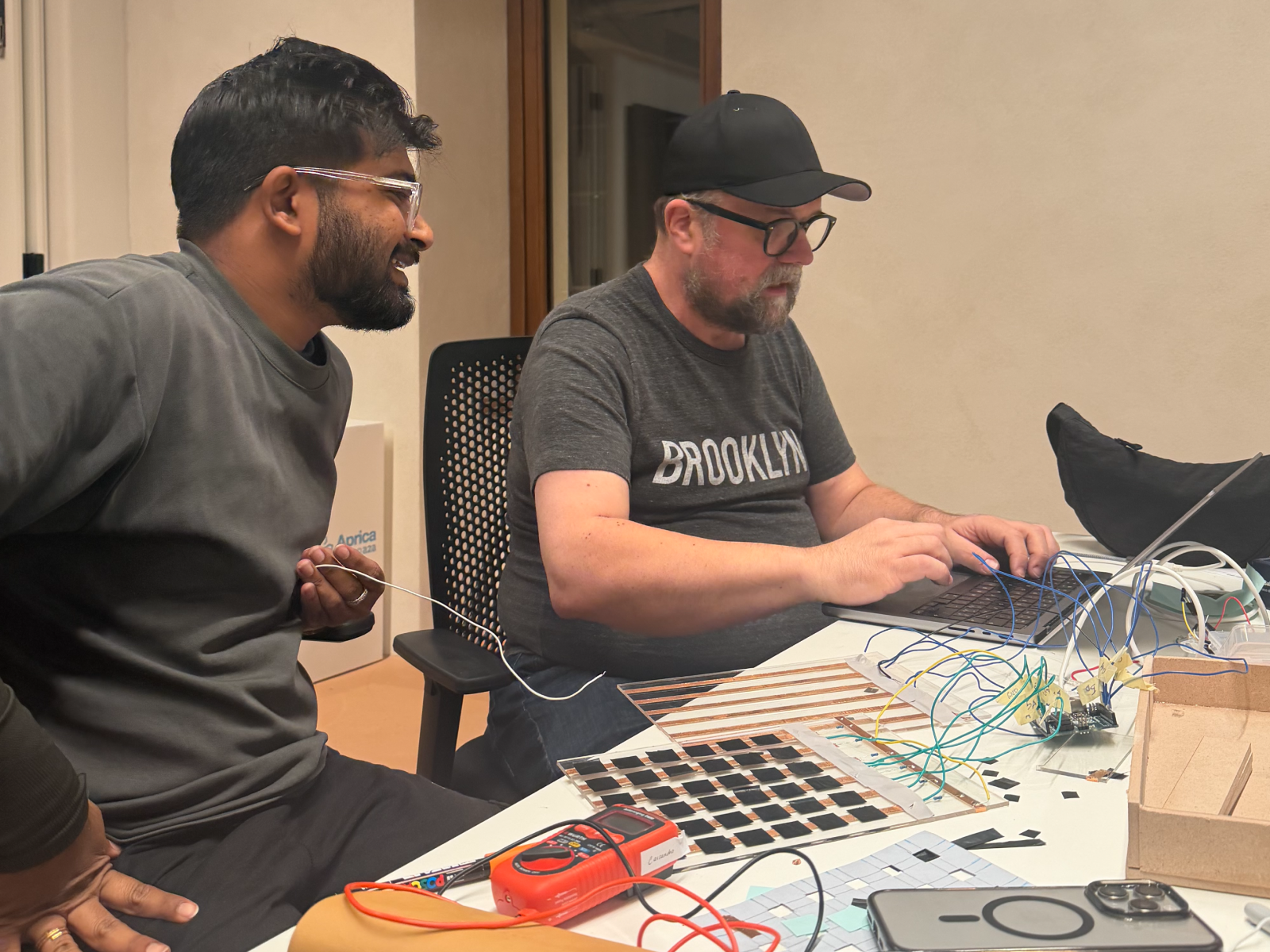
For this project our group wanted to recreate what happens inside a touchscreen, like the ones we use every day on our mobile phones or on the many interactive devices now found throughout cities.
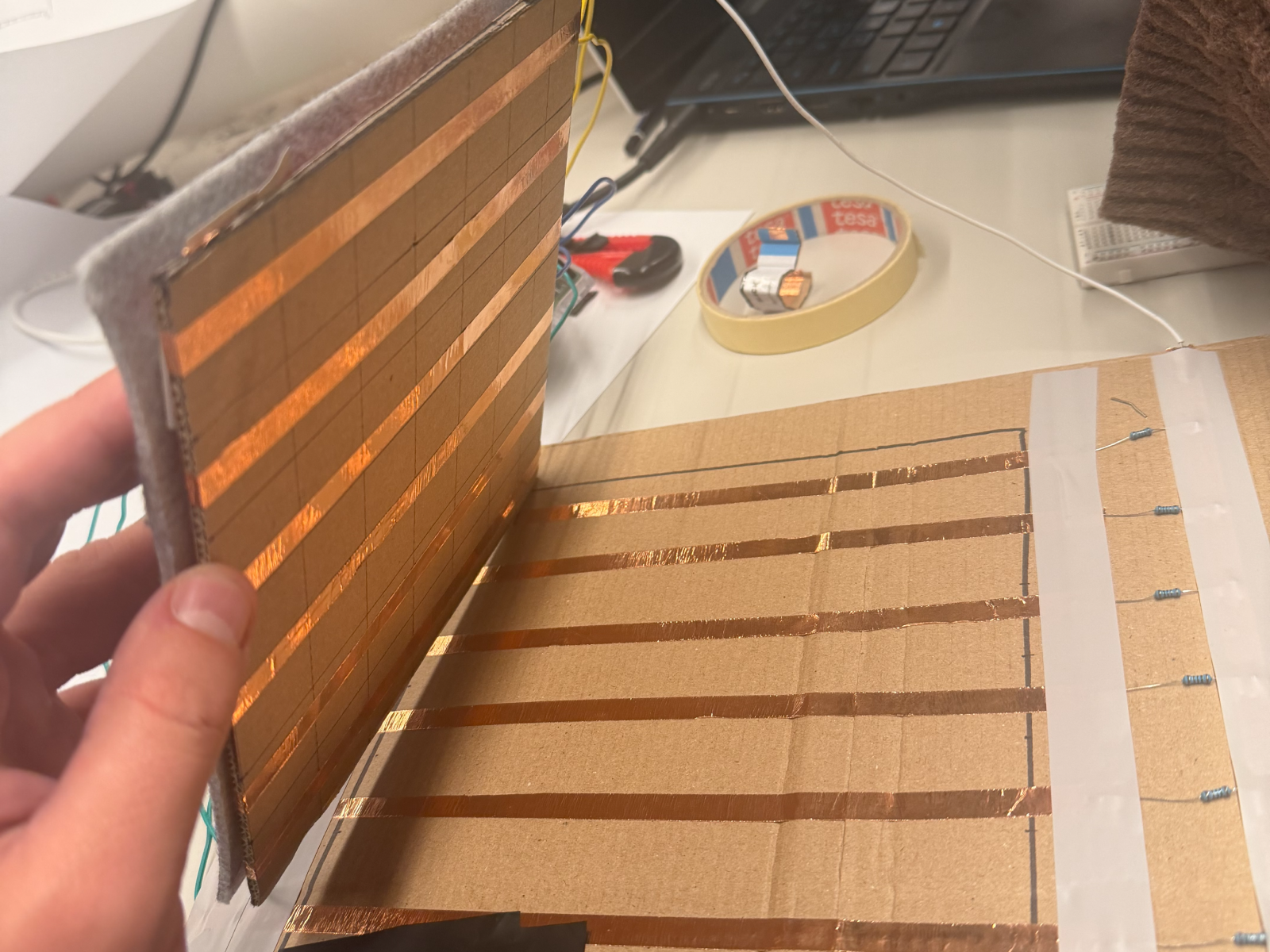
To achieve this, we connected an Arduino to a series of plastic rectangles, onto which strips of copper tape were attached. Using these elements, we constructed a grid that was divided in the middle, mimicking the structure of a basic touch-sensitive surface.
We then introduced pieces of conductive fabric and mapped the entire grid so that the system could recognise the exact point at which a finger was pressed. This process required careful calibration in order to ensure accuracy and responsiveness across the whole surface.
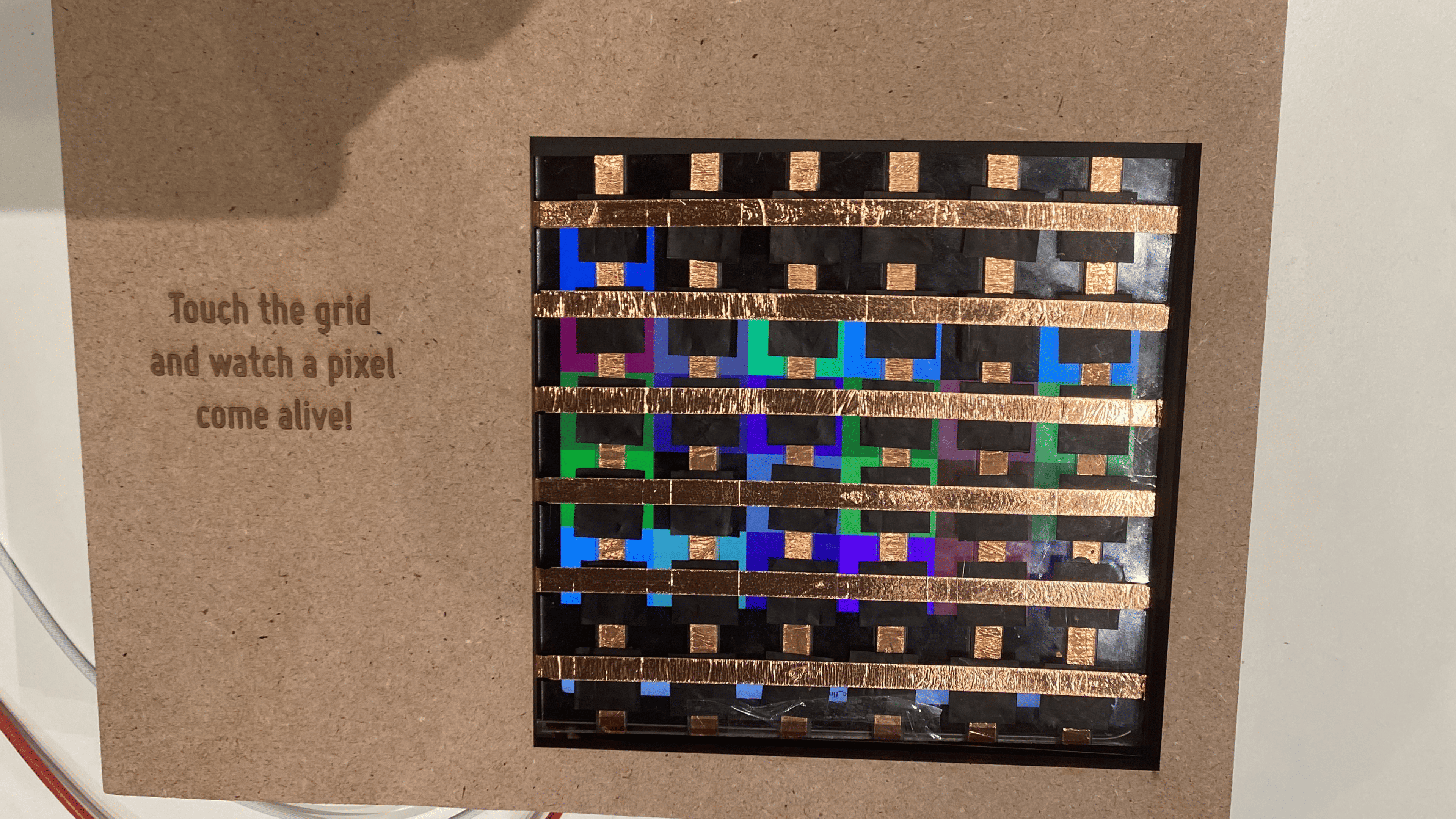
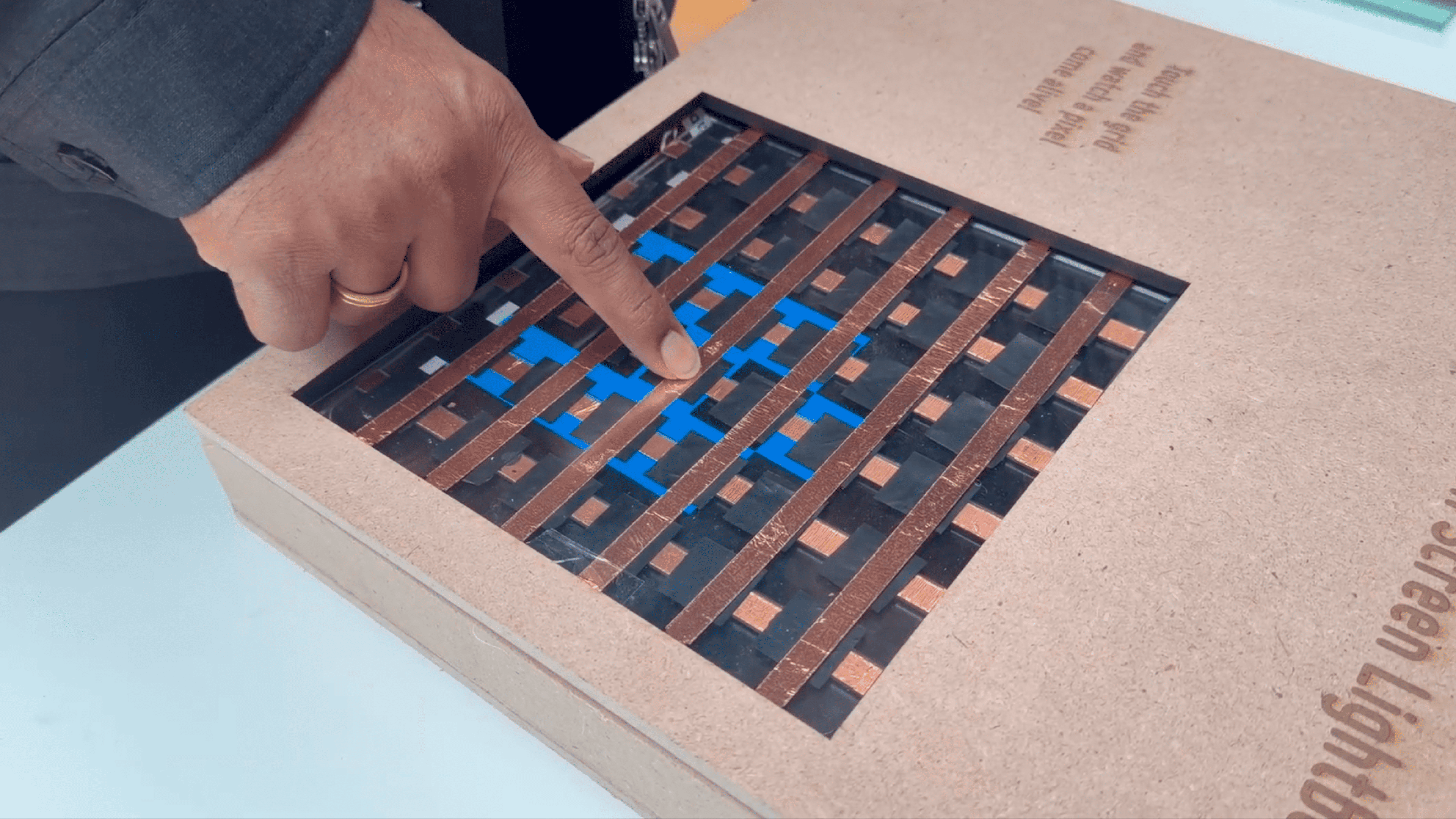
Once the interaction was working reliably, we built the box designed to contain all the components: the Arduino, the grid, the complete wiring system, and an iPad which, when connected to a PC, allowed us to visualise where the grid was being touched by illuminating the precise point of contact in real time.
Through this project, we became more aware of how much technology is embedded in the devices we use every day. Even something as apparently simple as a touchscreen conceals a complex series of processes, and attempting to recreate it revealed just how many technical and conceptual challenges lie behind everyday interactions.
.png)