Humming a song while doing something enjoyable. Tapping on the table while thinking hard. These are small, unconscious sounds we make when we slip into a subconscious mode, sound as a byproduct of an internal state we're not even aware we're expressing.
Humans make noise naturally. We make sounds when we're excited, when we're stressed, when we're in pain. The sound we produce is a trace of our internal state. Machines do the same. When we hear a noise from the kitchen, we know the washing machine is running. When we hear a particular whir, we know the printer is working hard. Sound lets us understand what a machine is doing without looking at it. Through sound, we come to know the world around us, and in a small way, we start to communicate with the silent machines working alongside us.
But when a sound isn't pleasant, we call it noise, or a designer’s term: friction. And modern life has promised us a quieter, less frictional existence. We've found every possible way to control and reduce the noise our machines make. This is especially true of our phones, the silent partner that helps us with the majority of our daily tasks, yet gives almost nothing away about what it's actually doing behind the screen. What is my phone thinking? What is it doing, right now, after I've asked it to do something?
A doctor doesn't ask a body how it feels. They take its vital signs: a pulse, a temperature, the rhythm of a breath. A phone has vitals of its own: a temperature that climbs, a memory that fills, a charge that drains and is fed again like breath. Vitals borrows that word on purpose.
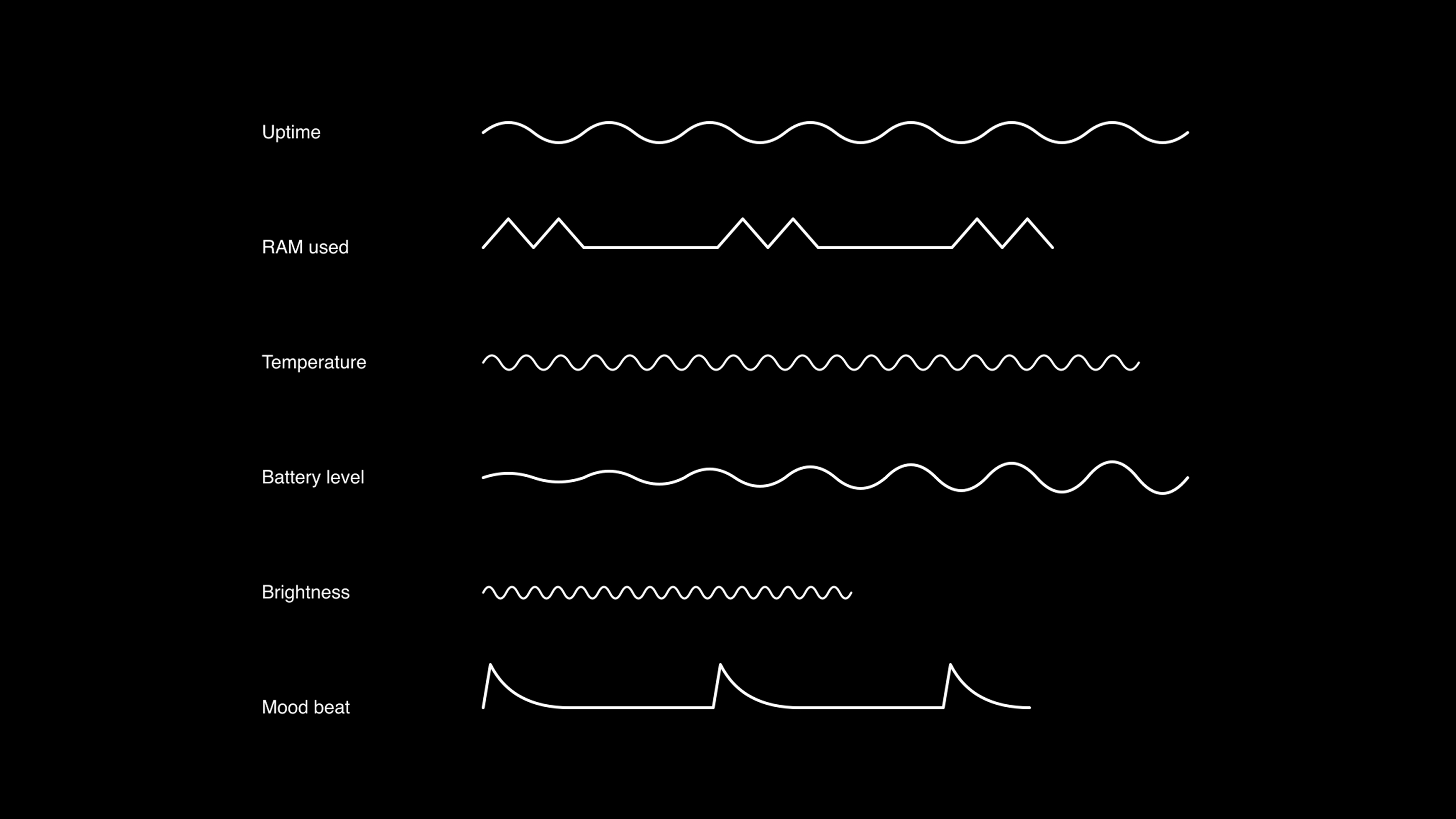
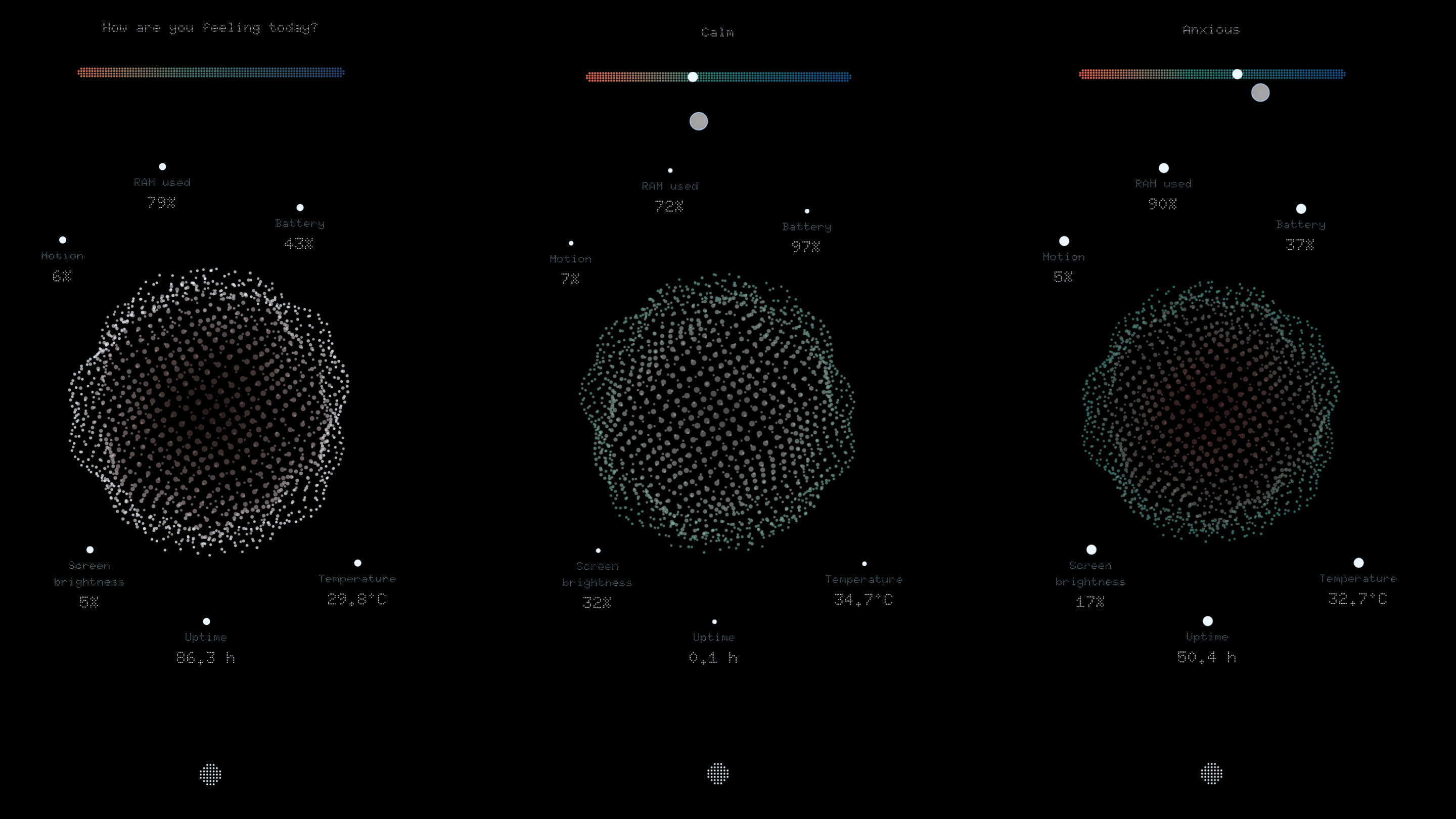
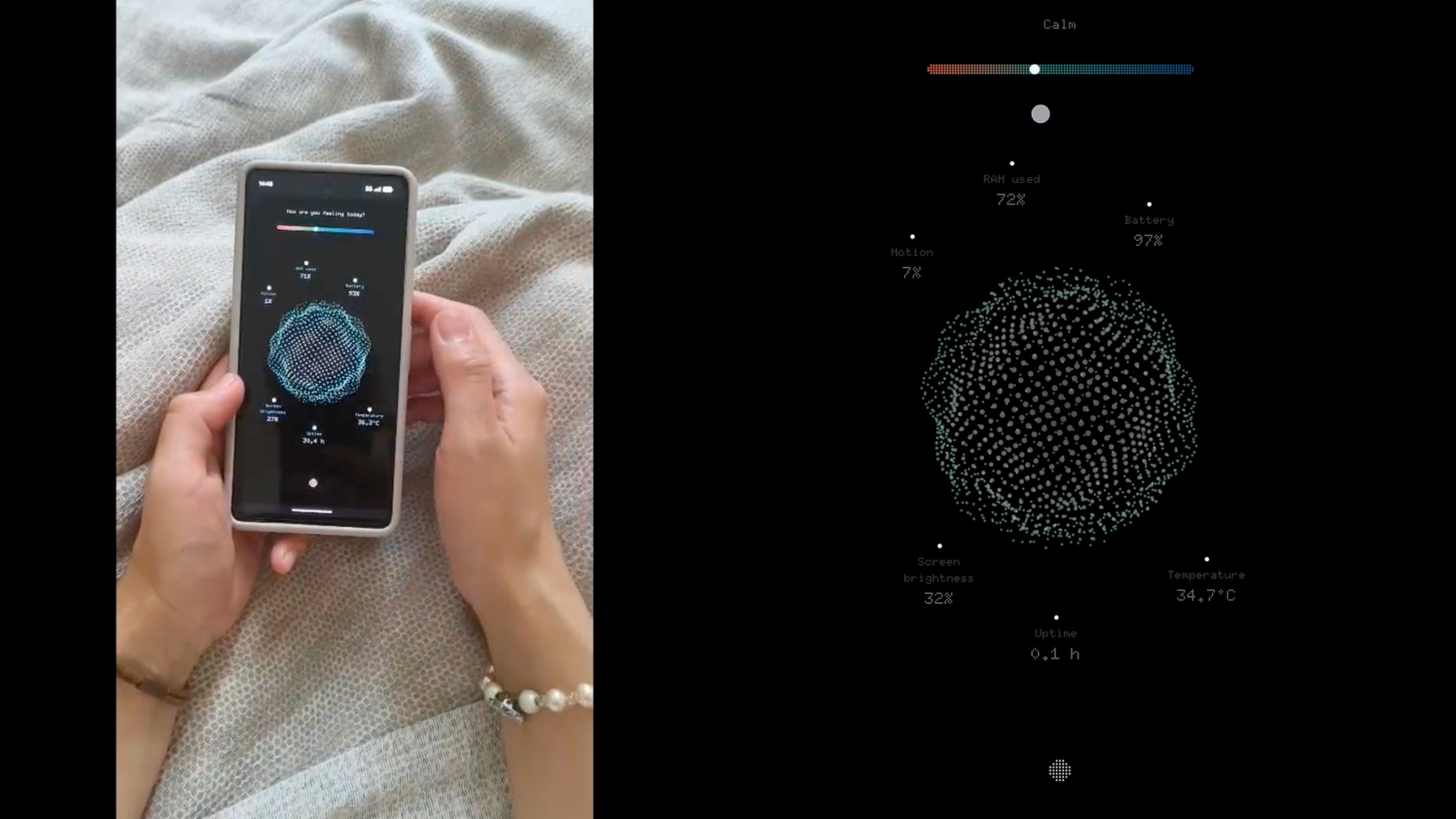
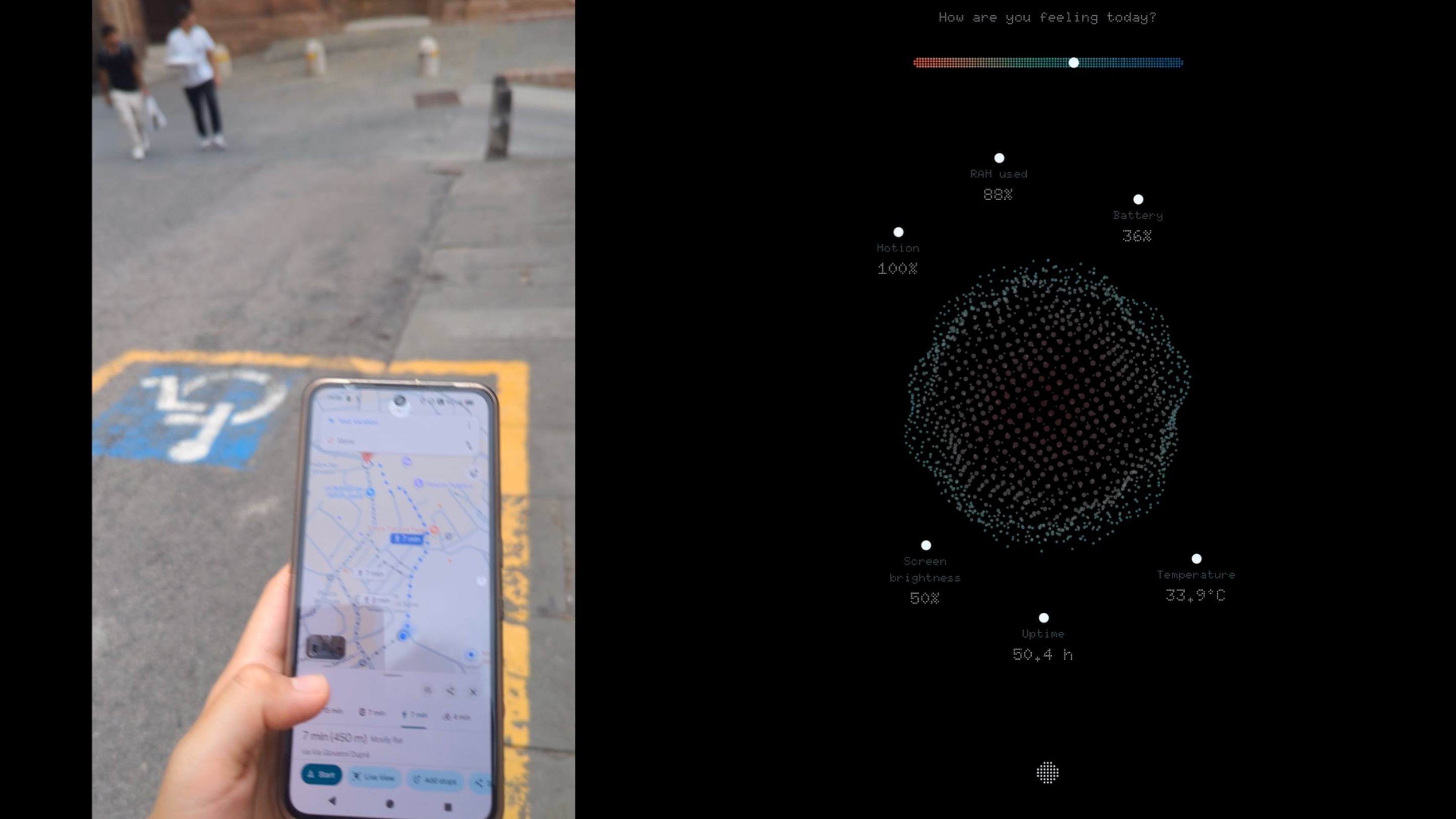
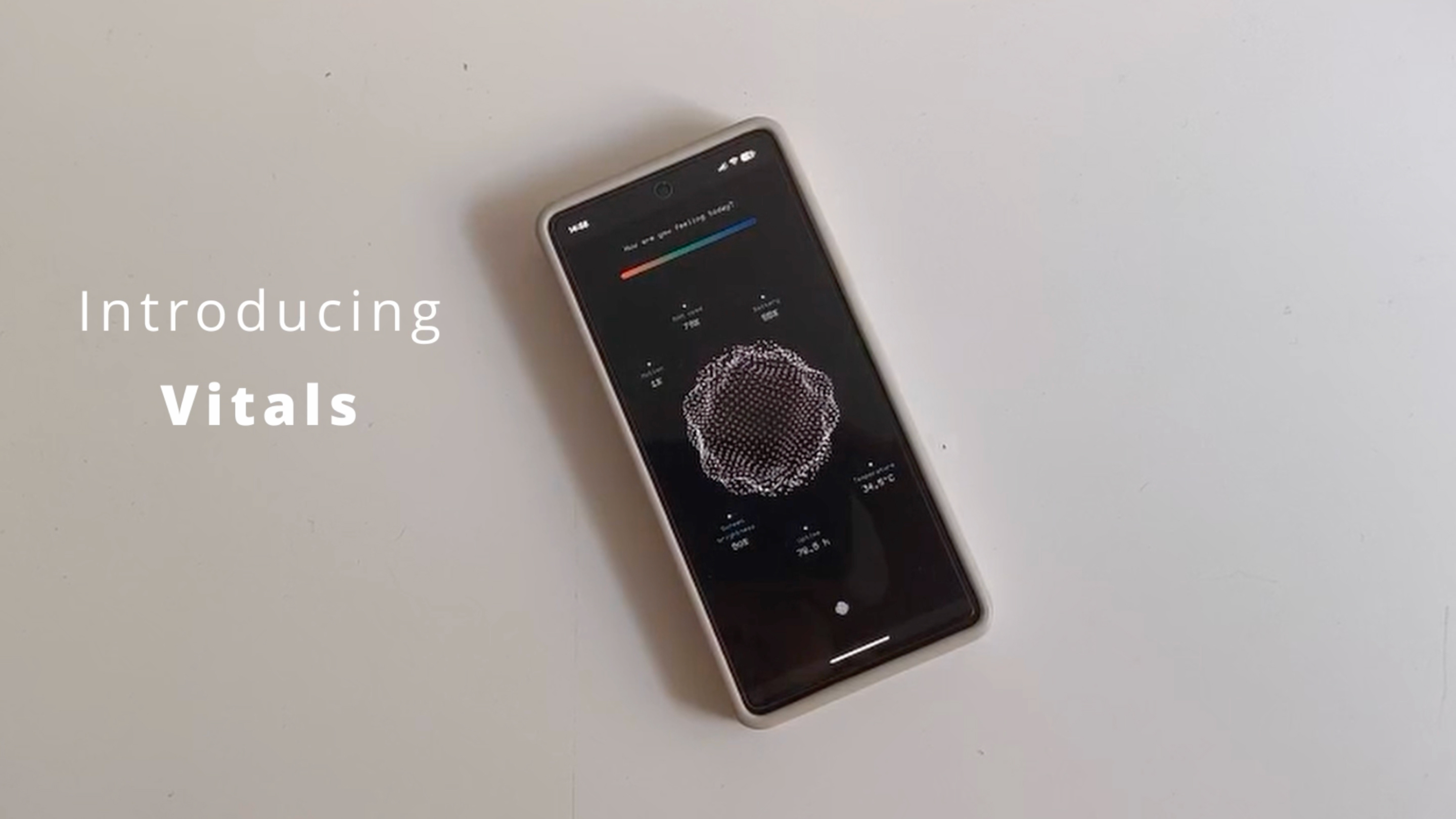
Vitals is an experiment that sonifies several native, on-device metrics of a phone: RAM used, battery level, internal temperature, uptime, screen brightness, and motion, all read from sensors already built into the device. Each metric is mapped to its own sound behavior, so as these values shift throughout the day, the sound shifts with them: an audible trace of the phone's internal state, a phone humming to itself. Alongside the sound, a rotating particle sphere gives that same internal state a visual body, glowing brighter or dimmer, warmer or cooler, as the metrics change.
Vitals also lets the user overlay their own mood onto the phone, not sensed automatically, but chosen by hand, on a simple slider. In doing so, the user isn't only listening to the phone; they're speaking back to it, and the two states, human and machine, blend into one shared sound.
This experiment was built with the help of Claude, which handled the technical infrastructure: the audio engine, the sensor plumbing, the interface, so Yisi could stay focused on the concept itself.