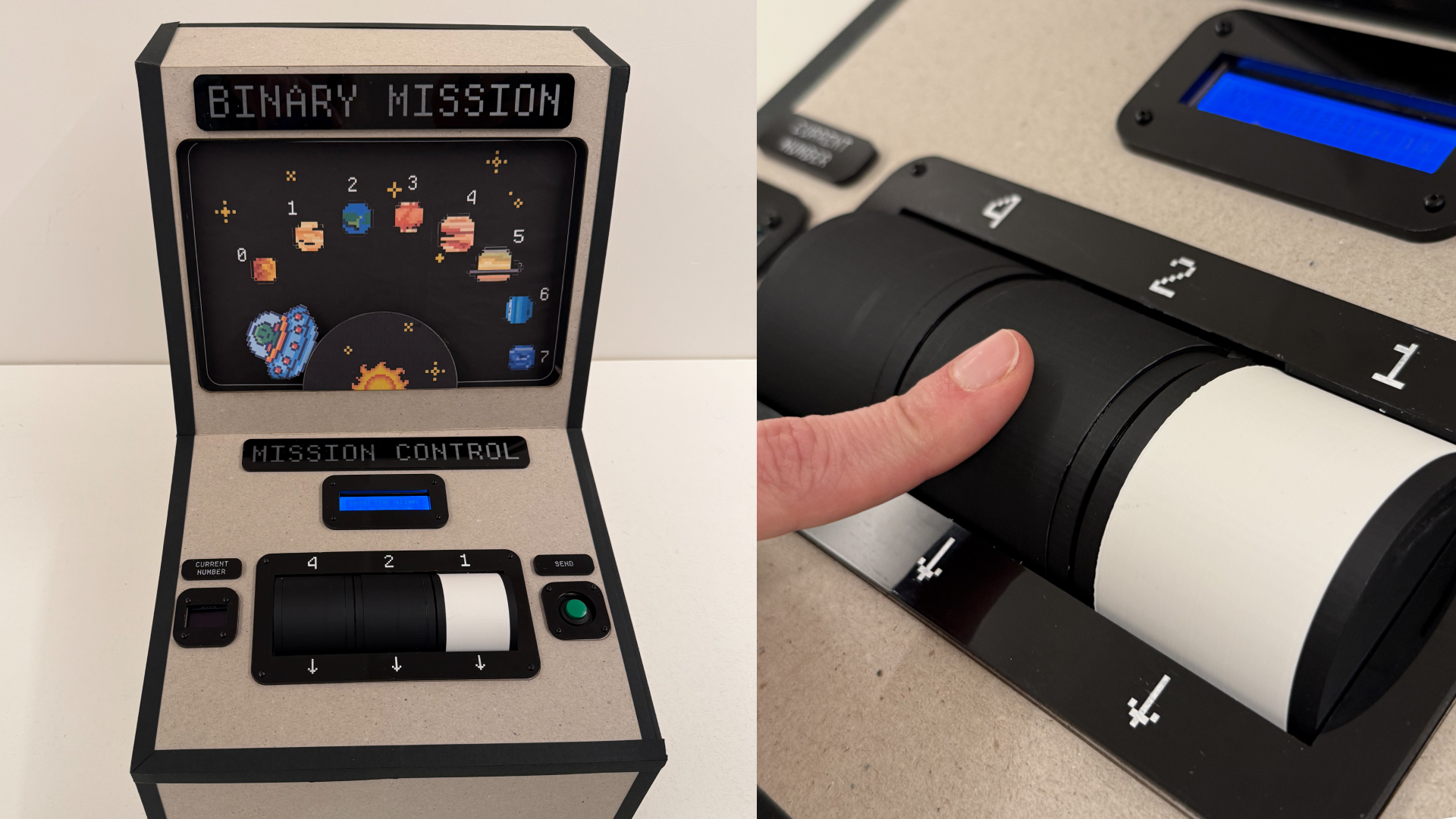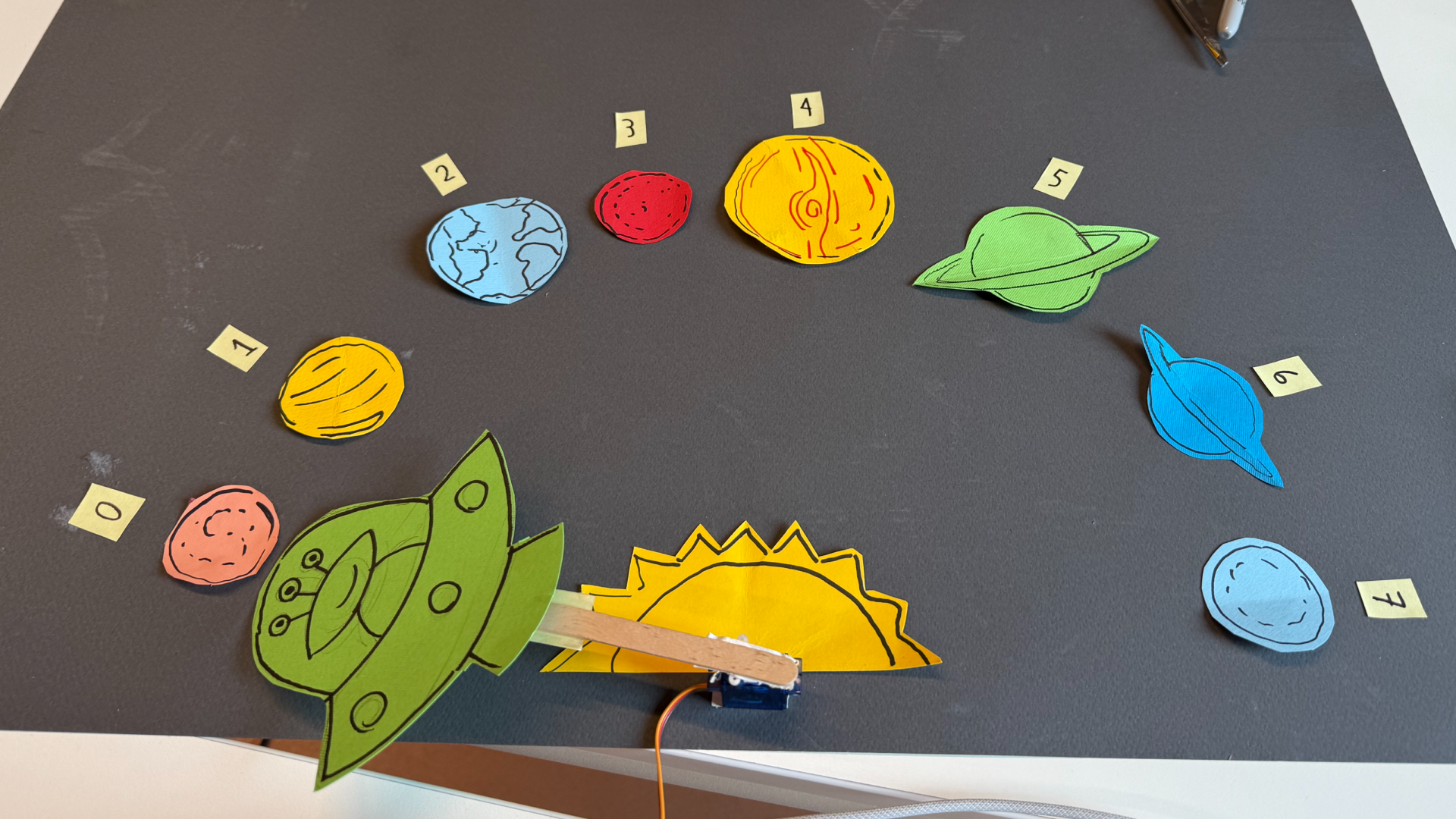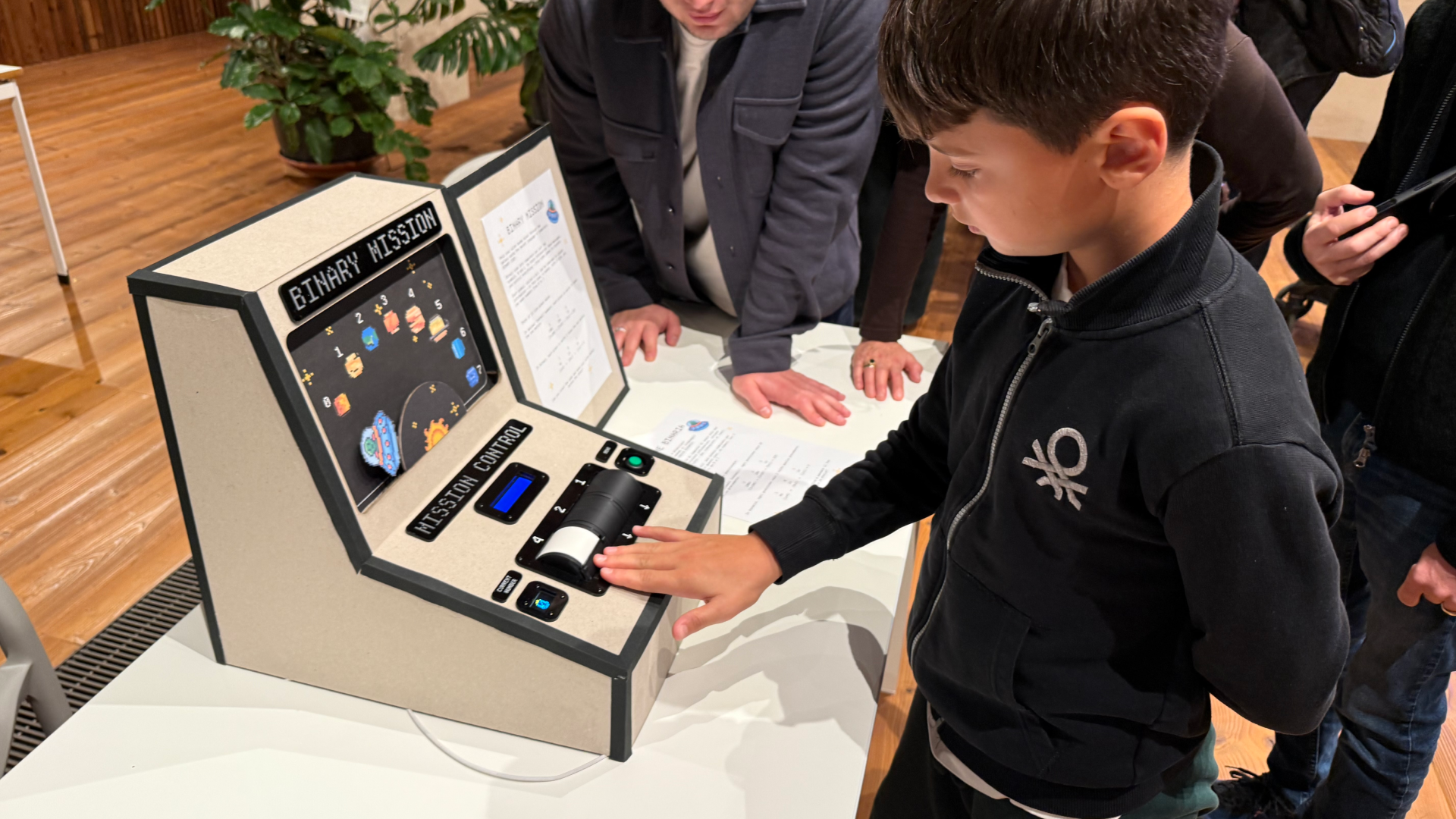
Binary Mission is an interactive game to help kids learn a fundamental building block of modern technology: binary code. Through manipulating the abacus-like knobs of the “Mission Control” panel, a user can send the alien on a mission through space to a destination planet.
The game begins when the user presses the button and receives their mission instruction, a number corresponding to a planet, displayed on the LED screen. The user then turns knobs to generate the correct planet number, using the current number display as feedback to understand what decimal (normal) number is represented by the knobs’ binary number. Each knob corresponds to a 0 or 1 (black or white, respectively), and when put together, the knobs create a 3 bit binary number. For example, white, black, white knobs correspond to 1 0 1 in binary, or 5 in decimal. Once the user has created the correct binary code for the mission instruction, they can send the mission to the alien by hitting the send button. If the user correctly transmitted the correct planet number, the alien moves to that planet and does a little celebratory dance upon arriving - mission success!
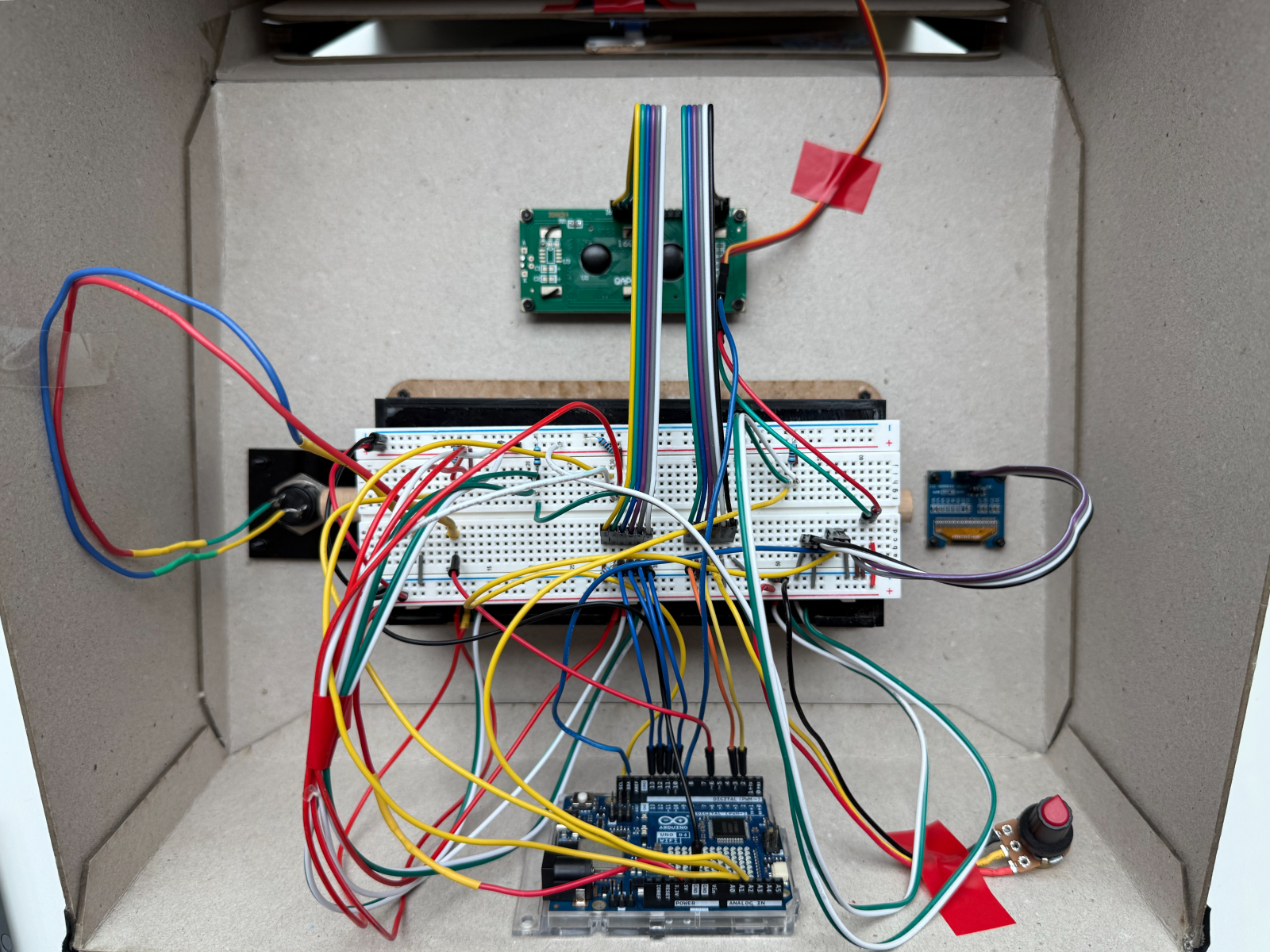
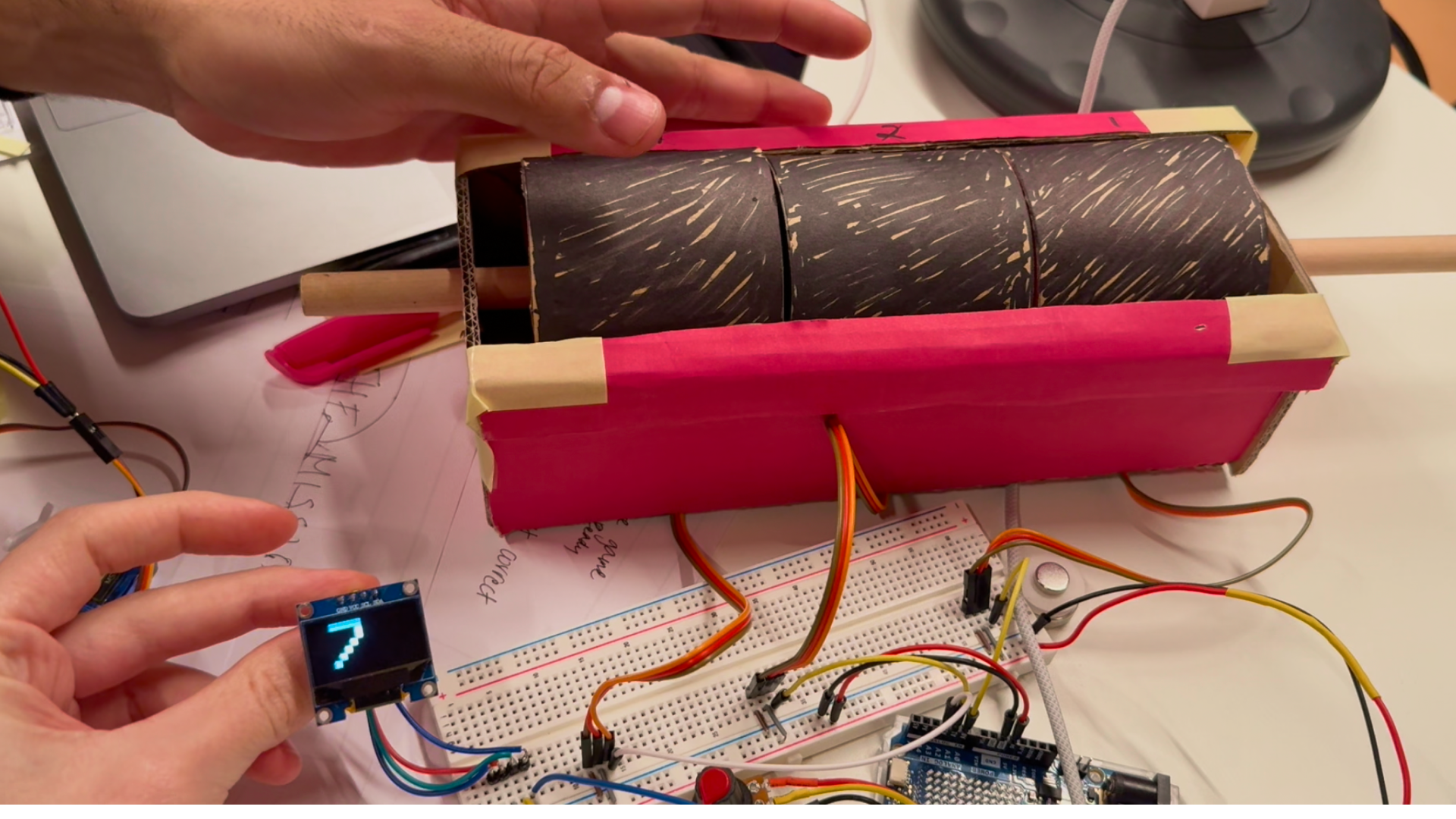
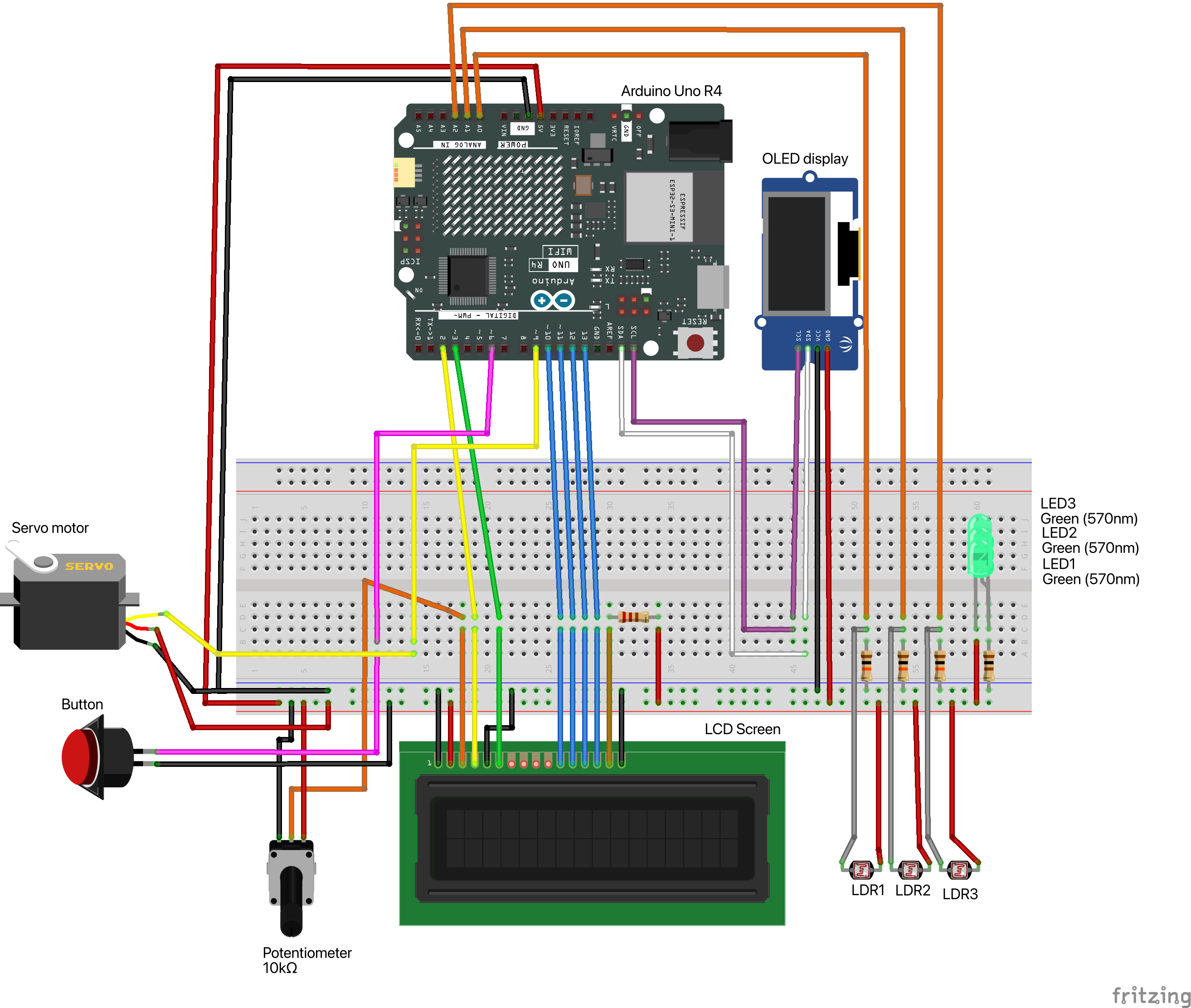
To create this project, the team used an Arduino board, LED screen (for mission instructions), an OLED display (for current number display), and a servo motor to control the alien’s movement. To detect whether knobs were turned to black or white, LEDs were placed behind the knobs next to LDRs (Light Dependent Resistors). The LDRs were able to detect different levels of reflected light from the LEDs off of the knobs, depending on whether the exposed section of the knob was black or white.
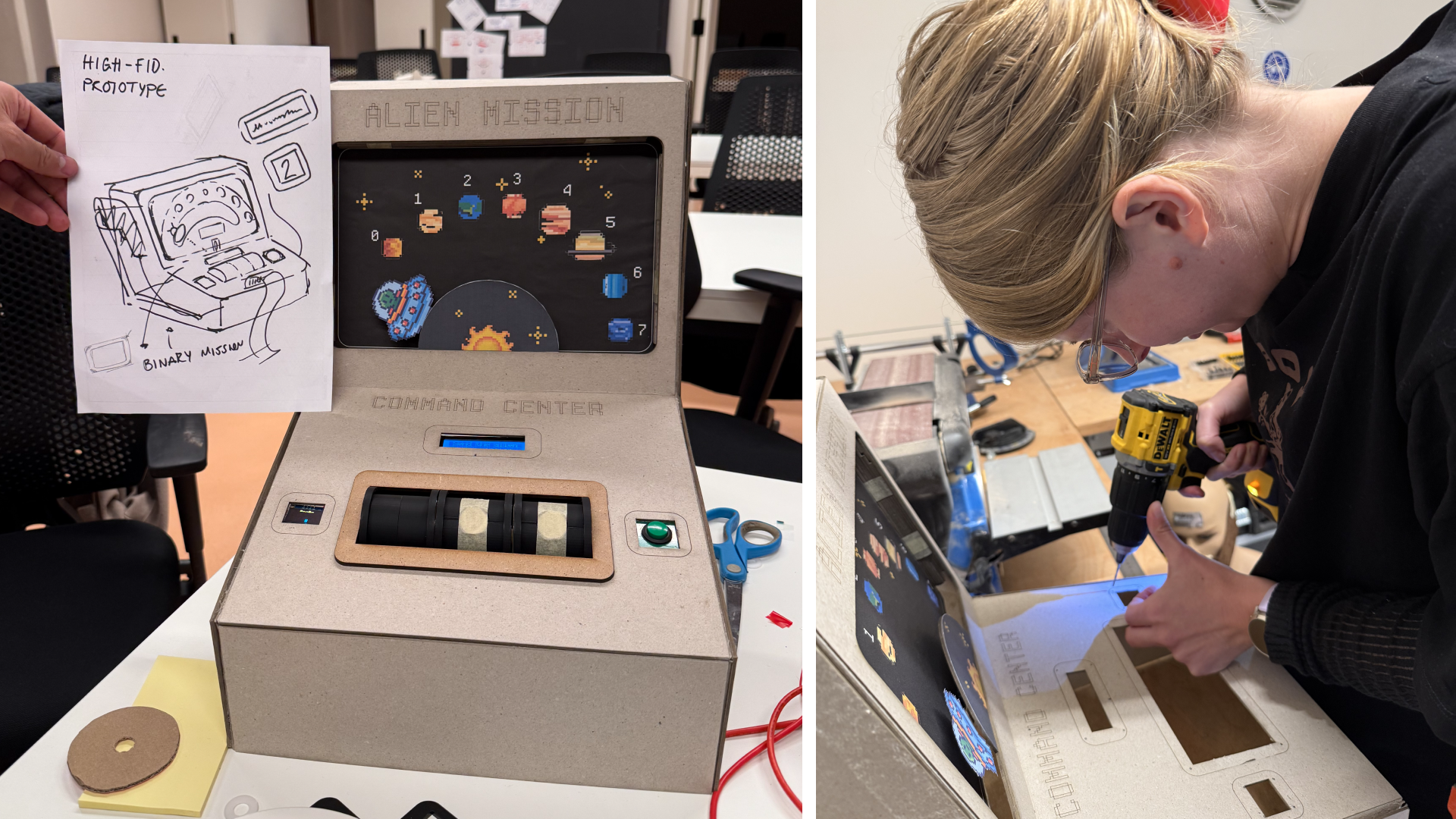
This was the first time the team had worked with LED screens, OLED displays, LDRs, and servo motors, so there was much learned in integrating these electronics into a designed experience. The team also learned the importance of rapid low-fidelity prototyping when working with sensors and actuators - the physical world introduces many unpredictable variables that must be accounted for while moving through the design process.