
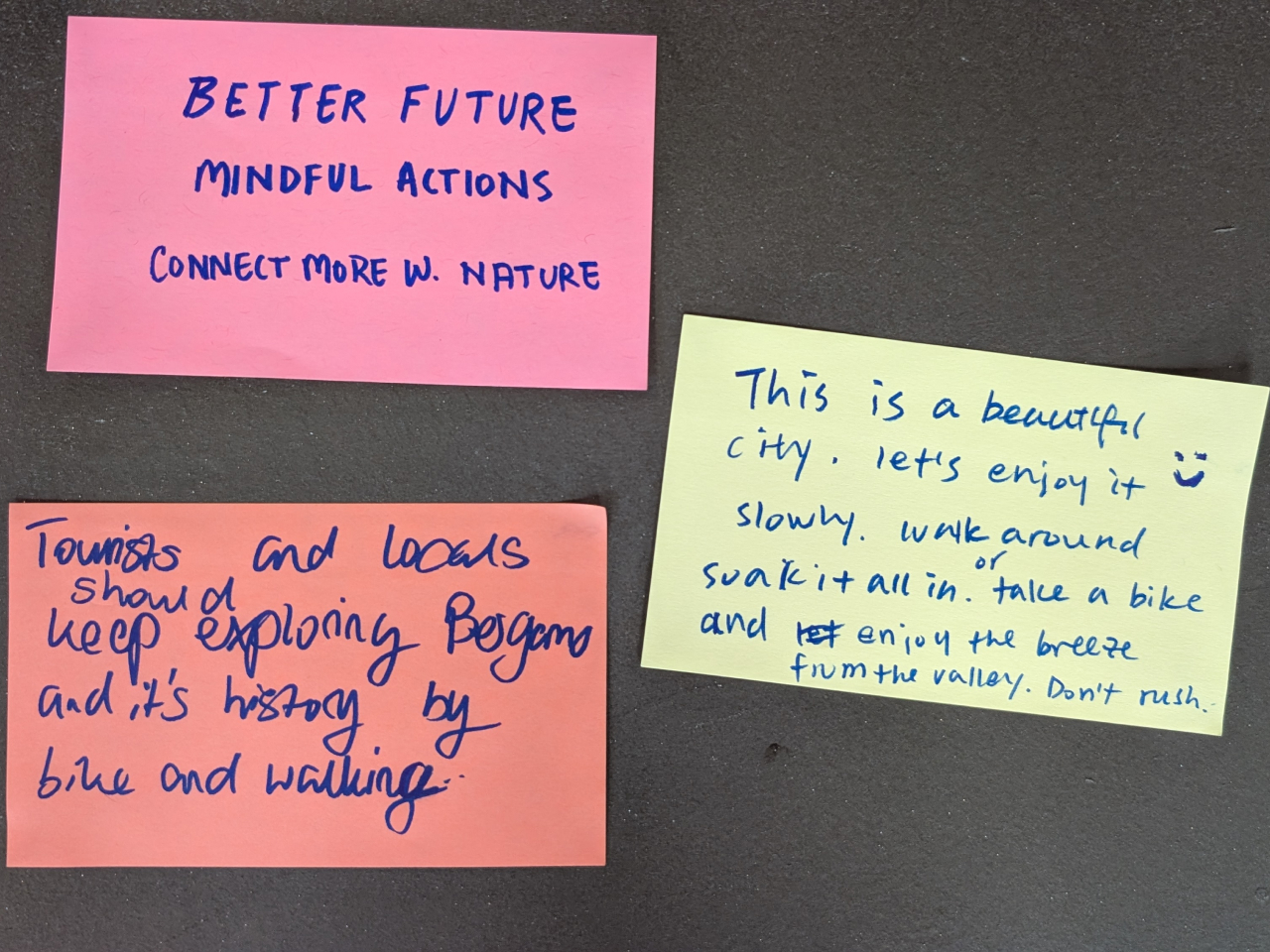
Ecco explores how walking and cycling might become the natural way to experience Bergamo, turning everyday movement through the city into a journey that deepens people's connection to its nature and heritage.
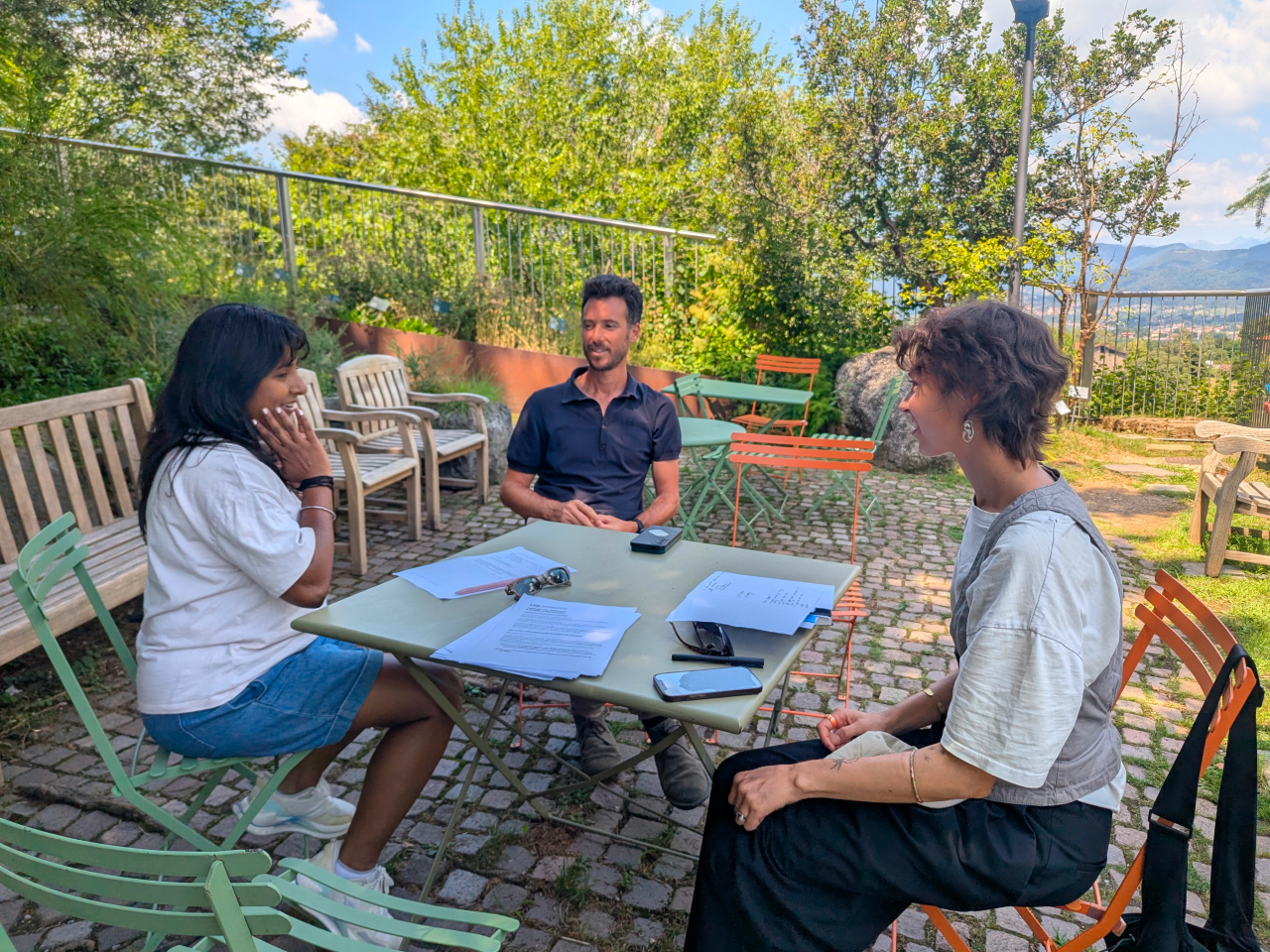
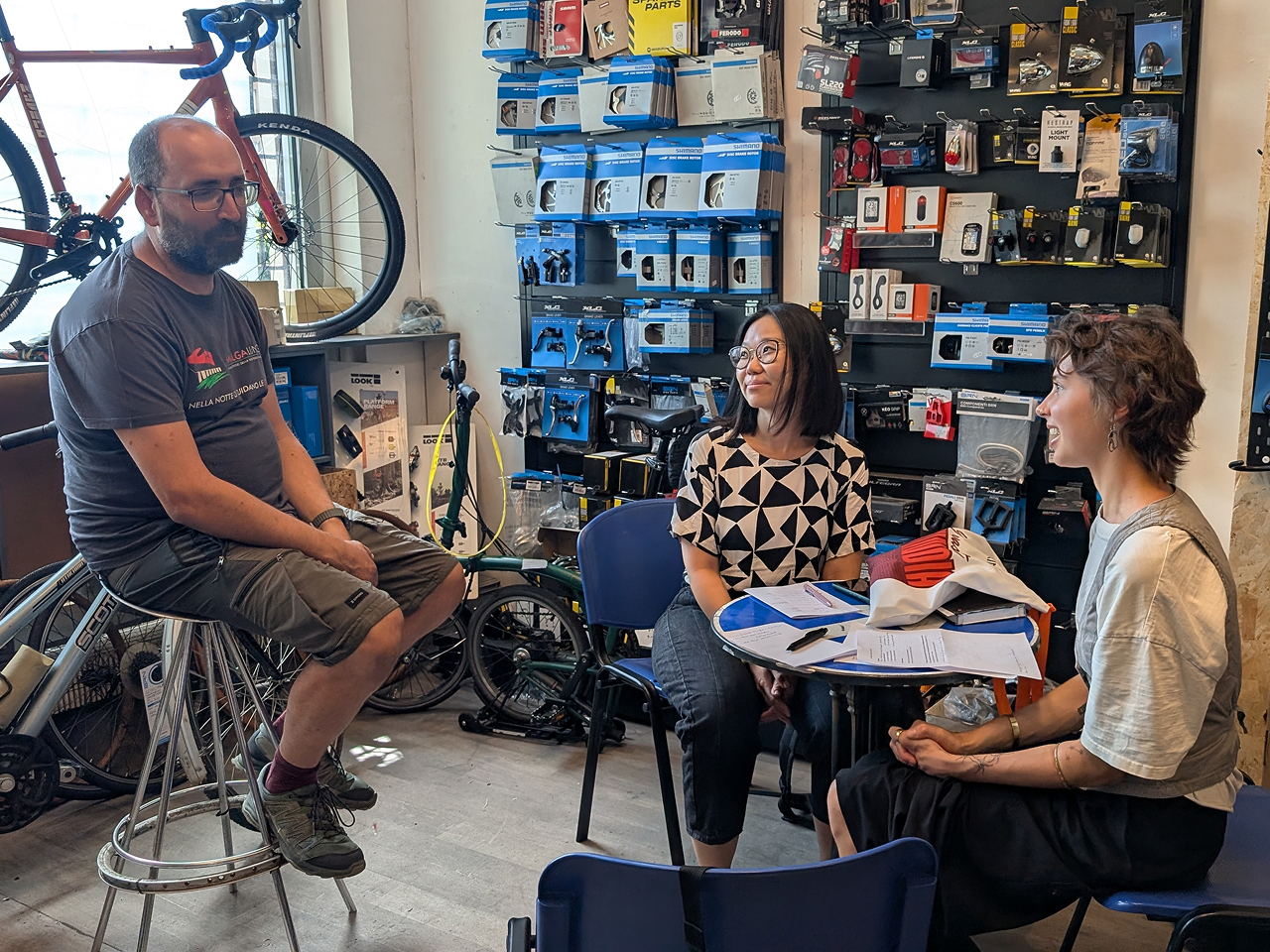
The idea grew out of a simple but striking fact: seventy percent of daily trips across the province, and over half of trips within the city, are still made by private car, a key contributor to air pollution in the region. Conversations with locals painted a more textured picture. Several spoke of the frustration of traffic and the lack of space for cars, while others, an urban planner, a director of a botanical garden, dreamed openly of walking or cycling to work instead. Locals also described how tourism had reshaped Città Alta, revitalising some spaces while pushing others toward becoming showcases mainly for visitors, and away from the everyday rituals residents once held there.
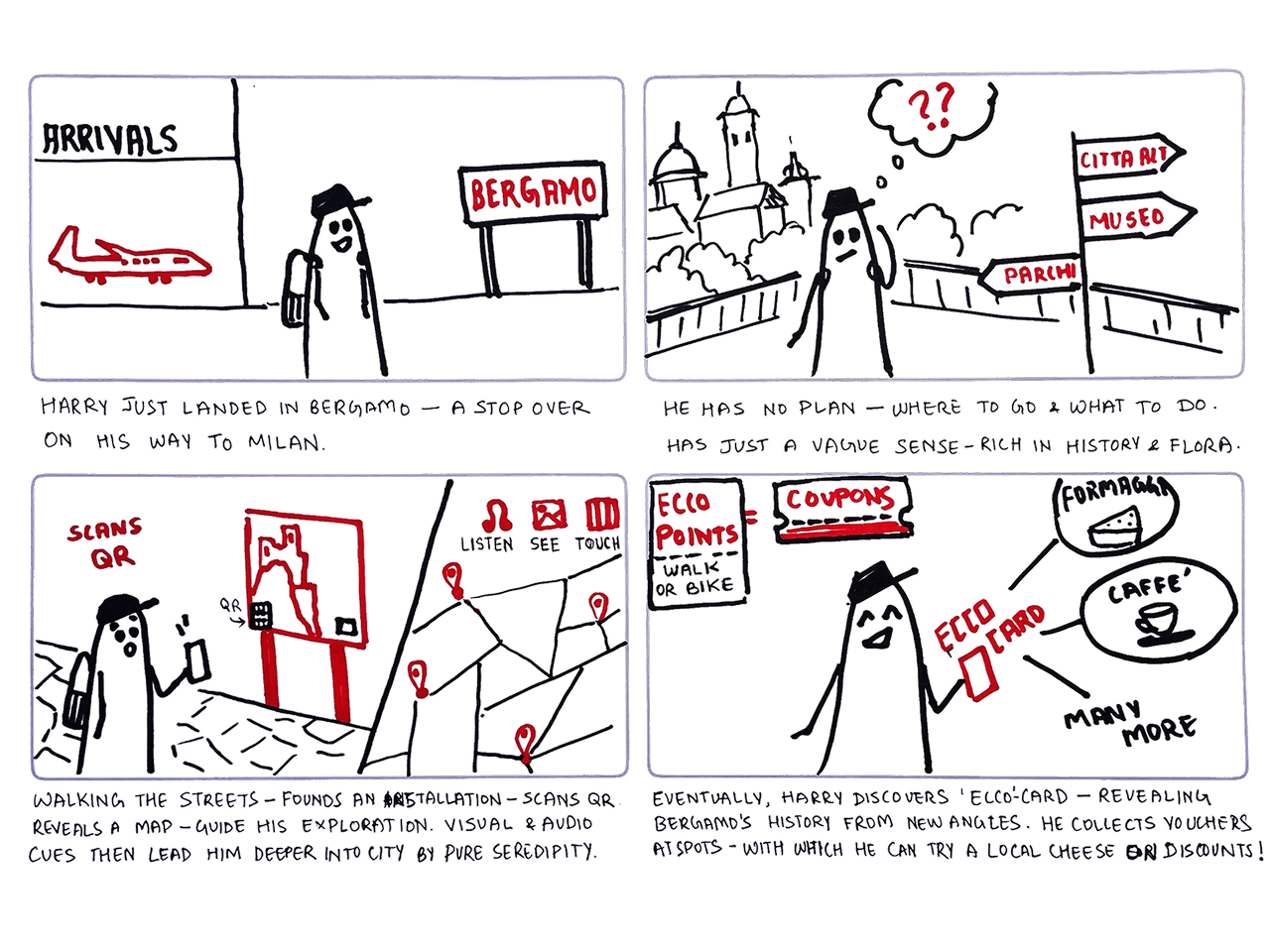
Ecco responds with a card-based rewards system built around walking and cycling. Visitors and residents follow small visual cues placed around the city that lead them toward Ecco spots, installations marking historic or meaningful places, with each installation telling the story behind that particular place, such as Piazza Vecchia, once filled with parked cars, now reshaped into a pedestrian space. Scanning the QR code at a spot reveals a map of all the Ecco spots across the city, along with information on where to get an Ecco card. Once a traveller or local has a card, they can tap it at any Ecco spot to earn points for having walked or cycled there, points which can later be redeemed for vouchers, turning slower, sustainable movement into something rewarding rather than merely virtuous.
At its core, Ecco is a small piece of a larger shift: away from cars and toward slower tourism, protecting the environment while giving residents' health and the city's heritage room to breathe.




.jpg)
