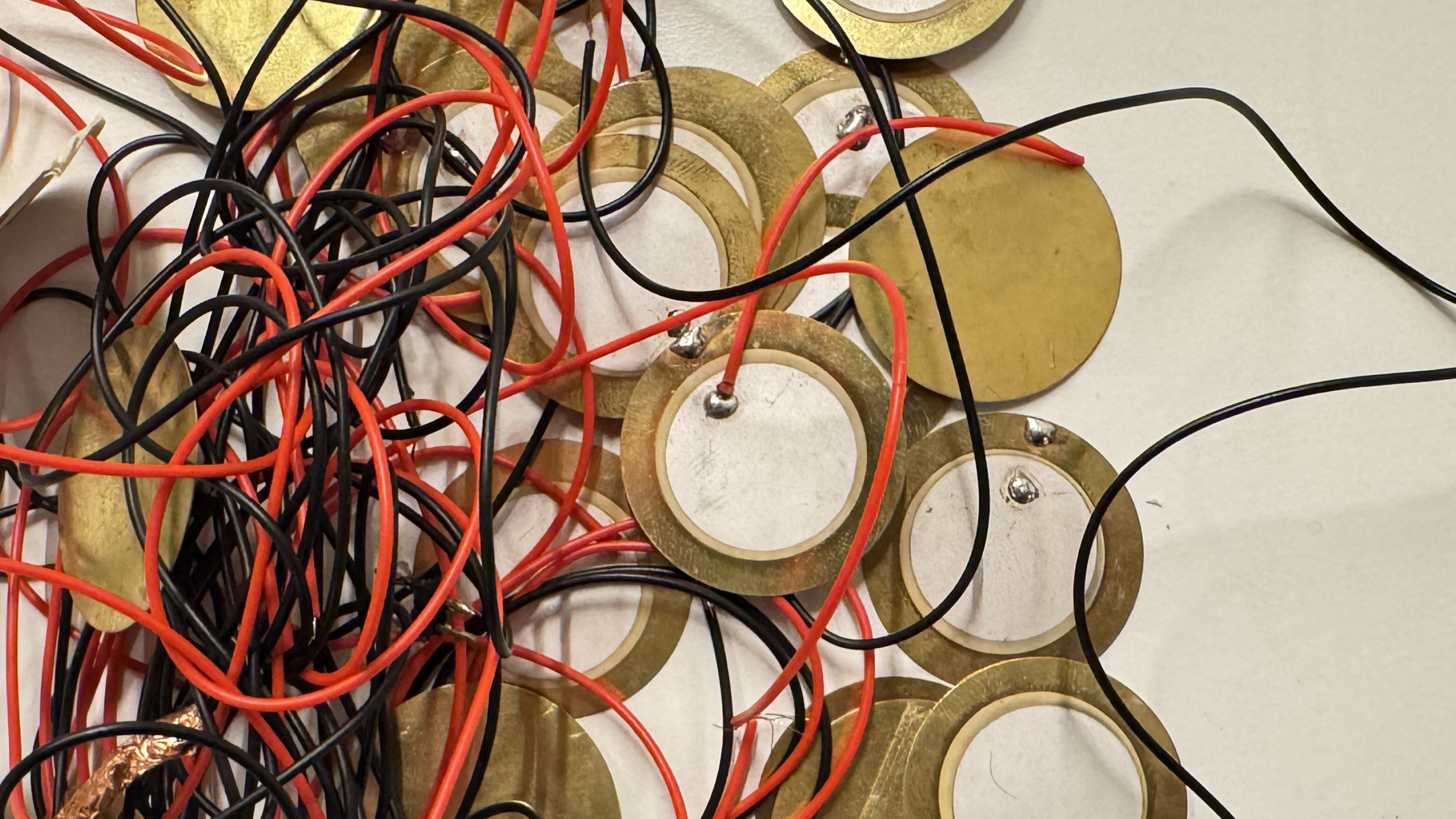
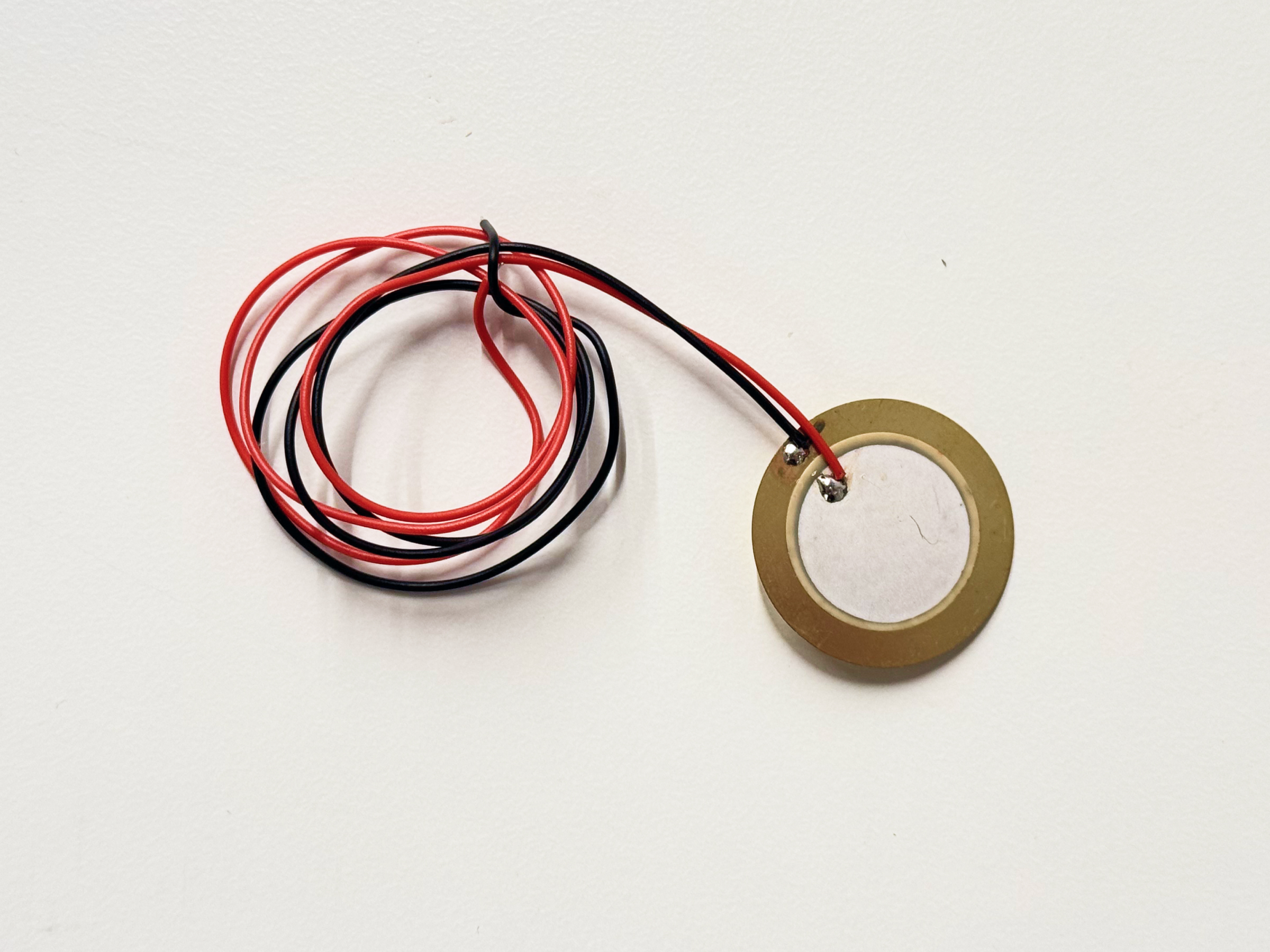
Following the brief 'Pick a material, concept, input or output from this week and ask an exploratory question about it to deepen your understanding', the team chose the Piezo microphone. After using it for some small projects, they became curious about how the Piezo actually works and where it could be applied.
Through research and testing, the team found that the Piezo is not a normal microphone, but a contact microphone. This means it cannot detect speech or sound in a room, but rather the sound and vibrations of a surface — for example, it could be placed on a guitar to detect its frequencies. The microphone's name comes from the Piezo crystal sitting between two metal plates (nowadays, ceramic materials are more commonly used), which is slightly deformed by the vibrations of the surface it is attached to. This deformation causes a change in charge within the crystal, generating a small but noticeable amount of electricity.
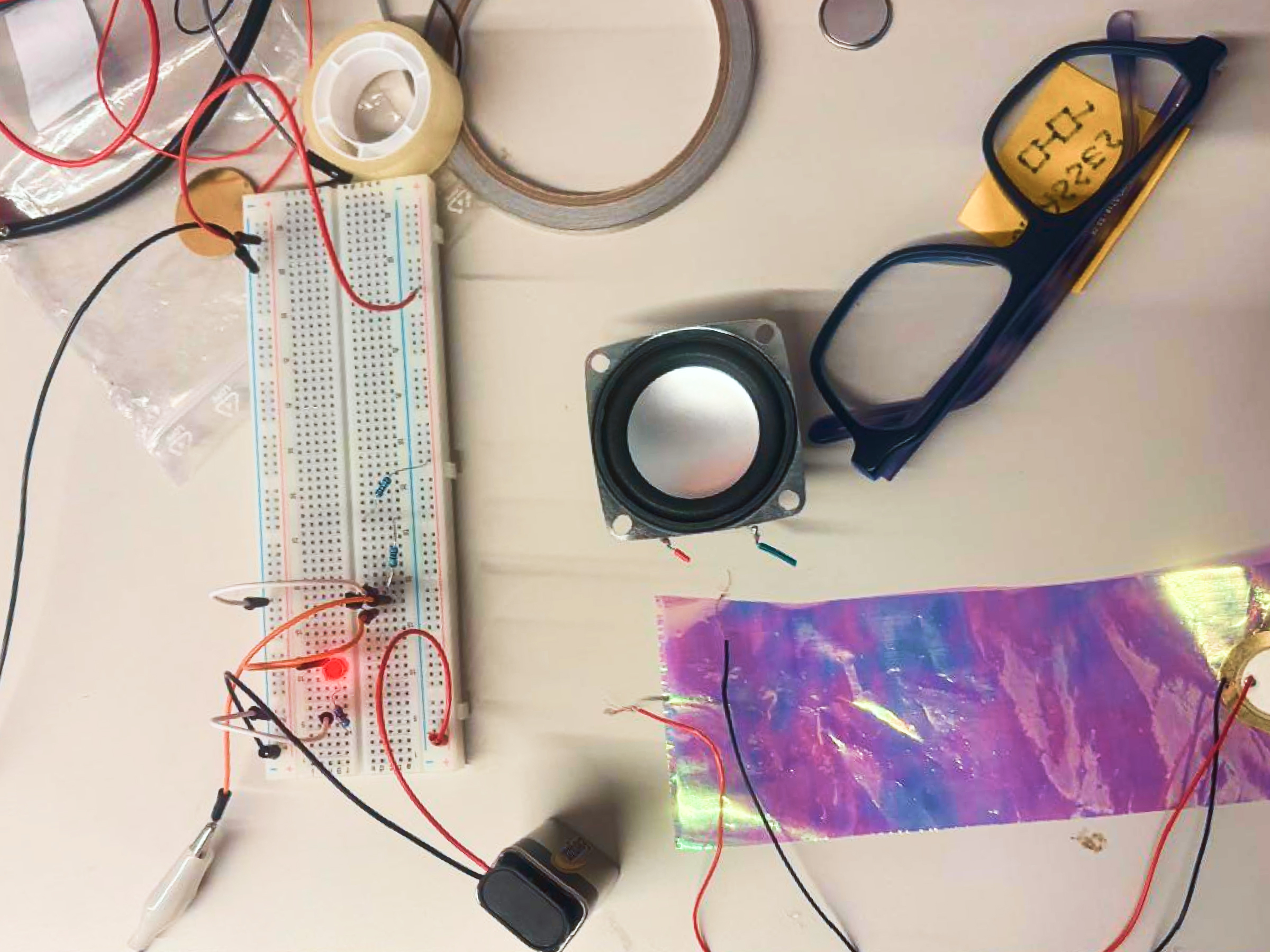
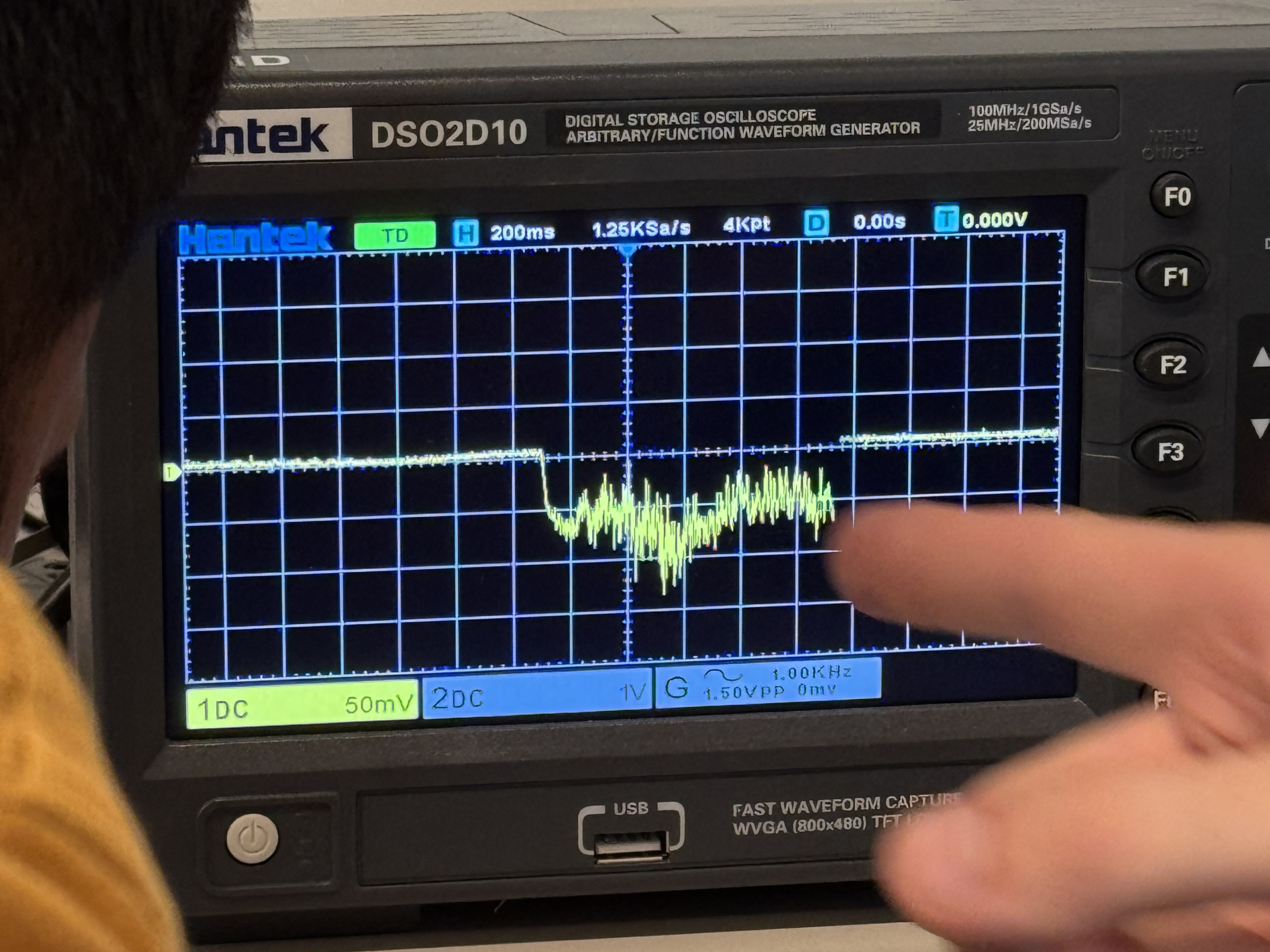
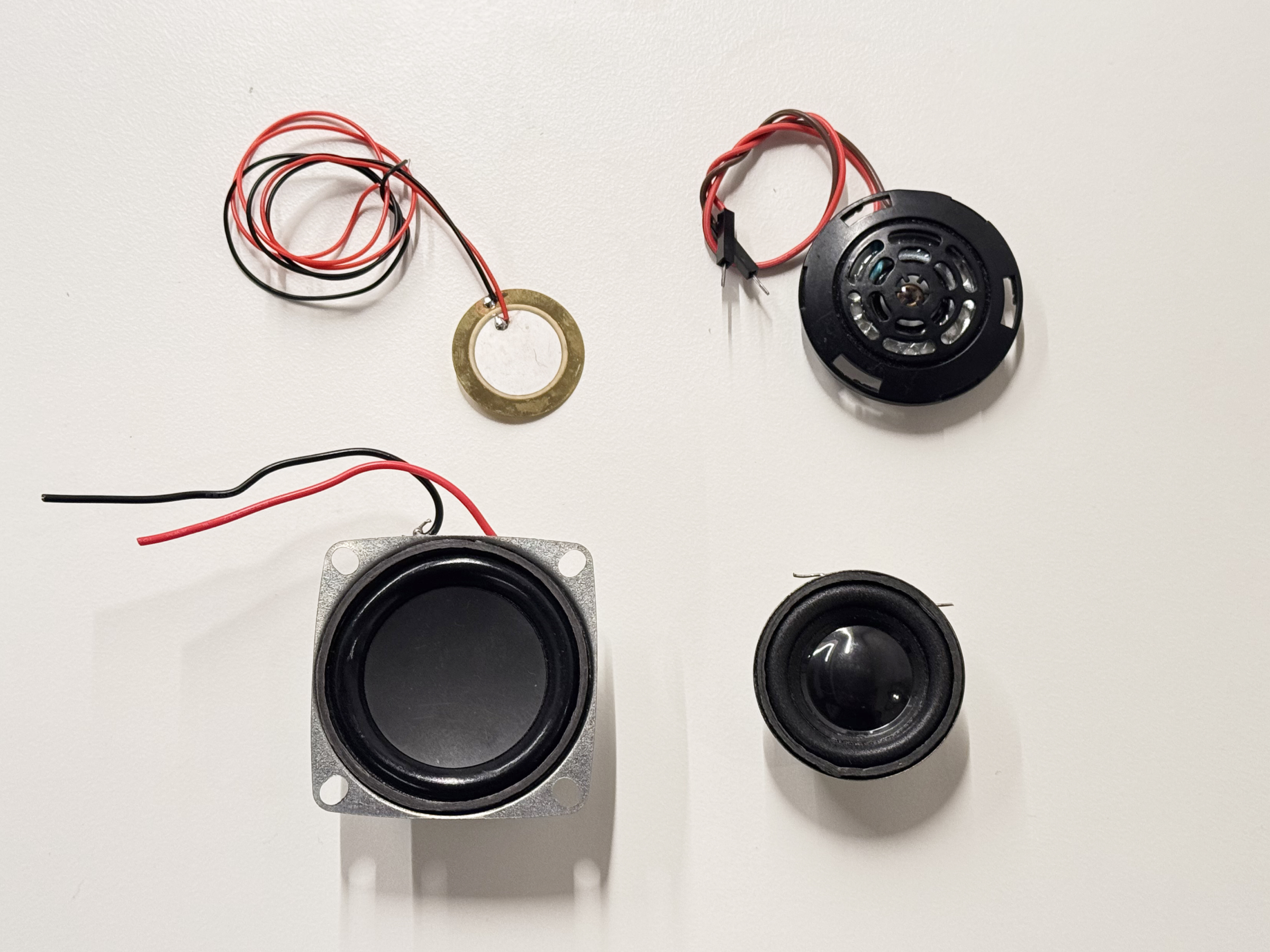
With this knowledge, the team explored the differences between the Piezo and other microphones through extensive research and testing with various speakers on an oscilloscope, trying different types of vibration — from speaking loudly to tapping on the table next to the Piezo and directly on it. Interestingly, the Piezo reacted at two distinct points: once when tapped with a finger, and again when the finger was released. Each reaction shows a charge displacement within the crystal, or material, between the plates. Surprisingly, they also found that a speaker works in a similar way to a Piezo, but with a diaphragm — meaning that more materials than initially thought can act as an input, or even as a microphone.


.jpg)