One of the most essential aspects of human life—the emotional landscape—remains largely underexplored or oversimplified by computational systems. Although emotions shape productivity, relationships, decision-making, and overall well-being, machines often treat them as discrete categories such as “happy,” “sad,” or “angry.” This reductive framing fails to capture the layered, fluid, and sometimes contradictory nature of lived experience. People frequently feel blended emotions, such as nostalgia while laughing or relief mixed with exhaustion, yet these nuanced states remain difficult for machines to interpret.
Recognizing emotional nuance as a form of data opens new possibilities for understanding human experience. If computational systems could perceive emotion in a more sensitive and contextual way, they might support environments that are more attuned to human needs. Contemporary discussions around workplace well-being show that emotional quality directly influences productivity and team dynamics. States such as clarity or fulfillment can foster creativity and flow, while frustration or burnout can slow collective rhythm. This project explores how a workspace might softly reflect and respond to these emotional dynamics in real time.
The team chose to sense an everyday object: a desk lamp. Object-based sensing was selected to establish an ethical boundary, as interaction occurs only through intentional engagement, reducing feelings of surveillance. The lamp is also closely tied to work routines, inhabiting a space where emotional states naturally fluctuate.
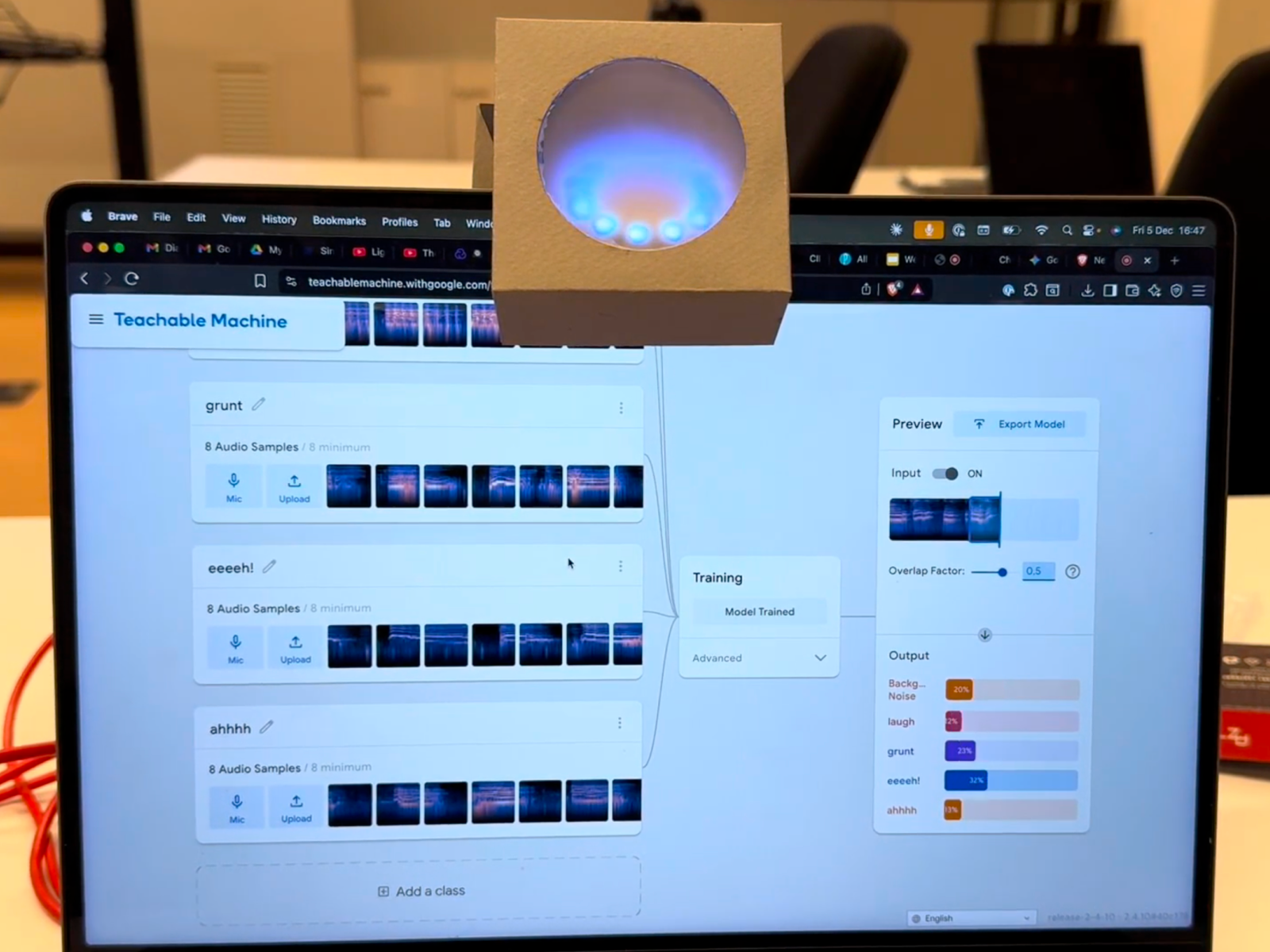
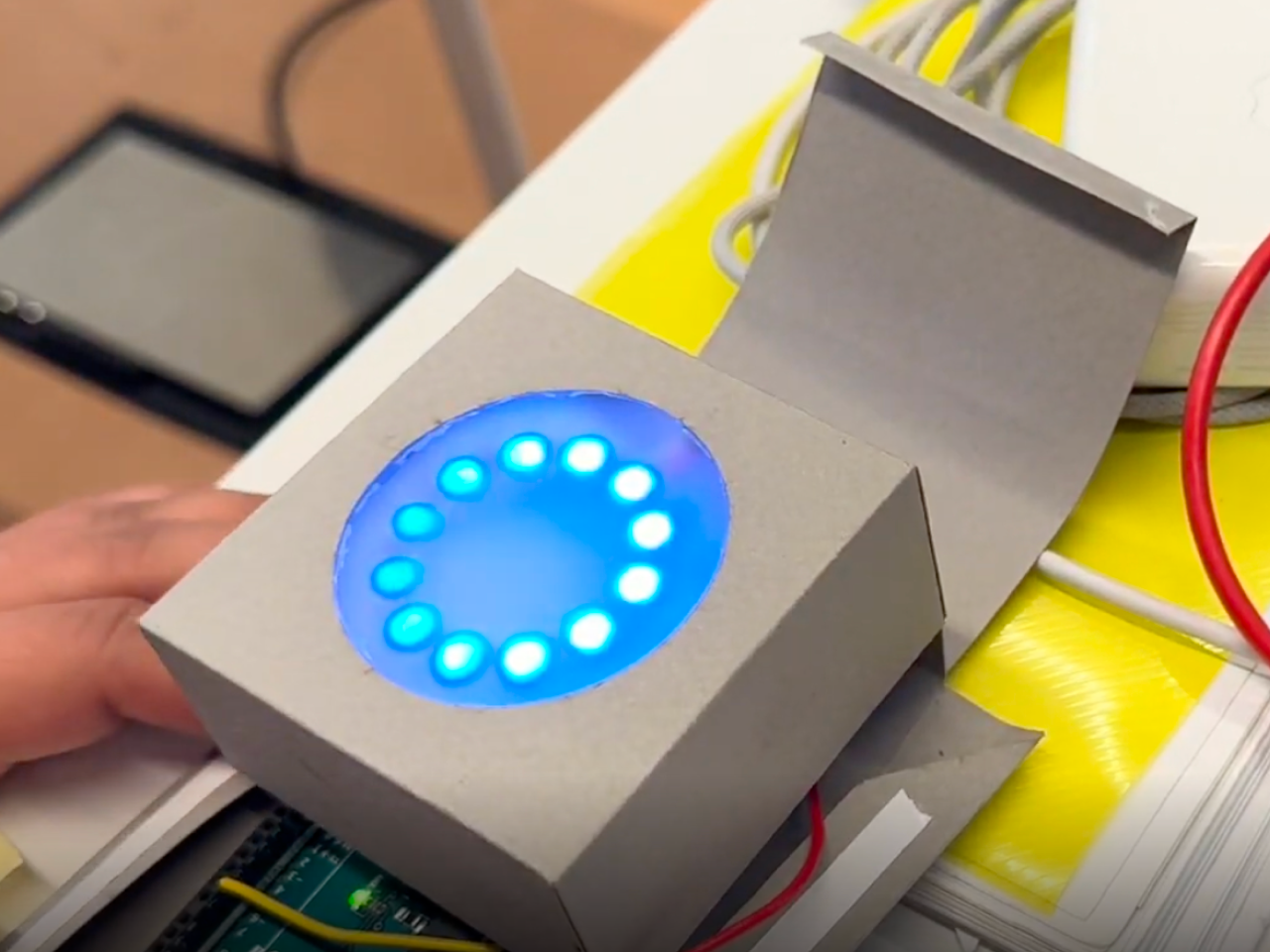
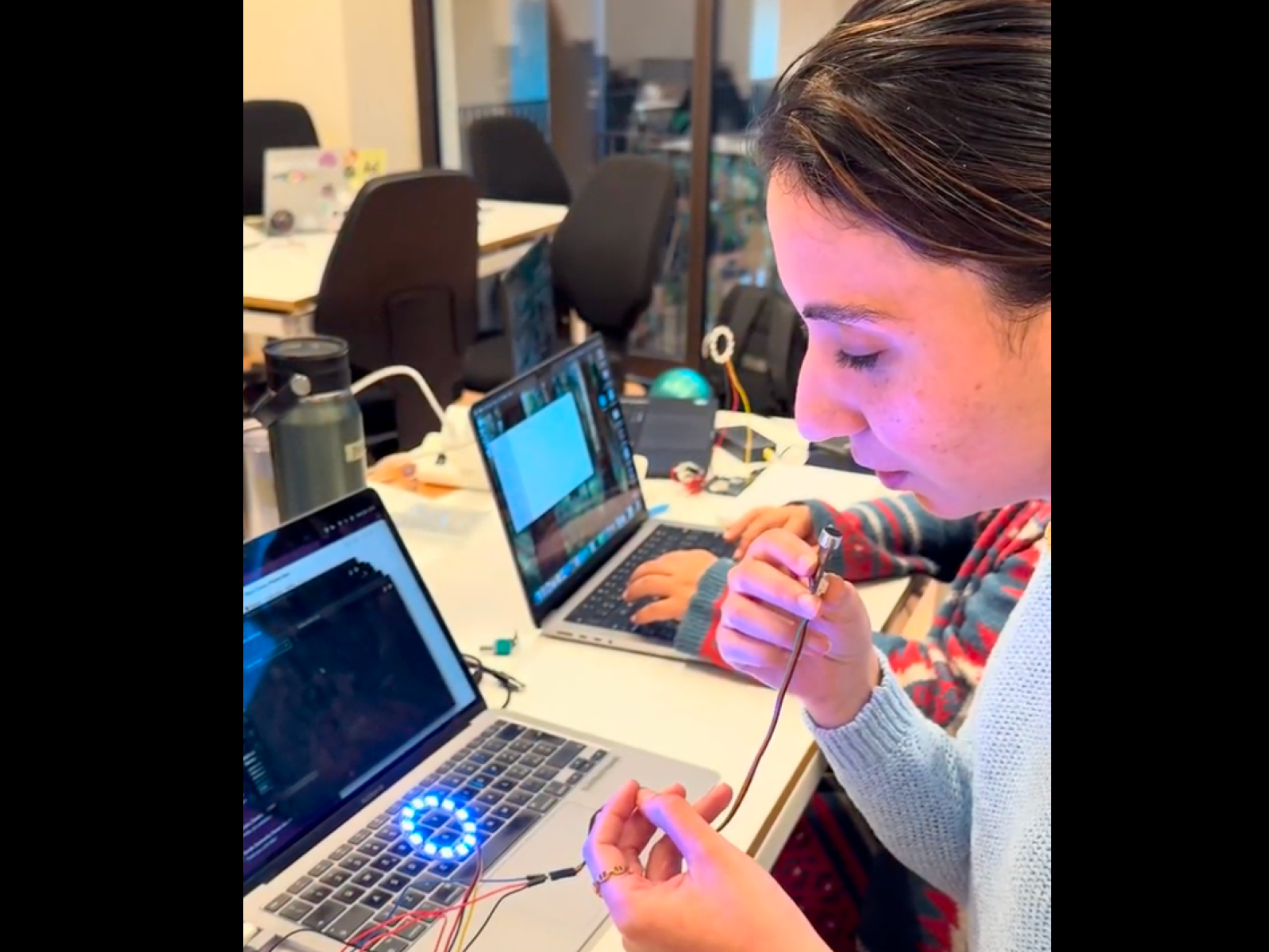
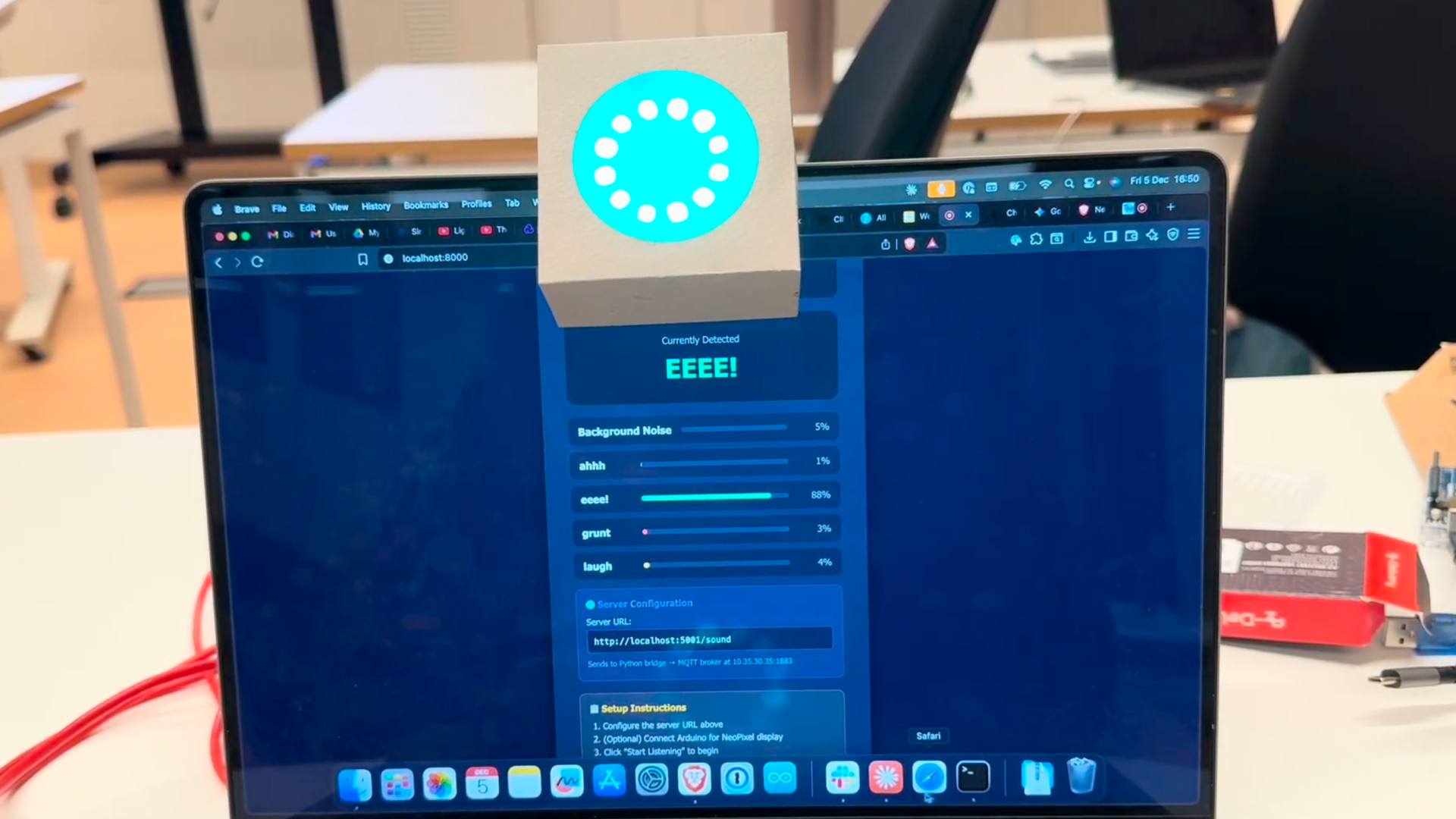
The prototype imagines the lamp as an extension of emotional expression, translating subtle affective cues into ambient light. Rather than relying on facial recognition or biometric wearables, the system interprets vocal and interaction-based cues—such as sighs, laughs, tone, pitch, and volume—to infer general emotional states. These signals drive shifts in light color, making emotion visible as awareness rather than judgment.
Ultimately, the project asks how everyday objects might help cultivate workplaces that respect emotional complexity and human well-being.