With “Città Alta and the People” we explored how tourism data could reveal opportunities to ease the pressure of tourism in Città Alta. We combined data on visitor arrivals, attendance figures, point-of-interest popularity, and real-time walking patterns to understand where and when congestion in Città Alta was most acute.
Our analysis highlighted Piazza Vecchia and the Corsarola as the epicenter of the pressure: the square recorded over 3.8 million visits in 2023, funneled through a 1,000 m² pedestrian route that can hold up to 2,000 people at once, turning Città Alta into a highly congested, ultra-dense zone. With 600,000 tourists against around 2,700 residents in 2023 (220 tourist attendances per resident) the imbalance was visible. Further research into visitor timing patterns revealed that most tourists concentrated their visits to monuments like Basilica di Santa Maria Maggiore, Fontana Contarini, and Sant'Andrea between Thursday and Sunday, 12pm-4pm, while quieter hours and lesser-known sites just outside Piazza Vecchia e.g. the botanical garden, Fontana del Delfino, hidden stairways, remained less visited.
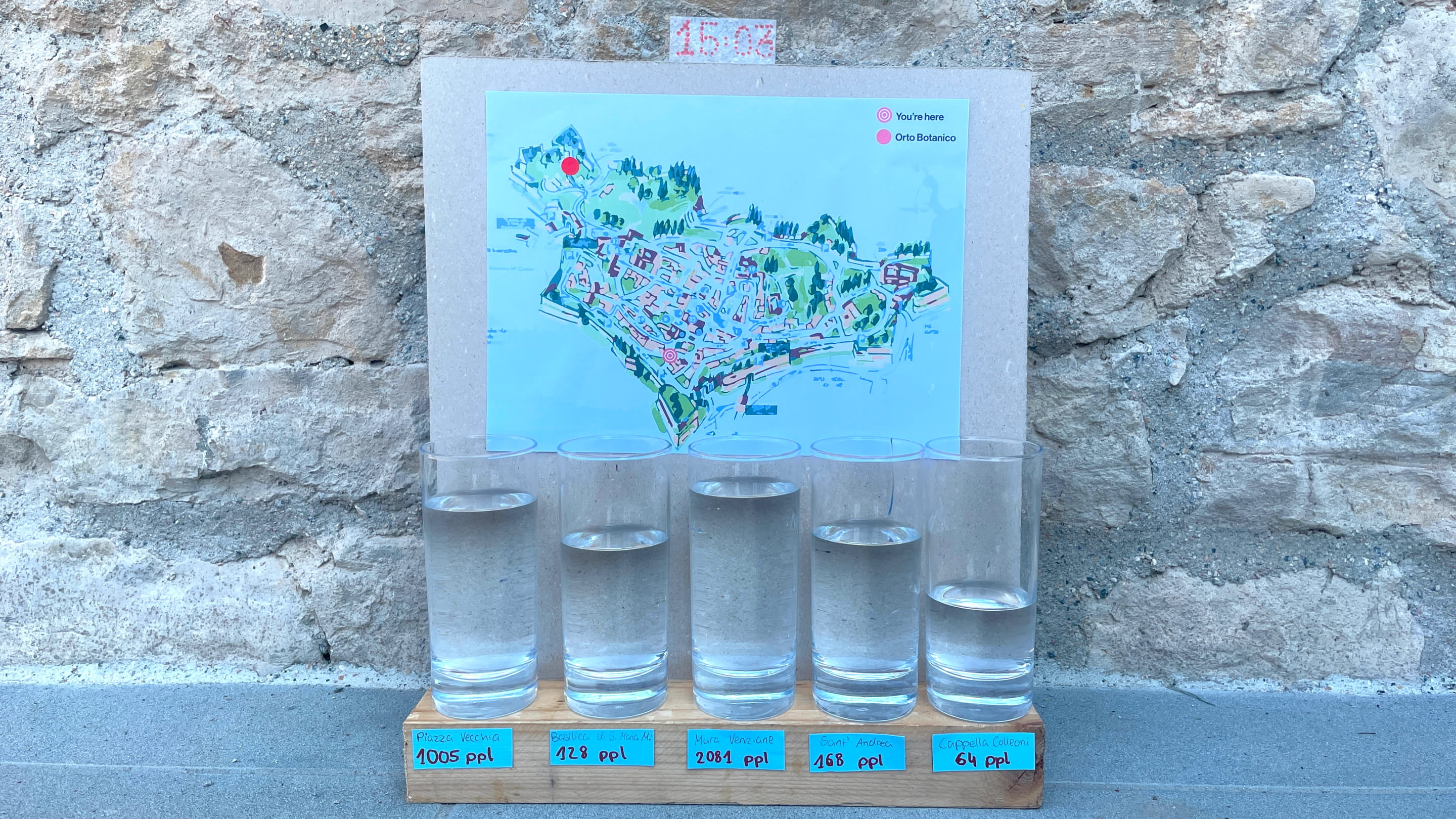
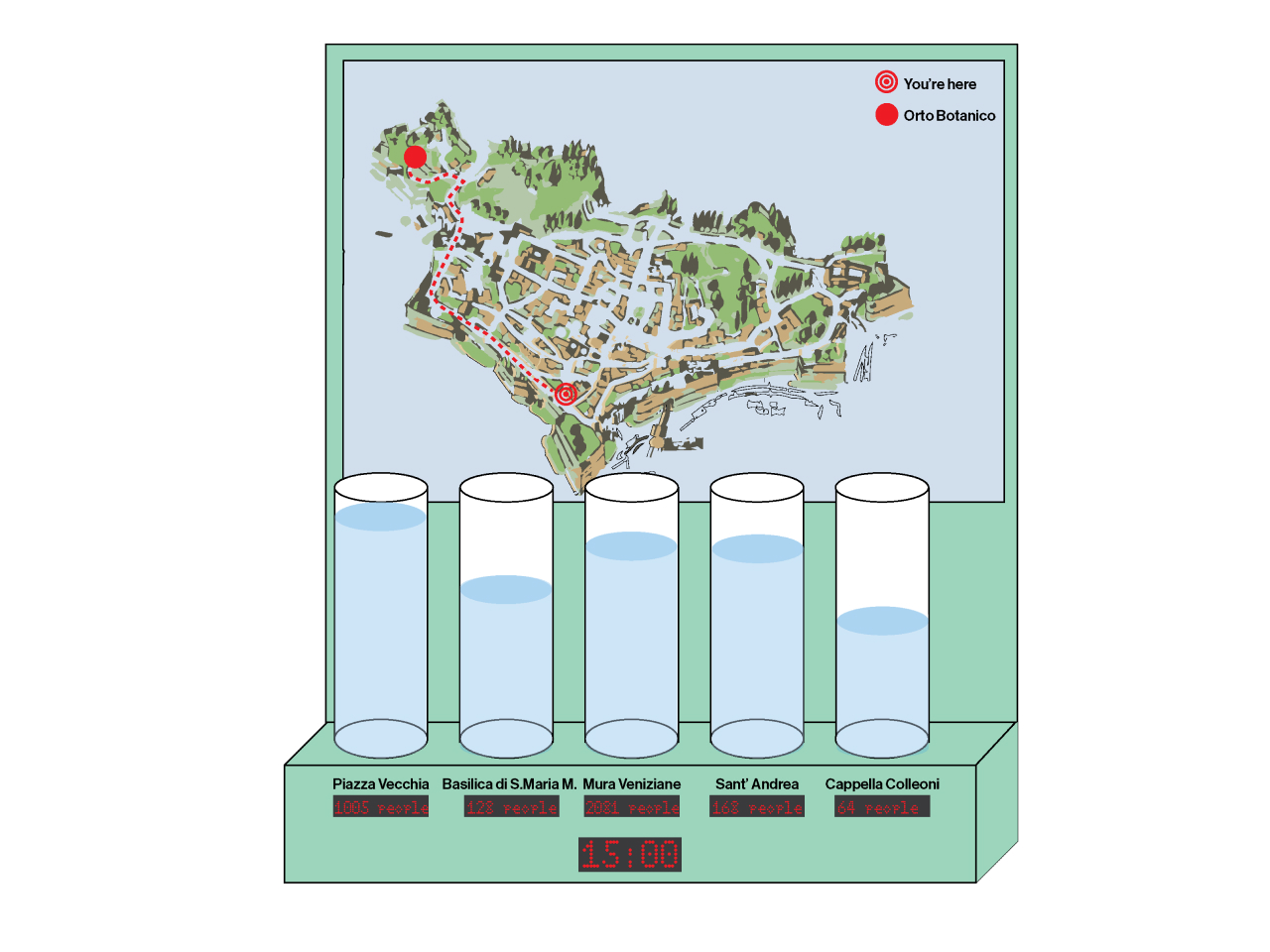
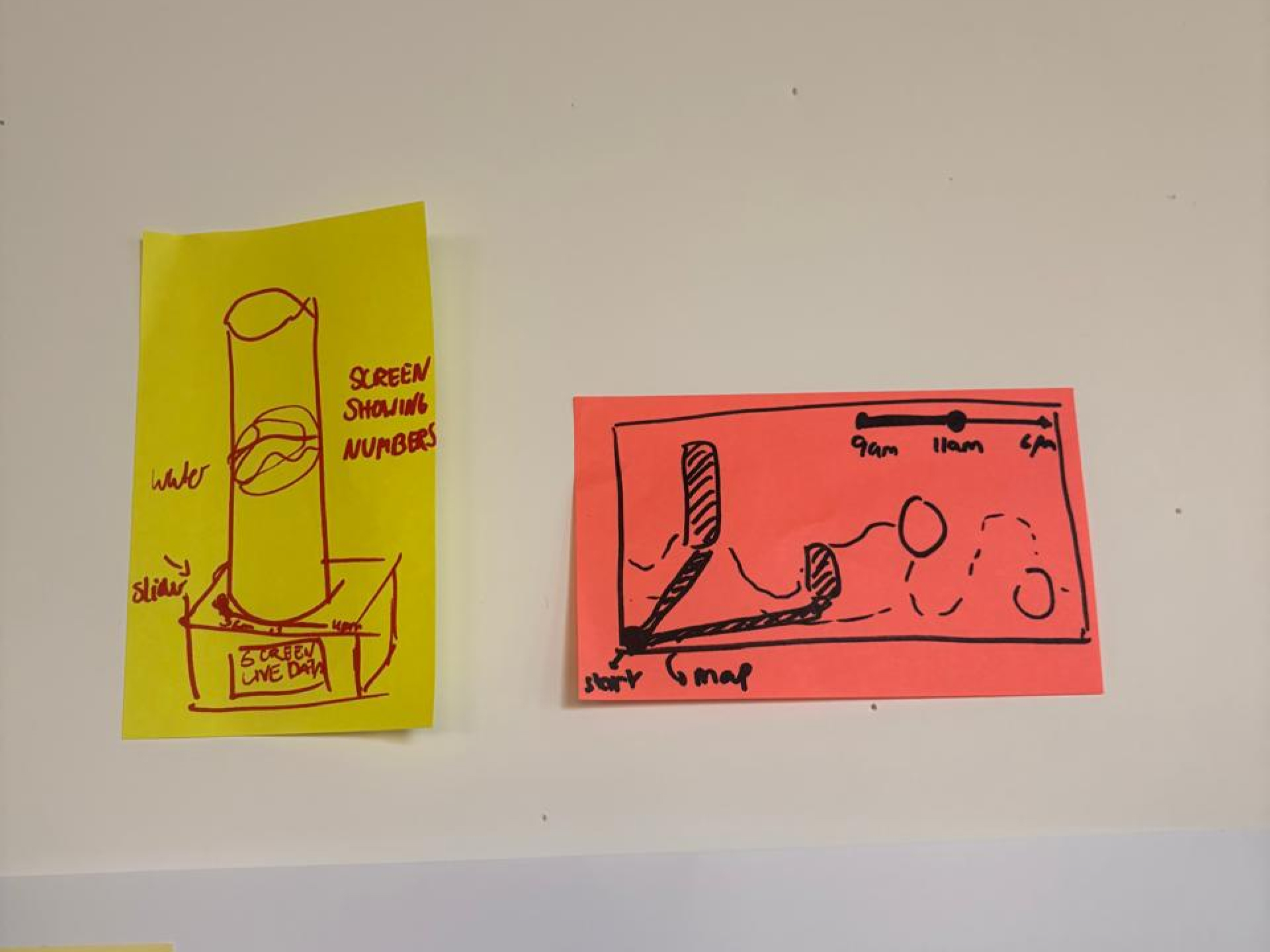
We translated these findings into two complementary directions: a digital layer offering real-time visitor insights, an interactive map of hidden gems, a display showing the current time, and a physical installation using water levels as a visual metaphor for real-time crowd volume at different points of interest. We prototyped this as a public installation, positioned at the airport and the funicular exit into Città Alta. By showing visitors this installation, we hope to make them aware of peak hours while highlighting quieter routes and undiscovered attractions before they even enter the upper town.
A key learning was that data discrepancies are normal. Approaching them with curiosity, treating everyday sources like Google Maps popular-times data as legitimate design material, and asking the right questions allowed us to turn scattered tourism data into a concrete, actionable prototype and we were excited to build on the collected data in the following weeks.
.jpg)



.jpg)